Portrait de Manuel Godoy
Francisco Goya · 1801
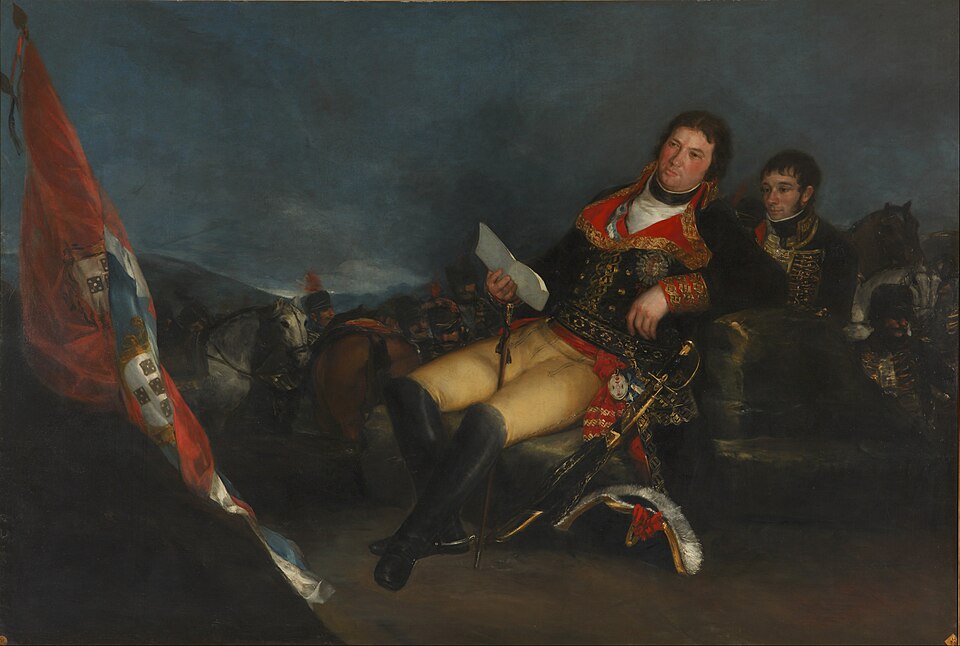
Spain's most powerful man lounges among horses and captured Portuguese flags, a baton between his legs. Goya painted his friend Manuel Godoy in 1801 at the peak of his power, and caught his arrogance with a sharp eye.
The story behind the painting
In 1801 Manuel Godoy, Spain's Prime Minister, had just won the brief War of the Oranges against Portugal, and he commissioned this large oil on canvas from Francisco de Goya to commemorate the victory. He was at the height of his power: Generalissimo of land and sea and Prince of Peace, pompous titles he willingly accepted. He was close to Queen Maria Luisa of Parma, wife of Charles IV, and had married into the royal family through the Countess of Chinchon, a cousin of the king. Goya and Godoy were friends.
What to look for
The canvas is large, about 180 by 267 cm. Godoy does not stand to attention; he reclines in an unusual, relaxed posture, in military uniform, with horses around him. Look for the baton set between his legs, which the source calls phallic, and for the Portuguese flags, trophies of his war. The lighting gives intensity to the whole scene. Every element seems chosen to show a man completely sure of himself, and Goya lets that self-belief speak through the body rather than through any heroic gesture.
Meaning and intent
The portrait is described as an incisive psychological characterisation. Through the posture, the horses, the baton and the enemy flags, Goya metaphorically places Godoy at the apex of the Spanish government, and at the same time captures his arrogance. It is a portrait that flatters and exposes at once. The friendship between painter and sitter was real: Godoy owned two of Goya's paintings of Majas, which he may have commissioned. Goya had already portrayed him in 1794, as Duke of Alcudia, in a small equestrian portrait.
Legacy
Godoy's career ended in disgrace. After the Spanish War of Independence he was banished to live in poverty, and he died in exile in Paris in 1851. Yet he never turned against the painter. In his memoirs he spoke favourably of Goya and referred to the Caprichos with great praise, as if he had seen them published himself. The portrait now hangs in the Real Academia de Bellas Artes de San Fernando in Madrid, a record of one triumphant moment before a long fall.
Le saviez-vous ?
- Painted by Goya in 1801 to mark the War of the Oranges.
- Godoy was Spain's Prime Minister and a friend of Goya.
- Godoy owned two of Goya's paintings of Majas.
- Held by the Real Academia de Bellas Artes de San Fernando.
À propos de l'artiste
Francisco Goya (1746-1828)
portrait · homme · position assise · Académie royale des Beaux-Arts Saint-Ferdinand · uniforme militaire · canne · bicorne
Autres œuvres de Francisco Goya
 Tres de Mayo - Francisco Goya (1814)
.jpg) La Maja nue - Francisco Goya (1800)
La Maja nue - Francisco Goya (1800).jpg) Saturne dévorant un de ses enfants - Francisco Goya (1819)
Saturne dévorant un de ses enfants - Francisco Goya (1819) La Famille de Charles IV - Francisco Goya (1800)
 La Maja vêtue - Francisco Goya (1800)
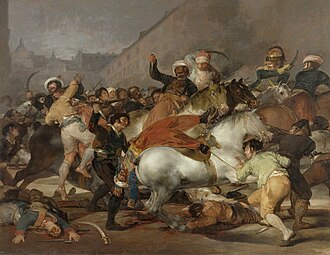 Dos de Mayo - Francisco Goya (1814)
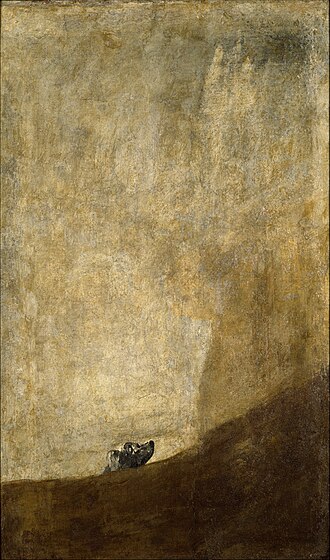 Le Chien - Francisco Goya (1819)
 Le Sabbat des sorcières - Francisco Goya (1820s)
Œuvres d'artistes liés
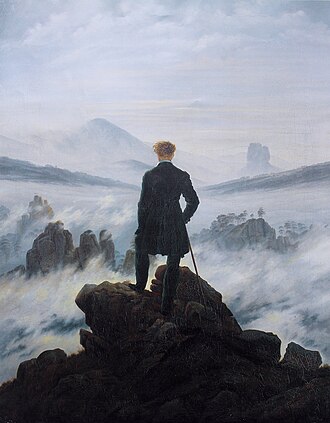 Le Voyageur contemplant une mer de nuages - Caspar David Friedrich (c. 1818)
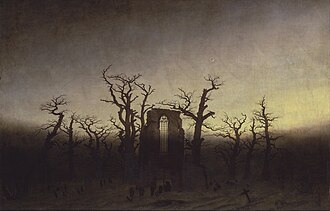 L'Abbaye dans une forêt de chênes - Caspar David Friedrich (1800s)
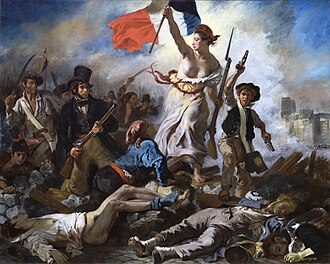 La Liberté guidant le peuple - Eugène Delacroix (1830)
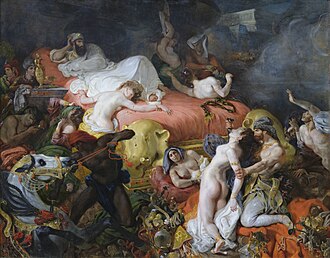 La Mort de Sardanapale - Eugène Delacroix (1827)
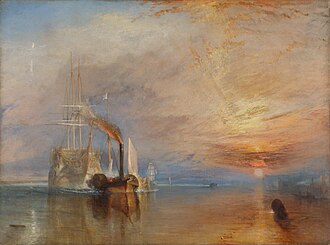 Le Dernier Voyage du Téméraire - J. M. W. Turner (1839)
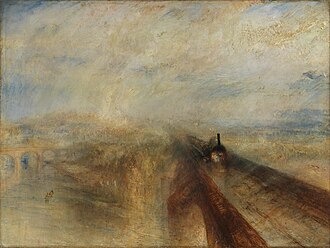 Pluie, Vapeur et Vitesse - J. M. W. Turner (1844)
.jpg) L'Enfant bleu - Thomas Gainsborough (1770)
L'Enfant bleu - Thomas Gainsborough (1770).jpg) Les Époux Andrews - Thomas Gainsborough (1748)
Les Époux Andrews - Thomas Gainsborough (1748)