Portrait de Jacob de Gheyn III
Rembrandt van Rijn · 1632
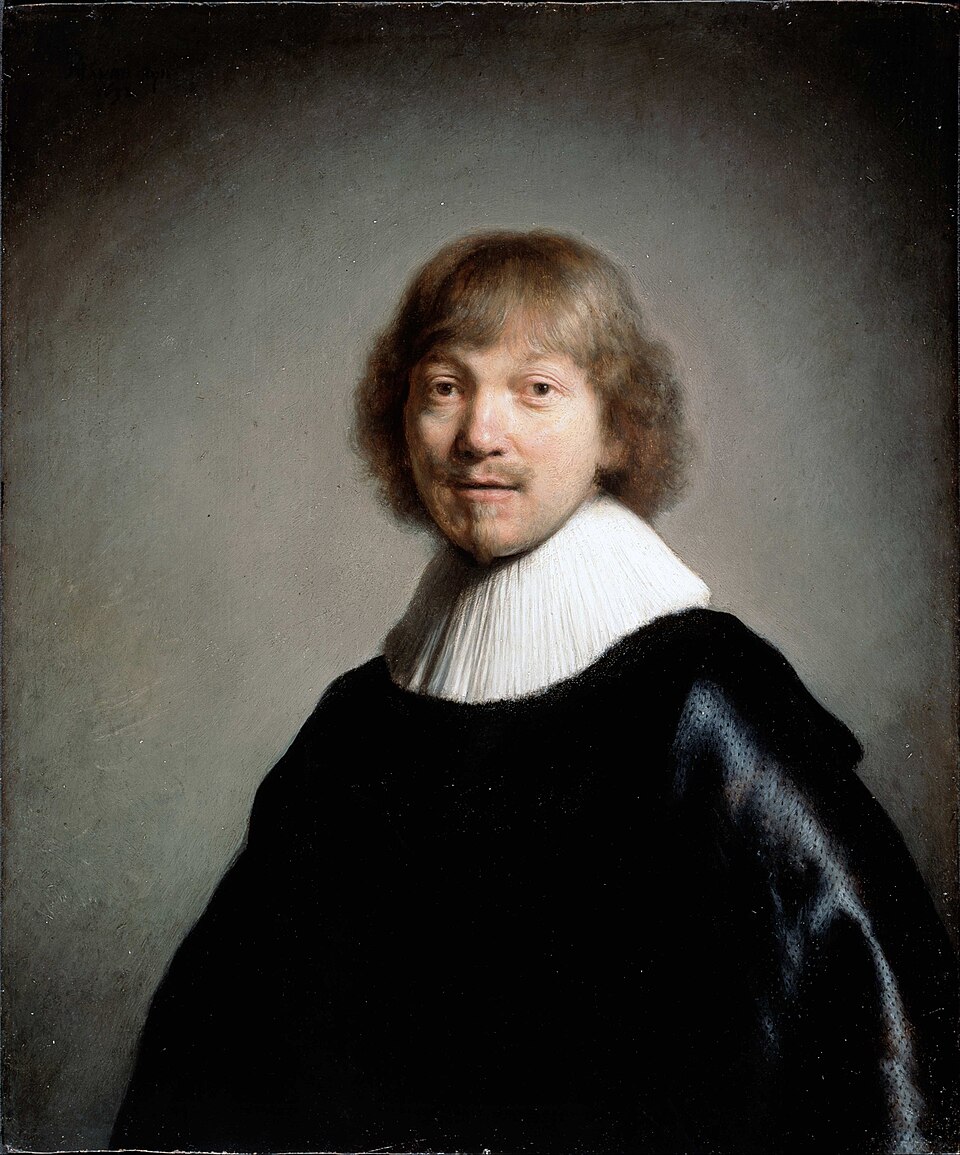
A small Rembrandt panel of a friend, painted as a pledge between two men, has been stolen more times than any other painting on record. They call it the takeaway Rembrandt, and each time it has found its way home.
The story behind the painting
The engraver Jacob de Gheyn III and his friend Maurits Huygens asked Rembrandt in 1632 to paint them both in identical formats, on oak panel. The two friends agreed that whoever died first would leave his portrait to the other, as inscriptions on the backs record. When de Gheyn died, the two portraits were reunited. Maurits Huygens survived him by less than a year, and his brother Constantijn Huygens was so heartbroken that he stopped writing for a long time. Tree-ring study shows Rembrandt painted a self-portrait that year on wood from the same tree.
What to look for
The panel is tiny for Rembrandt, only 29.9 by 24.9 cm, about the size of a sheet of paper. It is oil on oak, and it shows the engraver as one half of a matched pair, meant to sit beside his friend's portrait of the same size. Look at it knowing it was made to be held and kept close, a portrait of someone dear rather than a show piece. Its small size is also exactly what has made it so easy to carry away, again and again.
Meaning and intent
Behind this modest picture lies a promise. Two men commissioned matching likenesses so that the survivor would keep the other's face, a quiet way of planning for grief. The story does not end with de Gheyn: within a year Maurits too was dead, and the loss silenced his brother Constantijn, one of the great writers of the time. The painting is a record of friendship more than of rank, and it carries that private feeling into a public gallery.
Legacy
Now in Dulwich Picture Gallery in London, it has been stolen four times since 1966. In 1981 it was recovered when police stopped four men in a taxi. Less than two years later a burglar came through a skylight and pried it off the wall with a crowbar; police arrived within three minutes but too late. It was missing three years until it turned up on 8 October 1986 in a luggage rack at a station of a British army garrison in Münster. Once it was found under a graveyard bench in Streatham, once on the back of a bicycle.
Le saviez-vous ?
- Painted in 1632 on oak, only 29.9 by 24.9 cm.
- Made as a pair with a portrait of Maurits Huygens.
- Stolen four times since 1966, a recorded maximum.
- Held at Dulwich Picture Gallery, London.
À propos de l'artiste
Rembrandt van Rijn (1606-1669)
portrait · homme · âge d'or de la peinture néerlandaise
Autres œuvres de Rembrandt van Rijn
 La Ronde de nuit - Rembrandt van Rijn (1642)
 Autoportrait - Rembrandt van Rijn (1659)
 La Leçon d'anatomie du docteur Tulp - Rembrandt van Rijn (1632)
 La Fiancée juive - Rembrandt van Rijn (1660s)
 La Tempête sur la mer de Galilée - Rembrandt van Rijn (1633)
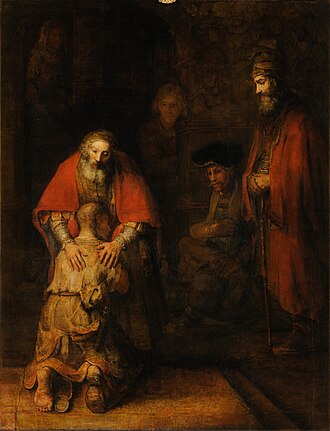 Le Retour du fils prodigue - Rembrandt van Rijn (1668)
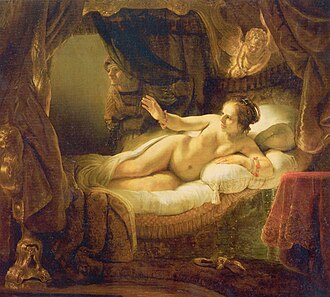 Danaé - Rembrandt van Rijn (1636)
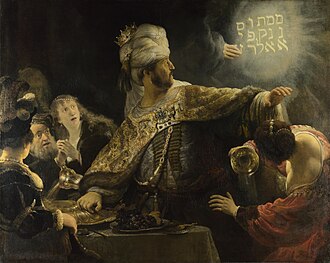 Le Festin de Balthazar - Rembrandt van Rijn (1636)
Œuvres d'artistes liés
 La Jeune Fille à la perle - Johannes Vermeer (1665)
 La Laitière - Johannes Vermeer (c. 1658)
 La Fête de la Saint-Nicolas - Jan Steen (1660s)
 La Mangeuse d'huîtres - Jan Steen (1658)
 Le Joyeux Buveur - Frans Hals (1620s)
 Le Cavalier riant - Frans Hals (1624)
 Le Moulin près de Wijk bij Duurstede - Jacob van Ruisdael (1670)
 Le Cimetière juif - Jacob van Ruisdael (1650s)
 La Cour d'une maison à Delft - Pieter de Hooch (1658)
 La Peleuse de pommes - Pieter de Hooch (1663)