Portrait de Caroline Sanders Truax en Sappho
Jean-Léon Gérôme · 1899
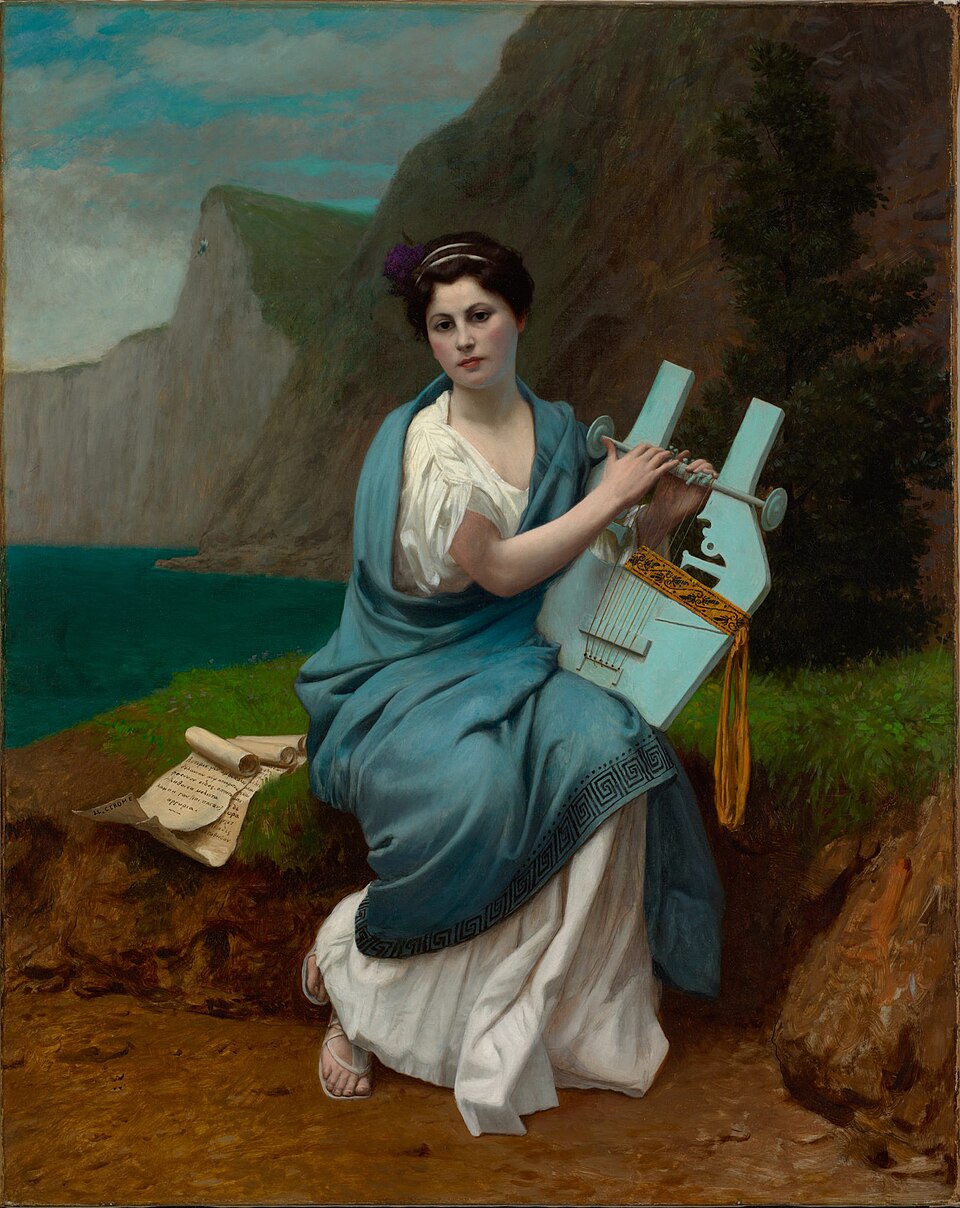
One of the first women admitted to the New York bar sits by the sea as the Greek poet Sappho, a blue lyre on her knees. Far behind her, a tiny figure falls from a cliff.
The story behind the painting
Caroline Sanders Truax, 1870 to 1940, was a prominent figure in late nineteenth century New York society and among the first women admitted to the bar of New York State, a graduate of the New York University law school. In 1896 she married Charles H. Truax, a justice of the New York Supreme Court, and she kept a lasting interest in the arts. Soon after the wedding the couple visited the Paris studio of Jean-Léon Gérôme, then a leading academic painter whose portraits were in demand. He painted her in 1899, in oil on linen.
What to look for
She wears a white dress draped with a blue mantle decorated with antique patterns, and white sandals. She has no jewellery; her pinned-up hair holds only a violet flower. A blue lyre rests on her knees, and several scrolls covered in writing lie on the rock to her right. Behind her, cliffs overlook the sea. Look for the small figure falling from a cliff in the background, and for the signature J. L. GEROME, written like a little label on the back of the top scroll on the rock.
Meaning and intent
Dressing the sitter in antique costume follows a tradition of wealthy Americans adopting the codes of ancient Greece and Rome. Choosing Sappho, the poet of archaic Greece from Lesbos, was bold for the end of the nineteenth century. Her lyric poetry, once sung to music, was famous in antiquity though only fragments survive, and in the nineteenth century readings of her celebration of women and of love between women made her both controversial and emblematic, tied to lesbian sexuality and to feminist movements. The falling figure recalls the legend that Sappho threw herself into the sea out of unrequited love, a story generally considered apocryphal.
Legacy
The portrait was a great success in New York society and was shown in several exhibitions. Many newspapers of the time described it and told its story. A letter of 1898 between someone close to Mrs Truax and the artist shows that Gérôme was pleased with the warm reception, a date the source gives even though the painting is dated 1899. The canvas, about 89 by 70 cm, is now in the Bowdoin College Museum of Art in Brunswick, Maine, given by Carolyn Aldrich Frost, Mrs Truax's granddaughter.
Le saviez-vous ?
- Painted by Jean-Léon Gérôme in 1899.
- The sitter was among the first women admitted to the New York bar.
- A tiny falling figure recalls the legend of Sappho's leap.
- Given to the Bowdoin College Museum of Art by her granddaughter.
À propos de l'artiste
Jean-Léon Gérôme (1824-1904)
Autres œuvres de Jean-Léon Gérôme
 Pollice verso - Jean-Léon Gérôme (1872)
 Le Marché aux esclaves - Jean-Léon Gérôme (1866)
 Phryné devant l'Aréopage - Jean-Léon Gérôme (1861)
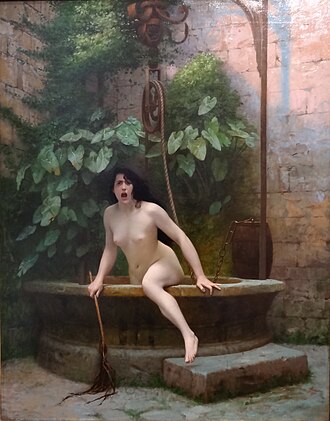 La Vérité sortant du puits armée de son martinet pour châtier l’humanité - Jean-Léon Gérôme (1896)
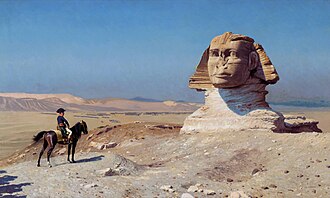 Bonaparte devant le Sphinx - Jean-Léon Gérôme (1867)
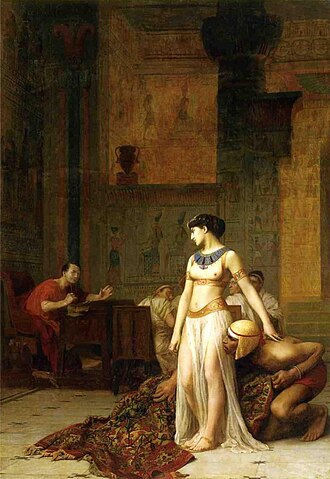 Cléopâtre et César - Jean-Léon Gérôme (1866)
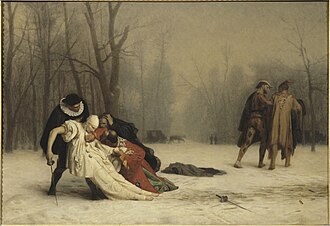 Suites d'un bal masqué - Jean-Léon Gérôme (1857)
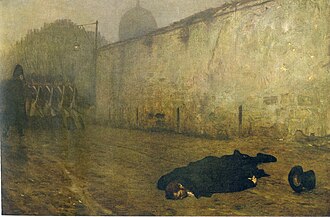 L'exécution du maréchal Ney - Jean-Léon Gérôme (1868)
Œuvres d'artistes liés
 Le Déjeuner sur l'herbe - Édouard Manet (1863)
 Olympia - Édouard Manet (1863)
 L'Origine du monde - Gustave Courbet (1866)
 Un enterrement à Ornans - Gustave Courbet (2020)
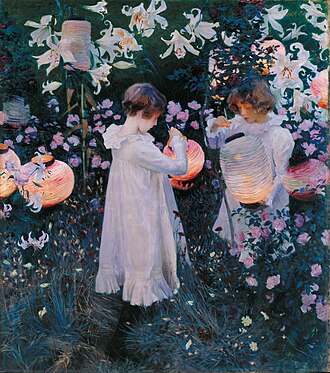 Œillet, lys, lys, rose - John Singer Sargent (1885-1886)
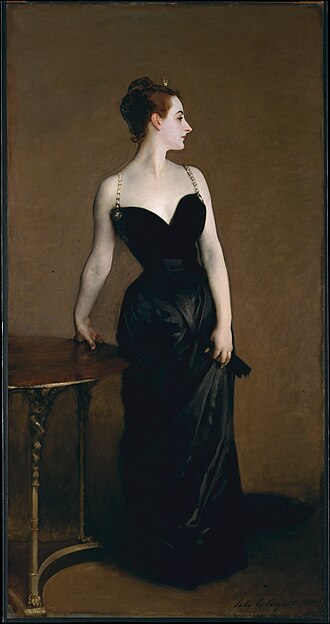 Madame X - John Singer Sargent (1884)
 La Liberté guidant le peuple - Eugène Delacroix (1830)
 La Mort de Sardanapale - Eugène Delacroix (1827)
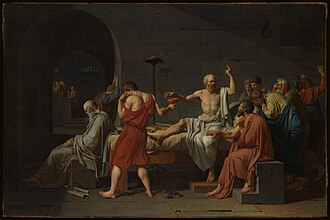 La Mort de Socrate - Jacques-Louis David (1787)
 Le Serment des Horaces - Jacques-Louis David (1784)
 The Ladies Waldegrave - Joshua Reynolds (1780)
 Capitaine George K. H. Coussmaker - Joshua Reynolds (1782)