Fleur mystique
Gustave Moreau · 1890
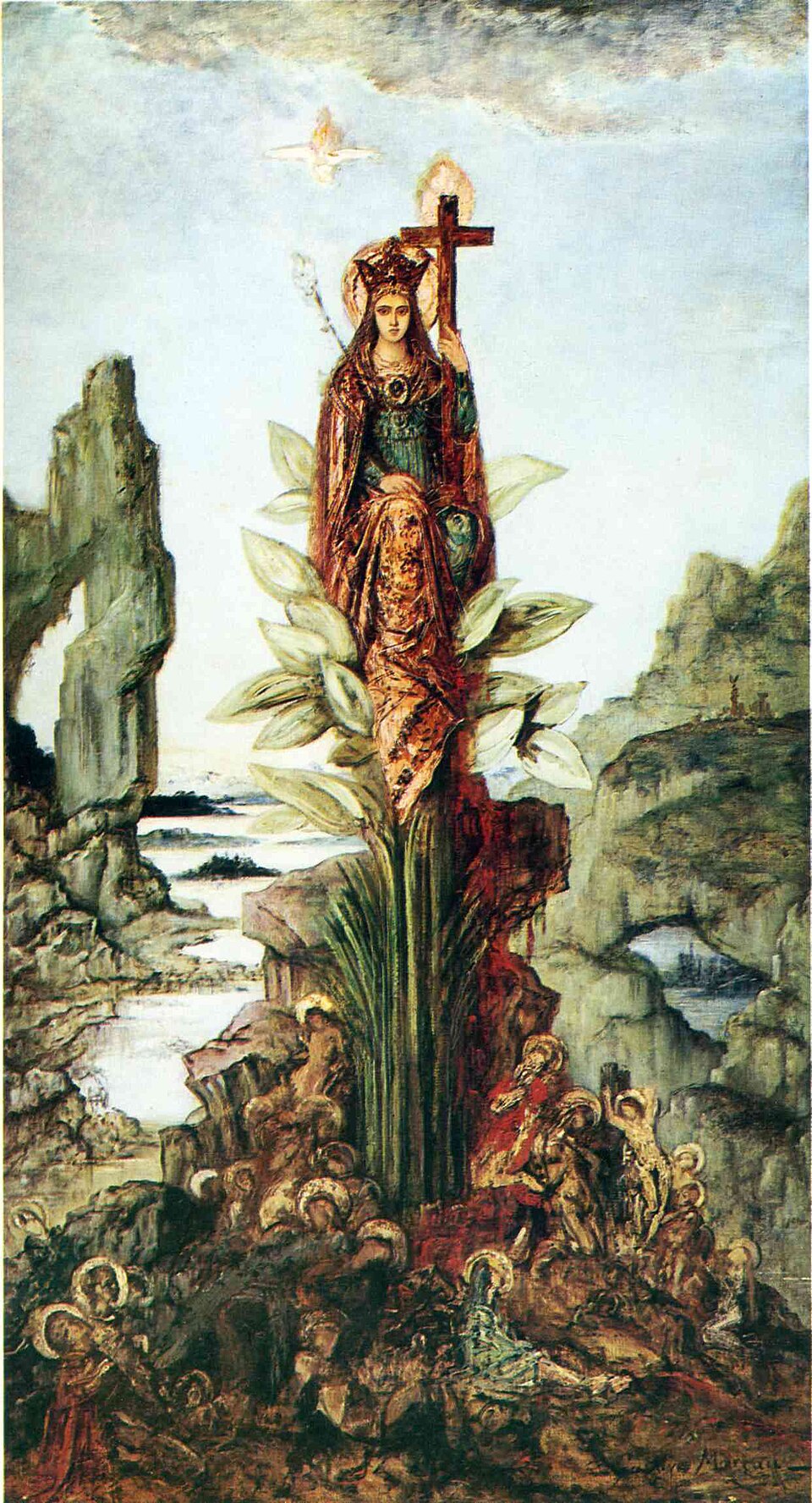
A giant lily rises from a mound of martyrs, and on its flower sits a still, towering Virgin. Painted near the end of Moreau's life, this two-and-a-half-metre canvas closes his Cycle of Man.
The story behind the painting
Moreau painted The Mystic Flower around 1890, at the end of his life, when he was thinking about the future of his work, editing accounts of his paintings and making canvases in a museum format. It came after the deaths of his mother and of his companion Alexandrine Dureux, after which his subjects grew more meditative and melancholic. Raised by agnostic parents and not practising, he developed very personal beliefs: he said he believed only in what he did not see and what he felt, and that only his inner feeling seemed eternal.
What to look for
The canvas is 253 cm tall and 137 cm wide, a vast rocky landscape. At the base, a mound is covered with small figures of martyrs in the pain of their torture. From it springs an immense lily, and on top sits a figure of the Church with a Byzantine stillness, which Moreau himself identified with the Virgin Mary, holding a cross visited by a celestial bird. Together they form a pyramid. The idea of a saint on a sheaf of palms comes from Carpaccio's Glory of Saint Ursula, which Moreau copied in Venice in 1858, and the rocks recall Leonardo's Virgin of the Rocks.
Meaning and intent
Moreau chose the tall format to express domination. He wrote that all the martyrs who died for her had watered this mystical flower, symbol of purity, with their blood. The source reads this as the Church dominating the martyrs, linked to a religion of redemptive suffering that echoed Moreau's own in his last years. In late 19th-century imagery a giant Virgin meant fear more than protection: here she is at the summit, out of scale and alone against the many, sitting above the martyrs rather than sheltering them.
Legacy
Moreau's heroes, from Oedipus and Prometheus to Saint John the Baptist, are devoted to sacrifice: civilising figures who show spirit over matter, yet must die. With The Mystic Flower, the Cycle of Man described by Leonce Benedite is completed. The painting belongs to the collection of the Musee Gustave Moreau in Paris, a fitting home for a canvas Moreau made in a museum format as he thought about the future of his work.
Le saviez-vous ?
- Painted around 1890, late in Moreau's life.
- 253 cm tall, in a deliberately vertical format.
- Inspired by Carpaccio's Glory of Saint Ursula, copied in Venice in 1858.
- Completes Moreau's Cycle of Man.
À propos de l'artiste
Gustave Moreau (1826-1898)
Marie · peinture d'histoire · paysage · cadavre · collection du musée Gustave-Moreau · croix · trône
Autres œuvres de Gustave Moreau
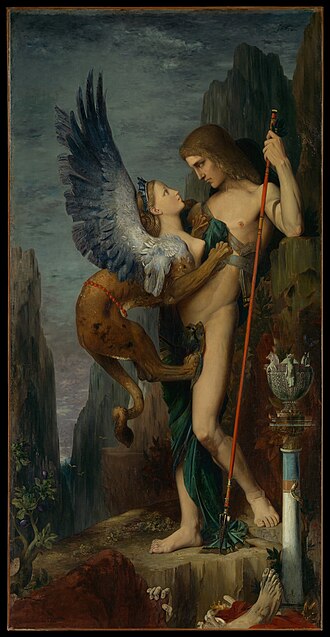 Œdipe et le Sphinx - Gustave Moreau (1864)
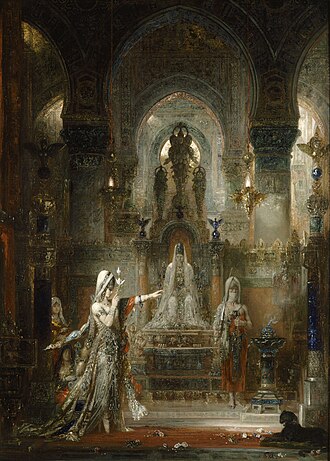 Salomé dansant devant Hérode - Gustave Moreau (1876)
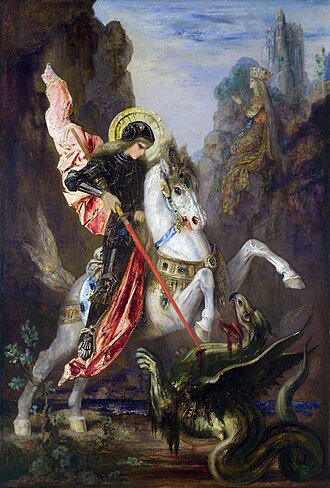 Saint Georges et le Dragon - Gustave Moreau (1880s)
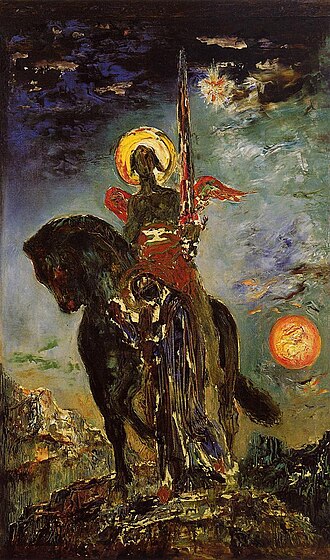 La Parque et l'Ange de la Mort - Gustave Moreau (1890)
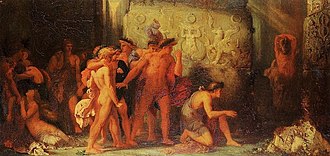 Les Athéniens livrés au Minotaure dans le labyrinthe de Crète - Gustave Moreau (1855)
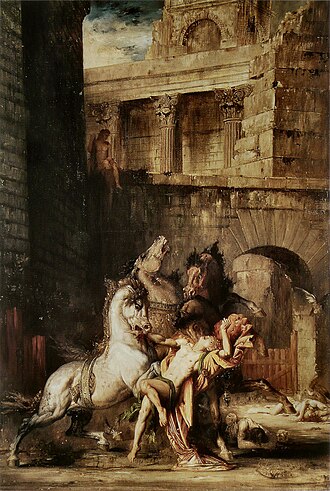 Diomède dévoré par ses chevaux - Gustave Moreau (1865)
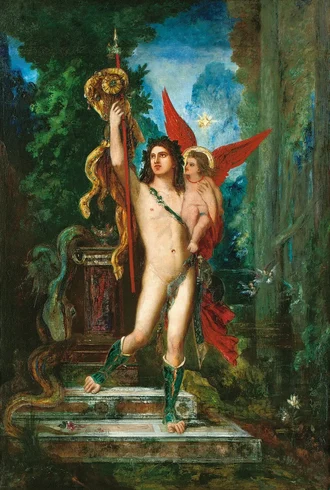 Jason et Éros - Gustave Moreau (1891)
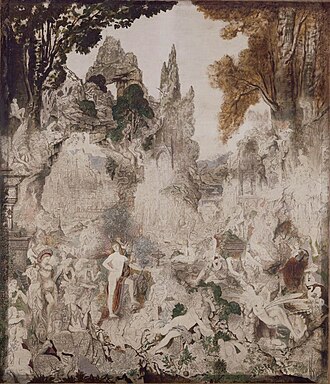 Les Chimères - Gustave Moreau (1884)
Œuvres d'artistes liés
 Pollice verso - Jean-Léon Gérôme (1872)
 Le Marché aux esclaves - Jean-Léon Gérôme (1866)
 Le Déjeuner sur l'herbe - Édouard Manet (1863)
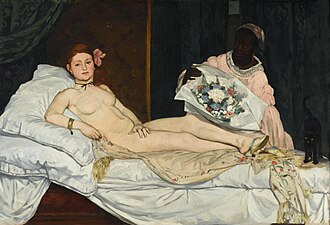 Olympia - Édouard Manet (1863)
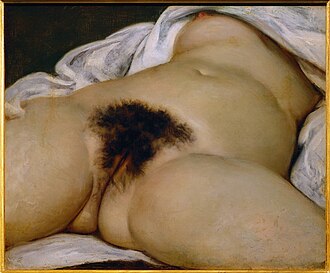 L'Origine du monde - Gustave Courbet (1866)
 Un enterrement à Ornans - Gustave Courbet (2020)
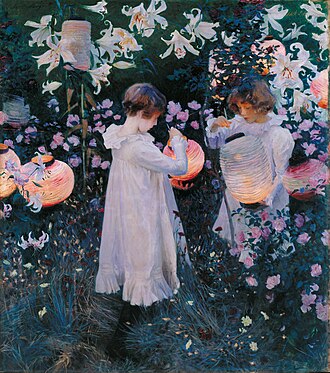 Œillet, lys, lys, rose - John Singer Sargent (1885-1886)
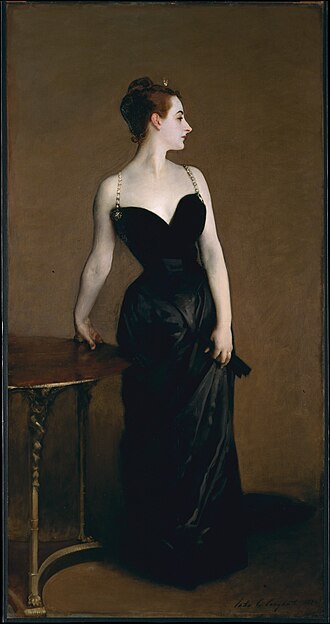 Madame X - John Singer Sargent (1884)
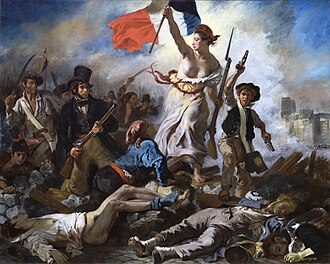 La Liberté guidant le peuple - Eugène Delacroix (1830)
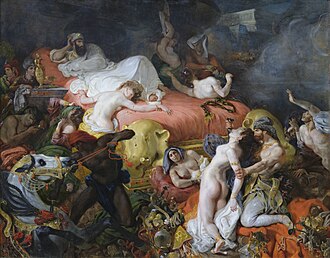 La Mort de Sardanapale - Eugène Delacroix (1827)
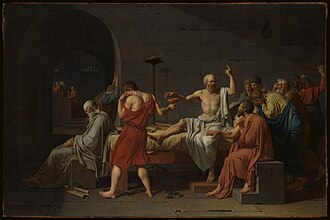 La Mort de Socrate - Jacques-Louis David (1787)
 Le Serment des Horaces - Jacques-Louis David (1784)