Les Chimères
Gustave Moreau · 1884
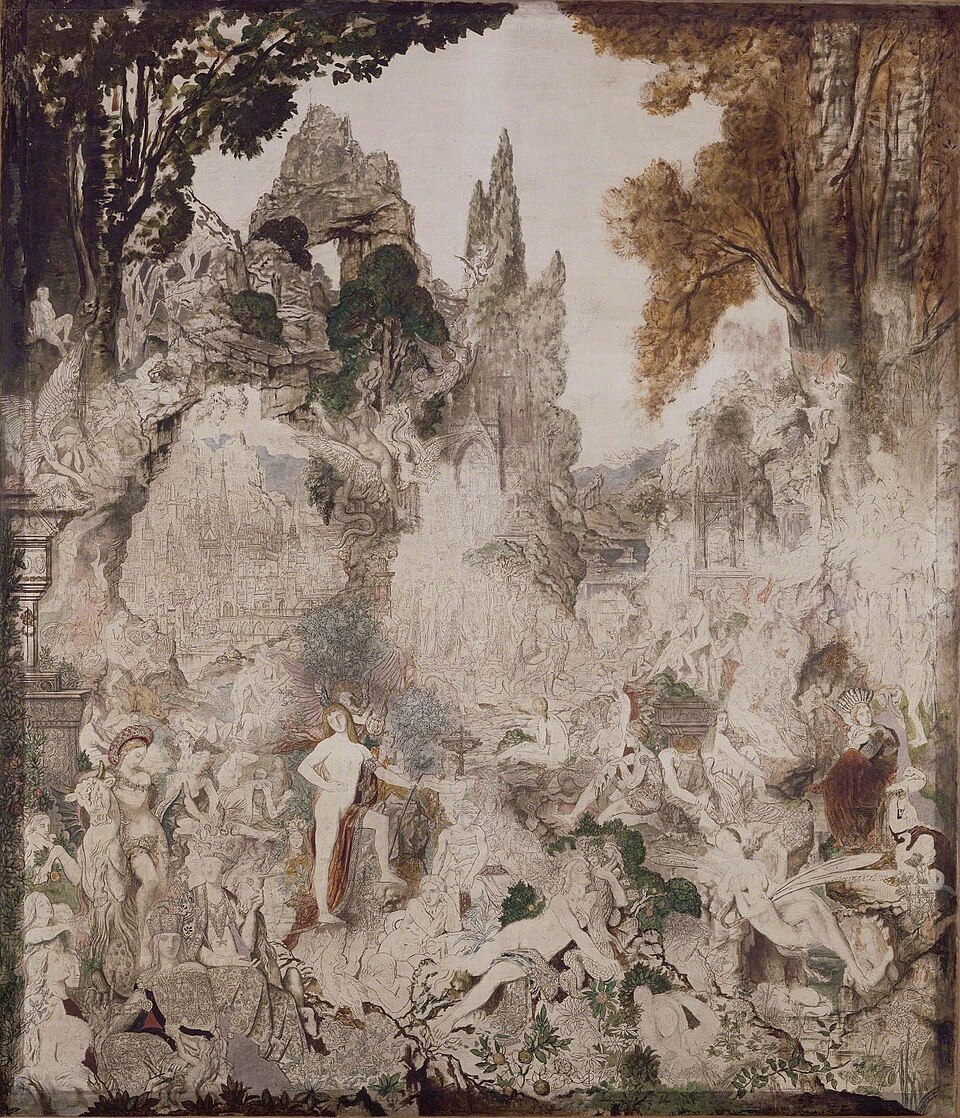
A pale forest crowded with women, centaurs, winged creatures and chimeras, many of them only sketched in. Gustave Moreau left this vast dream unfinished in 1884, and it still hangs in his own house in Paris.
The story behind the painting
Gustave Moreau began Les Chimères, The Chimaeras, and worked on it in 1884, but never finished it. He abandoned the canvas shortly after his mother's death to turn to a darker polyptych, La Vie de l'Humanité, considered one of his masterpieces. The painting is large, 2.36 by 2.04 metres, and belongs to the Musée national Gustave Moreau at 14 rue de La Rochefoucauld in Paris, the artist's own house. Moreau was fascinated by the theme and began no fewer than half a dozen paintings with variations on it.
What to look for
The scene is a forest, like many of Moreau's works, but filled with figures that merge with the landscape and complete it. The focal point is a nude woman courted by a centaur. Around her, other women and their chimeras, together with fauns, minotaurs and winged creatures, fill the canvas. Because the work was abandoned, many of the figures are only sketched and left a pale white, the same white as the sky. This creates a haze in the middle of the picture and makes the figures look like classical marble statues. Near the centre, look for an effeminate young man with a cryptic smile, uncannily close to Leonardo's Saint John.
Meaning and intent
The chimera began in Greek myth as a fire-breathing beast with the heads of a lion, a goat and a dragon, slain by Bellerophon riding Pegasus. In the Middle Ages it came to stand for the Devil's perverse forces, later hypocrisy and fraud, and in French une chimère also means an illusion. Moreau called painting a mental matter and wrote that these fantastic dreams enclose all the forms of the passions, fantasy and caprice of Woman. The views he expresses about women belong to his time; the painting turns them into a crowded dream of desire, imagination and mystery.
Legacy
Moreau spent nearly a decade travelling in Italy and absorbed Michelangelo's human form and Leonardo's soft blues and philosophical mind. He also followed Poussin and shared with the Neoclassicists a love of proportion and harmony. Yet he was fully a Symbolist, even ahead of the movement: Jean Moréas published the Symbolist Manifesto two years after Moreau stopped working on this canvas, describing real things as surfaces that point to primordial Ideals. Les Chimères is a clear example of that idea. Unfinished as it is, it lets us see a mind at work, half dream and half drawing.
Le saviez-vous ?
- Begun in 1884 and left unfinished.
- Canvas 2.36 x 2.04 m.
- Held by the Musée national Gustave Moreau in Paris.
- Abandoned after the death of Moreau's mother.
À propos de l'artiste
Gustave Moreau (1826-1898)
collection du musée Gustave-Moreau
Autres œuvres de Gustave Moreau
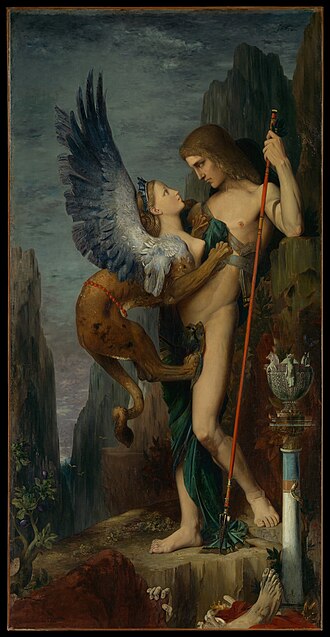 Œdipe et le Sphinx - Gustave Moreau (1864)
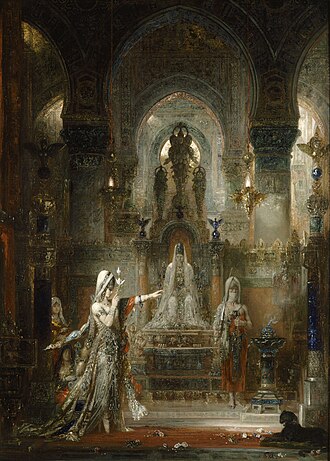 Salomé dansant devant Hérode - Gustave Moreau (1876)
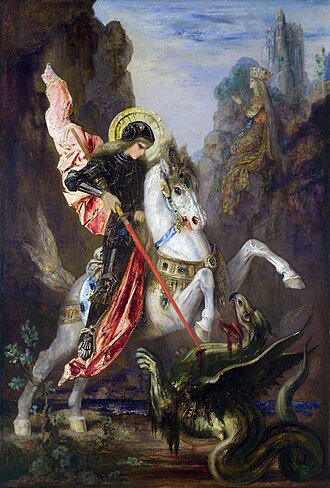 Saint Georges et le Dragon - Gustave Moreau (1880s)
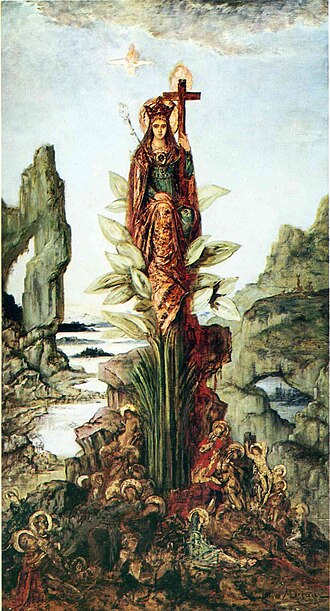 Fleur mystique - Gustave Moreau (1890)
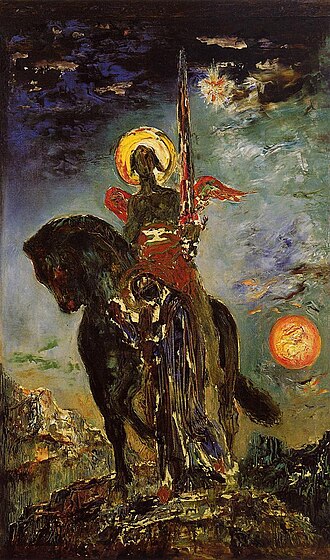 La Parque et l'Ange de la Mort - Gustave Moreau (1890)
 Les Athéniens livrés au Minotaure dans le labyrinthe de Crète - Gustave Moreau (1855)
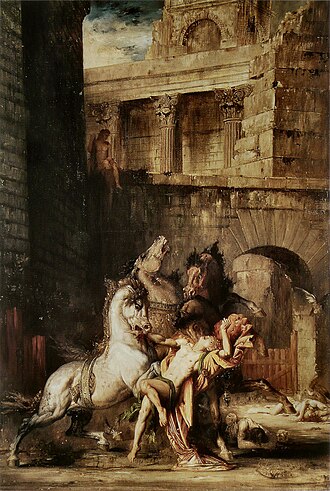 Diomède dévoré par ses chevaux - Gustave Moreau (1865)
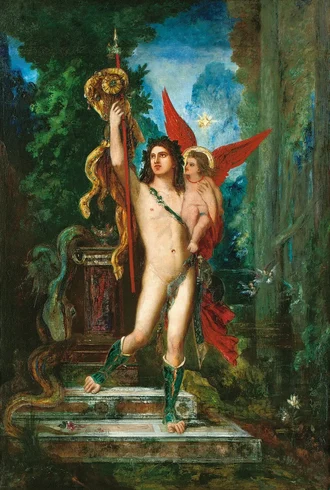 Jason et Éros - Gustave Moreau (1891)
Œuvres d'artistes liés
 Pollice verso - Jean-Léon Gérôme (1872)
 Le Marché aux esclaves - Jean-Léon Gérôme (1866)
 Le Déjeuner sur l'herbe - Édouard Manet (1863)
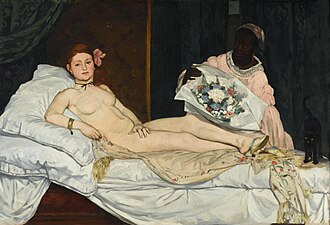 Olympia - Édouard Manet (1863)
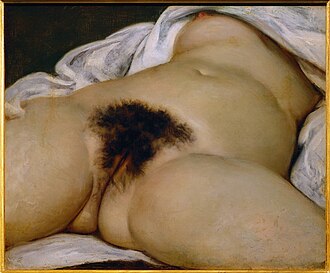 L'Origine du monde - Gustave Courbet (1866)
 Un enterrement à Ornans - Gustave Courbet (2020)
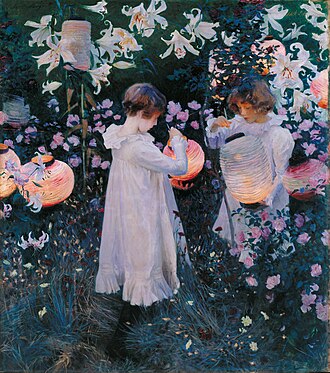 Œillet, lys, lys, rose - John Singer Sargent (1885-1886)
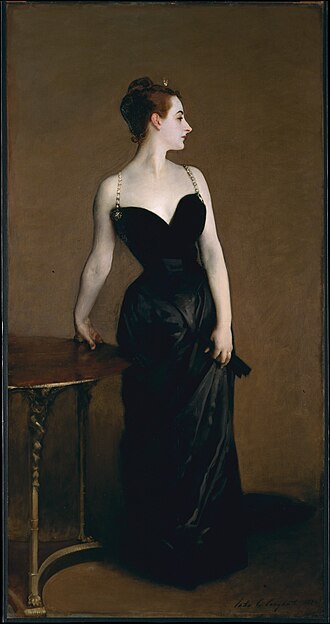 Madame X - John Singer Sargent (1884)
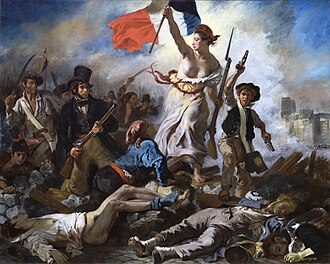 La Liberté guidant le peuple - Eugène Delacroix (1830)
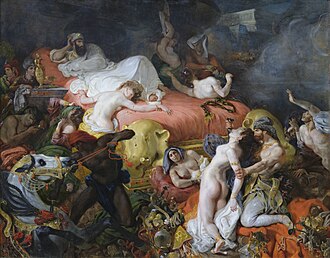 La Mort de Sardanapale - Eugène Delacroix (1827)
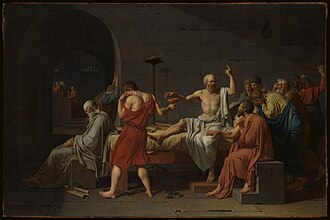 La Mort de Socrate - Jacques-Louis David (1787)
 Le Serment des Horaces - Jacques-Louis David (1784)