Marshy Landscape
Vincent van Gogh · 1883
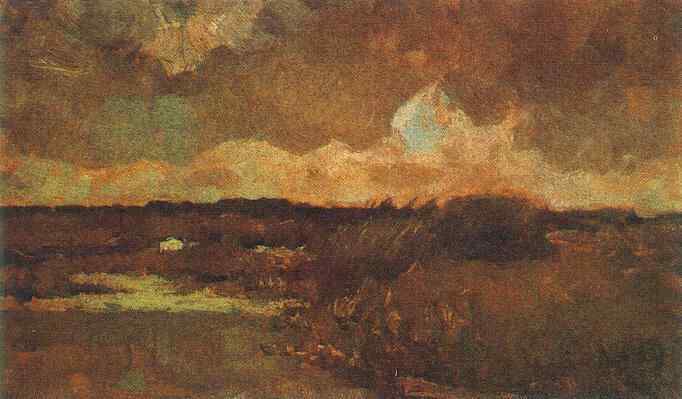
A low strip of land, still water and a wide sky, painted in colours so earthy they seem to come from the bog itself. This is van Gogh alone in the peat country, learning to look.
The story behind the painting
Marshy Landscape is an oil painting Vincent van Gogh created in 1883. That year he was living in Drenthe, a remote district of the Netherlands, flat and cut through by canals, a land of marsh and mist. Throughout 1883 he worked on a series of peasants' cottages and explored the local terrain on foot: marshes and peat fields, ditches and canals. This small canvas, about 25 by 45.5 cm according to Wikidata, belongs to that period of wandering and study. It records not a famous view but an ordinary stretch of wet land that most travellers would have passed by without a second glance.
What to look for
Like much of his work from these months, the painting is rendered in subdued, earthy tones. The source describes it as giving the impression of having been painted with the very soil itself. There is no bright accent to pull the eye; instead the browns, greys and muted greens settle into horizontal bands of ground, water and sky. The wide, low format suits the flatness of Drenthe, where the horizon stretches out and nothing rises high. Standing before it, you can almost feel the damp air and the silence that hung over these marshes.
Meaning and intent
Van Gogh was alone in this wilderness, and he drew strength from it. The stillness and silence of the marshes inspired him. Writing to his brother Theo, he described going further into the peat fields and finding marvellous scenes, adding that the longer he stayed the more beautiful he found the region. He felt that a great deal of study was needed to capture it. The painting is part of that patient effort: an attempt, in his own words, to reach a truer understanding of things as they are at bottom, in their serious, sober nature.
Legacy
Marshy Landscape is a modest work, and that is part of its value. It shows a painter still learning, testing how much feeling a plain landscape can hold when it is observed with honesty. Wikidata places it within realism, and the dark, earthbound palette fits that description. Its story lives above all in the letters to Theo, which let us hear van Gogh's own voice beside the canvas. Seen today, the little painting invites us to slow down, as he did in Drenthe, and to find beauty where the land is quiet and the sky is grey.
Le saviez-vous ?
- Oil painting from 1883, made in Drenthe, Netherlands
- Wikidata size: 25 x 45.5 cm
- Painted in subdued earthy tones
- Van Gogh described the peat fields in a letter to his brother Theo
À propos de l'artiste
Vincent van Gogh (1853-1890)
Autres œuvres de Vincent van Gogh
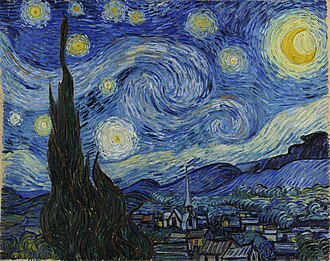 La Nuit étoilée - Vincent van Gogh (1889)
.jpg) Terrasse du café le soir - Vincent van Gogh (1888)
Terrasse du café le soir - Vincent van Gogh (1888)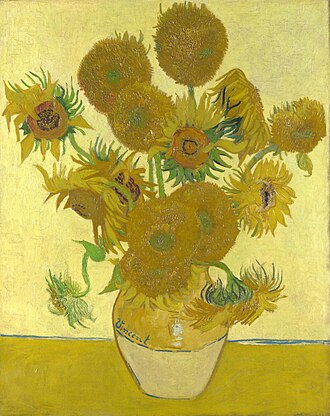 Les Tournesols - Vincent van Gogh (1888)
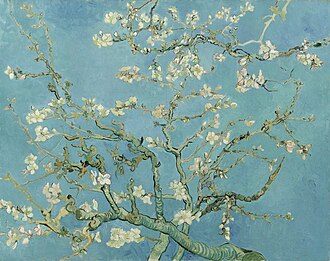 Amandier en fleurs - Vincent van Gogh (1890)
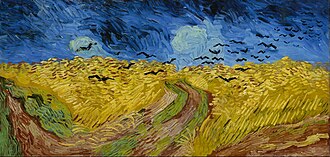 Champ de blé aux corbeaux - Vincent van Gogh (1890)
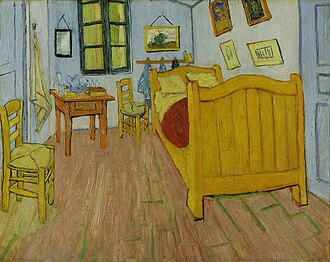 La Chambre à coucher - Vincent van Gogh (1888)
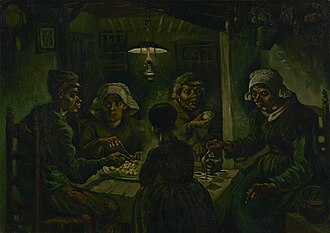 Les Mangeurs de pommes de terre - Vincent van Gogh (1885)
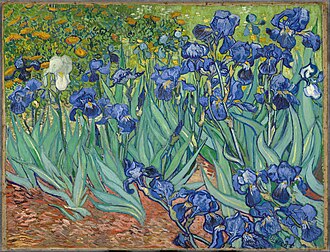 Iris - Vincent van Gogh (1889)
Œuvres d'artistes liés
 D'où venons-nous ? Que sommes-nous ? Où allons-nous ? - Paul Gauguin (1897-1898)
%201889.jpg) Le Christ jaune - Paul Gauguin (1889)
Le Christ jaune - Paul Gauguin (1889) Le Déjeuner sur l'herbe - Édouard Manet (1863)
 Olympia - Édouard Manet (1863)