La Vierge à la grenade
Sandro Botticelli · 1487
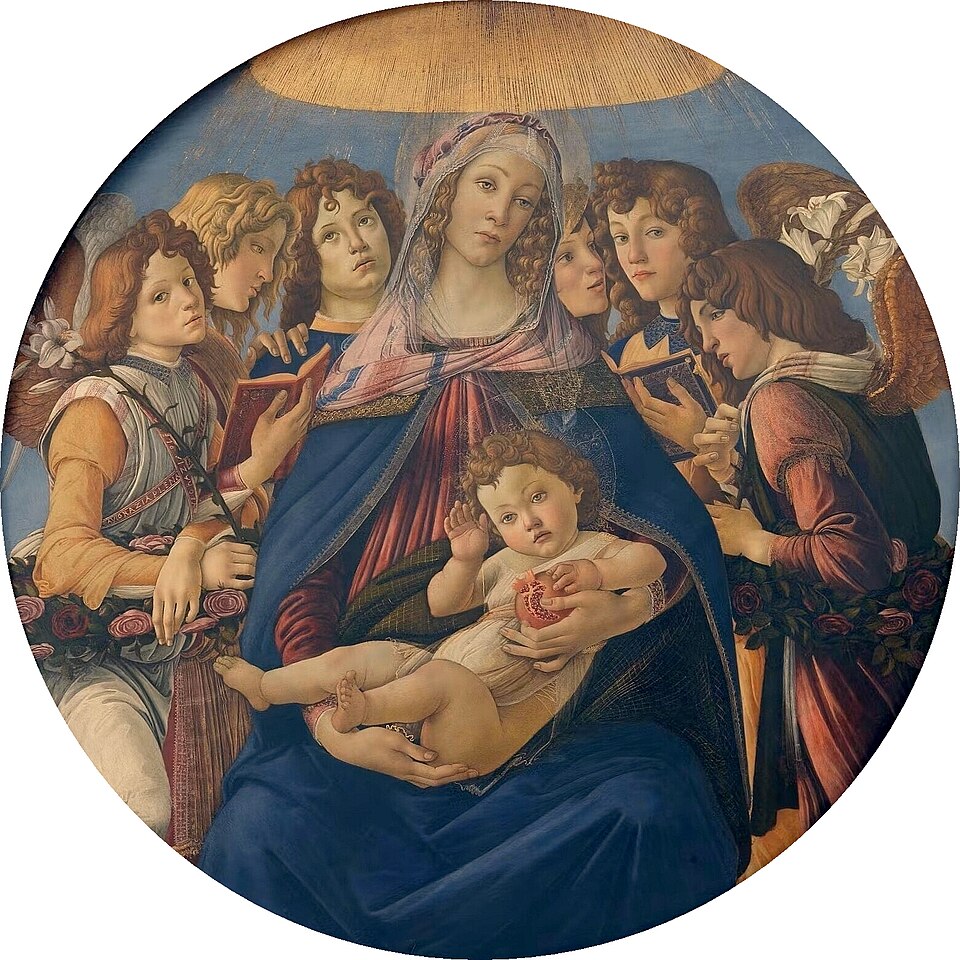
A sad young mother and her child rest their hands together on an open pomegranate, its red seeds bright among a circle of angels. Botticelli's round panel holds a fruit that some doctors now read as a human heart.
The story behind the painting
The Madonna of the Pomegranate is a tempera on panel tondo, a round painting about 143.5 cm across, made around 1487 by Sandro Botticelli. By then he was an established master in Florence. He had trained under Fra Filippo Lippi, whose clear lines and female figures shaped his style. The painting may have been commissioned by the Massai di Camera, an administrative body of the Florentine Republic, for their audience hall. In the seventeenth century it entered the collection of Cardinal Leopoldo de' Medici, and it has been in the Uffizi since 1780.
What to look for
The round format draws the eye to the centre. Mary holds the Child gently, and both have a hand on the pomegranate. Three angels stand on each side in perfect symmetry, worshipping with lilies and garlands of roses. Vertical lines lead toward the heavenly light around mother and child. Both faces are sad. Botticelli used tempera grassa, egg yolk mixed with oil, which made the paint more transparent. Mary's skin is pale and porcelain-like with faint pink on cheek, nose and mouth, built from thin layers of white, ochre, cinnabar and red lake. The Child is warmer, with cinnabar glazes, while the angels are darker, so the centre glows.
Meaning and intent
The sad expressions remind the viewer of the suffering the Child will endure. The pomegranate stands for the fullness of that suffering and the resurrection: in Christian thought it marks the passage from life through death to new life, and its red seeds recall the blood of Christ. A more recent reading, reported by the source, finds an accurate heart in the fruit. The peeled part shows unequal chambers like a heart's, the membrane divides the seeds into five spaces, and the split crown resembles the great vessels. The fruit is held over the left side of the chest. The source also sees in it the virtues of Mary as mother.
Legacy
The tondo was copied many times, since copying was part of artistic training in the Renaissance. One surprise came from England. After years of removing yellow varnish from what was thought to be an inferior copy, Rachel Turnbull, a senior collections conservator at English Heritage, found that it was in fact a work from Botticelli's own Florence studio. Her team removed later paint added to make it look more up to date, and tests of the underlying paint pointed to the Renaissance. A different painting by Fra Angelico, often given the same title, is in the Prado, so the name alone can mislead.
Le saviez-vous ?
- Tondo in tempera on panel, about 1487, in the Uffizi since 1780.
- Three angels on each side, holding lilies and roses.
- One reading sees an accurate human heart in the pomegranate.
- An English Heritage copy proved to come from Botticelli's studio.
À propos de l'artiste
Sandro Botticelli (1445-1510)
art religieux · femme · Marie · Enfant Jésus · garçon · ange · mère · galerie des Offices
Autres œuvres de Sandro Botticelli
 La Naissance de Vénus - Sandro Botticelli (c. 1485)
 Le Printemps - Sandro Botticelli (1480s)
 Vénus et Mars - Sandro Botticelli (1485)
 L'Adoration des mages - Sandro Botticelli (1470s)
 La Madone du Magnificat - Sandro Botticelli (1481)
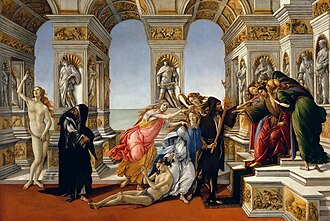 La Calomnie d'Apelle - Sandro Botticelli (1490s)
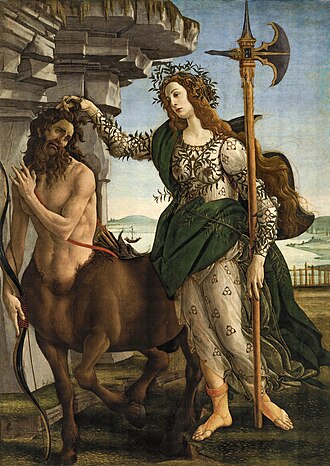 Pallas et le Centaure - Sandro Botticelli (1482)
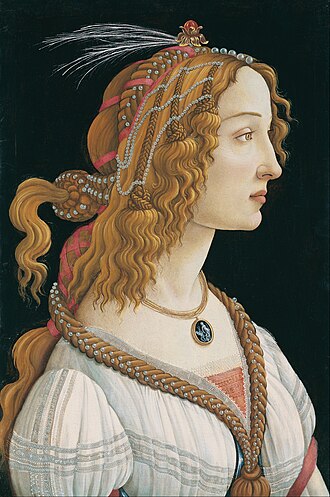 Portrait ideale d'une jeune femme - Sandro Botticelli (1480)
Œuvres d'artistes liés
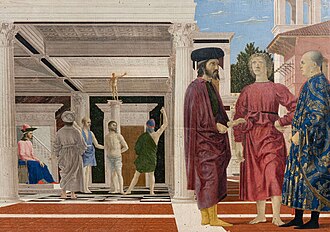 La Flagellation du Christ - Piero della Francesca (1450s)
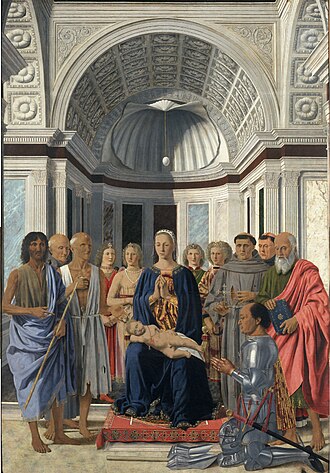 La Conversation sacrée - Piero della Francesca (1472)
 La Joconde - Leonardo da Vinci (1503-1519)
 La Dame à l'hermine - Leonardo da Vinci (1490)
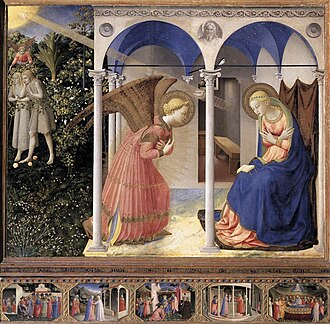 L'Annonciation - Fra Angelico (1425)
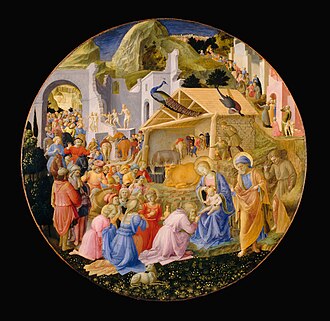 Tondo Cook - Fra Angelico (1430)
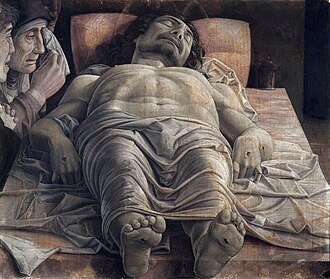 Lamentation sur le Christ mort - Andrea Mantegna (1483)
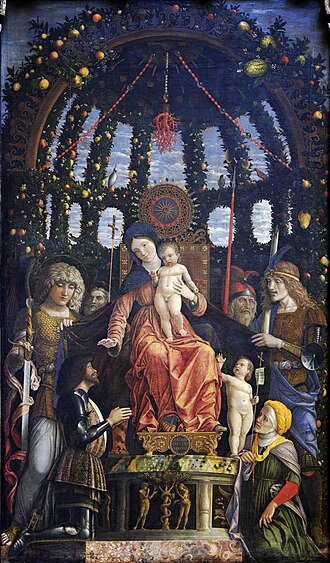 La Vierge de la Victoire - Andrea Mantegna