Lucrèce
Rembrandt van Rijn · 1666
.jpg)
Lucretia stands in a golden dress, a dagger in one hand and a bed cord in the other, blood already seeping through her white shift. In one of his last history paintings, Rembrandt shows not a heroine's pose but the full weight of a woman's anguish.
The story behind the painting
Rembrandt painted Lucretia in 1666, a few years before his death, in oil on canvas, about 110.2 by 92.3 cm. The story comes from the Roman historian Livy. Lucretia, a noblewoman married to Lucius, was raped by Sextus, son of an Etruscan king, who threatened to kill her and frame her in a false affair if she resisted. The next day she sent for her father and her husband, told them what had happened, and stabbed herself. For the Romans she became a heroine of virtue. The subject was popular in the Baroque period, and Rembrandt was one of many Dutch artists who carried it through Northern Europe.
What to look for
Lucretia wears an ornate gold dress and pearl earrings, signs of her wealth. The dress is in disarray, showing her undergarment, which is stained with blood from the wound to her heart. In her right hand she holds the dagger; with her left she grips what appears to be a bed tassel. Rembrandt does not paint idealised beauty. Her skin is pale and her small lips speak of grief. Notice how she is lit as if by a spotlight against a dark background, a tenebrism that comes from Caravaggio's influence and pulls her toward the viewer, so that we meet her pain face to face.
Meaning and intent
Svetlana Alpers has linked the painting to Rembrandt's companion Hendrickje Stoffels. In 1663, when he painted her as Bathsheba, she had been censured by the Dutch Reformed Church for living with him unmarried after the birth of their daughter Cornelia. Rembrandt never married her, because a clause in his first wife Saskia's will threatened his income. Alpers suggests the painting may carry his guilt and the strain of his domestic life, and that he used Hendrickje's experience to explore the full humanity of a suffering woman. Sir Lawrence Gowing suggested another reading: that the figure is not Lucretia but Arria, a Roman heroine who stabbed herself to give her husband courage.
Legacy
Rembrandt had painted Lucretia two years earlier, in 1664, in a work now in the National Gallery of Art in Washington, showing her before she stabs herself. In 2020 the art historian Jeremy Caniglia used X-rays, palette comparisons and overlays to argue that Rembrandt built this Lucretia as a feminised echo of Caravaggio's David, with a similarly tilted head, a figure ending below the waist, and a bed tassel in place of Goliath's head. After passing through collections in France, Poland, England and the United States, the painting was given to the Minneapolis Institute of Art, where it has been since 1934.
Le saviez-vous ?
- Painted in 1666, oil on canvas, about 110.2 x 92.3 cm.
- Shows Lucretia after the fatal wound, unlike the 1664 version.
- Lawrence Gowing suggested the figure may be Arria, not Lucretia.
- In the Minneapolis Institute of Art since 1934.
À propos de l'artiste
Rembrandt van Rijn (1606-1669)
femme · âge d'or de la peinture néerlandaise · peinture d'histoire · Lucrèce
Autres œuvres de Rembrandt van Rijn
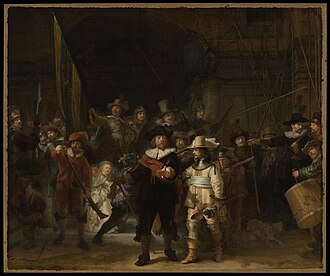 La Ronde de nuit - Rembrandt van Rijn (1642)
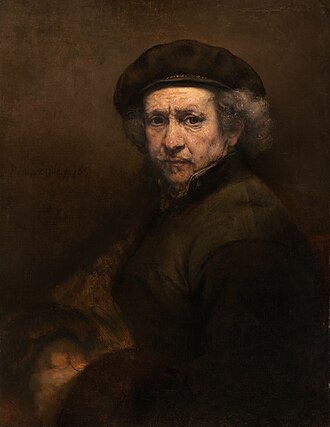 Autoportrait - Rembrandt van Rijn (1659)
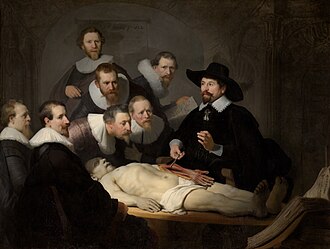 La Leçon d'anatomie du docteur Tulp - Rembrandt van Rijn (1632)
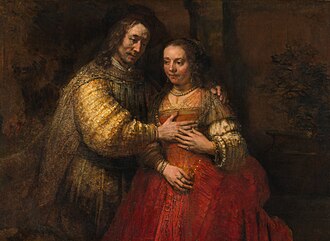 La Fiancée juive - Rembrandt van Rijn (1660s)
 La Tempête sur la mer de Galilée - Rembrandt van Rijn (1633)
 Le Retour du fils prodigue - Rembrandt van Rijn (1668)
 Danaé - Rembrandt van Rijn (1636)
 Le Festin de Balthazar - Rembrandt van Rijn (1636)
Œuvres d'artistes liés
 La Jeune Fille à la perle - Johannes Vermeer (1665)
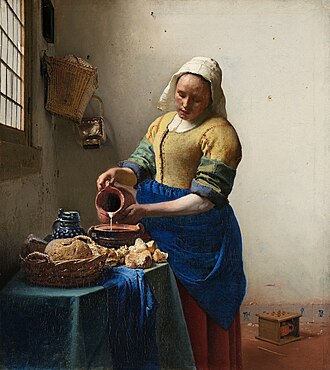 La Laitière - Johannes Vermeer (c. 1658)
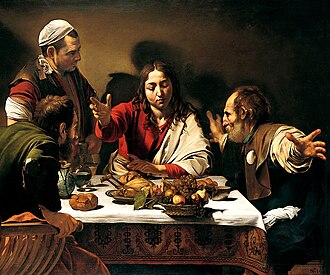 Le Souper à Emmaüs - Caravaggio (1601)
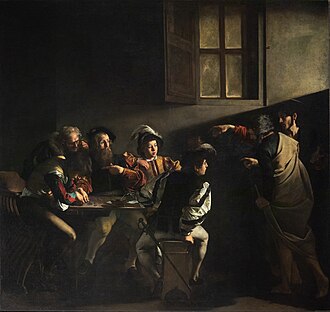 La Vocation de saint Matthieu - Caravaggio (1609)
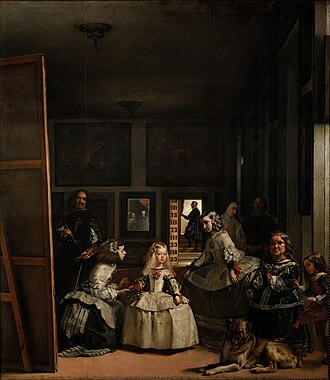 Les Ménines - Diego Velázquez (1656)
 La Reddition de Bréda - Diego Velázquez (1635)