Le Suicide de Lucrèce
Rembrandt van Rijn · 1664
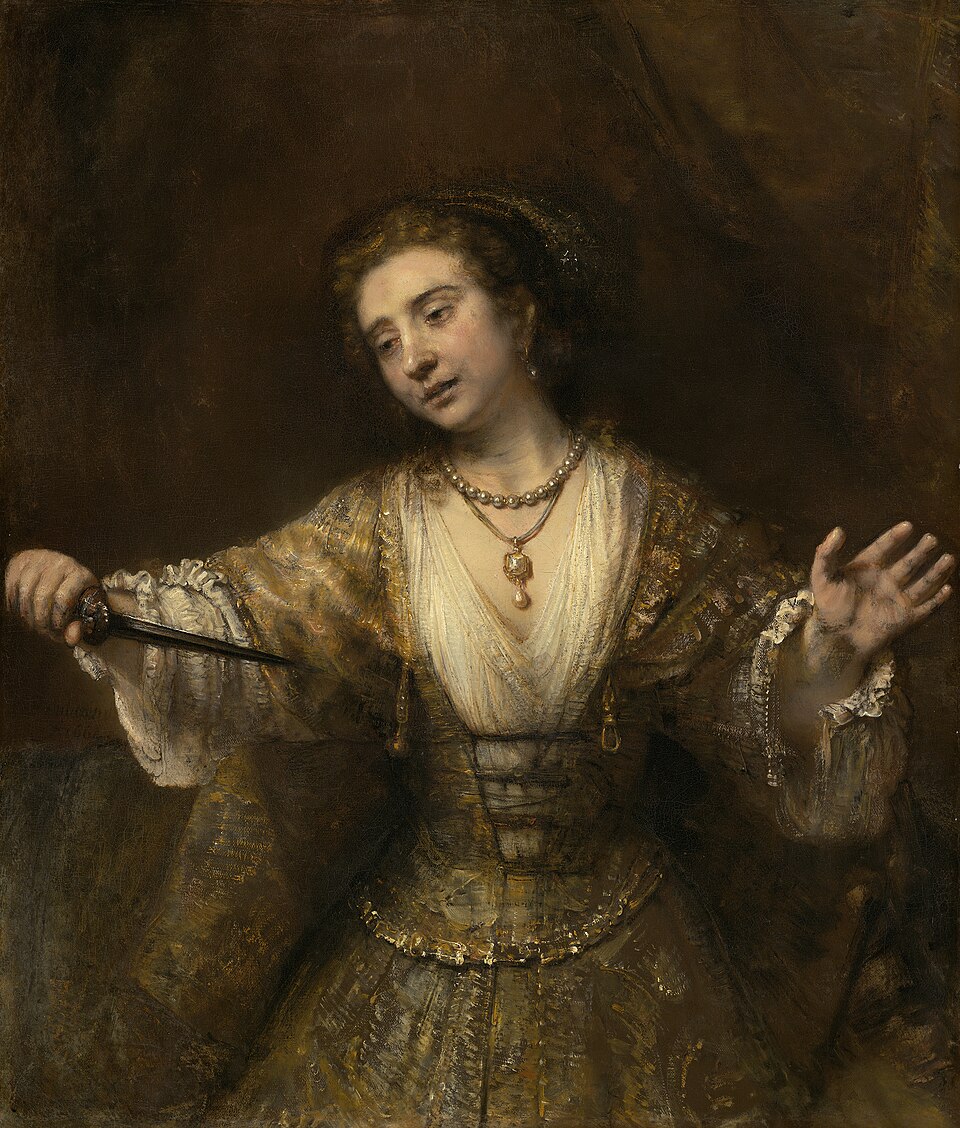
A woman in greenish gold turns a dagger toward her own breast, lips parted, her other hand lifted as if in a last appeal. Signed Rembrandt and dated 1664, this Lucretia now carries a question mark: a leading expert believes another hand painted it.
The story behind the painting
Lucretia is a history painting of the Roman noblewoman Lucretia, who took her own life after being raped, in a work historically attributed to Rembrandt and signed on the left Rembrandt f. 1664. In 2015 Ernst van de Wetering of the Rembrandt Research Project said that the formal qualities and execution of the painting, in his view, ruled out that it was by Rembrandt himself, and that it recalls his pupil Aert de Gelder. The painting was left out of the project's 2015 Rembrandt corpus, while the 1666 Lucretia in Minneapolis was included. Wikidata still records Rembrandt as the painter, so the sources disagree on its authorship.
What to look for
Hofstede de Groot described the picture in 1915: Lucretia is seen full face, lips parted, her head inclined slightly to the left, the direction of her gaze. With her right hand she points a dagger at her breast, and her left hand is raised and stretched out. She wears a rich greenish gold dress with wide sleeves and a laced bodice, a pearl necklace, a pendant on a string and a pearl in her ear. The figure is life-size and shown more than half-length, on a canvas of about 120 by 101 cm. Earlier, the cataloguer John Smith praised its colour, effect and dexterous execution.
Meaning and intent
The painting follows the familiar tradition of showing Lucretia just before the fatal blow, the dagger raised, the decision made but not yet carried out. Smith saw in her raised face the firm resolve of injured honour. Seen beside the 1666 Lucretia, which shows the moment after she has stabbed herself, the two works trace a story in time: before and after. Whether both come from Rembrandt's own brush or the earlier one from a gifted pupil such as Aert de Gelder, the image asks the viewer to stand with a woman at the edge of an irreversible choice.
Legacy
The painting has a long public history. It was in the Lapeyrière collection in Paris in 1825, passed through London sales, and belonged to H. A. J. Munro of Novar and then to Prince Paul Demidoff at San Donato near Florence. It was exhibited at the British Institution in London in 1832, at the Hudson-Fulton Celebration at the Metropolitan Museum in New York in 1909, and in Amsterdam in 1913, and was etched by W. Koepping. It later came to the Andrew W. Mellon collection and is now in the National Gallery of Art in Washington, where it remains a key work in the debate over late Rembrandt.
Le saviez-vous ?
- Signed and dated Rembrandt f. 1664.
- About 120 x 101 cm, life-size.
- Ernst van de Wetering (2015) doubts Rembrandt painted it, pointing to Aert de Gelder.
- Now in the National Gallery of Art, Washington.
À propos de l'artiste
Rembrandt van Rijn (1606-1669)
femme · âge d'or de la peinture néerlandaise · National Gallery of Art · peinture d'histoire · collection Andrew W. Mellon · Lucrèce
Autres œuvres de Rembrandt van Rijn
 La Ronde de nuit - Rembrandt van Rijn (1642)
 Autoportrait - Rembrandt van Rijn (1659)
 La Leçon d'anatomie du docteur Tulp - Rembrandt van Rijn (1632)
 La Fiancée juive - Rembrandt van Rijn (1660s)
 La Tempête sur la mer de Galilée - Rembrandt van Rijn (1633)
 Le Retour du fils prodigue - Rembrandt van Rijn (1668)
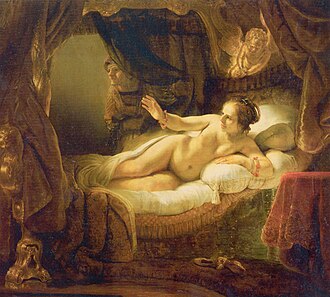 Danaé - Rembrandt van Rijn (1636)
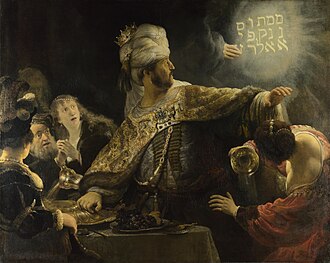 Le Festin de Balthazar - Rembrandt van Rijn (1636)
Œuvres d'artistes liés
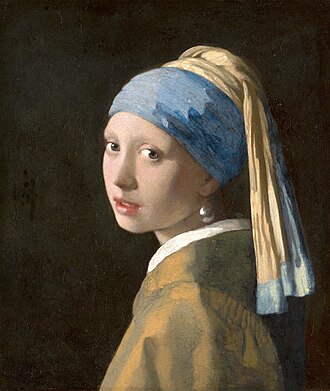 La Jeune Fille à la perle - Johannes Vermeer (1665)
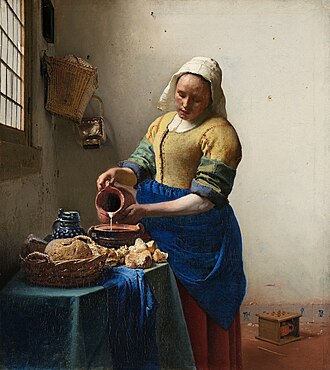 La Laitière - Johannes Vermeer (c. 1658)
 Le Souper à Emmaüs - Caravaggio (1601)
 La Vocation de saint Matthieu - Caravaggio (1609)
 Les Ménines - Diego Velázquez (1656)
 La Reddition de Bréda - Diego Velázquez (1635)