La Déposition de Croix
Fra Angelico · 1436
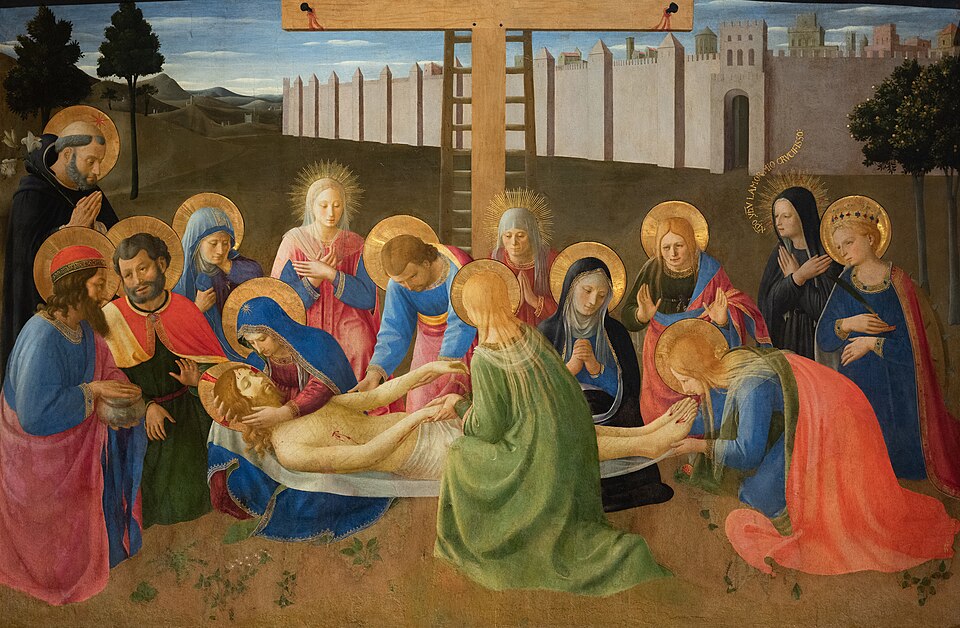
The body of Christ lies stretched across the knees of the mourners, while behind them Jerusalem rises with the towers of Florence. Fra Angelico painted it for a brotherhood that comforted men on their way to execution.
The story behind the painting
The panel is named after its patron, the Compagnia di Santa Maria della Croce al Tempio, a Florentine confraternity. Most historians say it was commissioned in April 1436 and finished that December, citing records of the artist's payment. Others point to letters hidden on the edge of the Virgin's cloak, MIIIXXXX, read as 1440, and argue that the work was left half finished and completed only after Fra Angelico returned from his stay in Cortona in 1439 and 1440. Wikidata follows the earlier date, 1436.
What to look for
This tempera on panel, about 105 by 164 cm, spreads the lament across a wide, low format. Among the mourners are Saint Dominic and Villana de' Botti, a pious woman linked to the Dominican order whose relics were tied to the confraternity. The landscape on the left is securely by Fra Angelico's own hand: Jerusalem appears in the guise of Florence, including Lorenzo Ghiberti's Ark of San Zenobi. Some figures are of lower quality and not by the master. Look for the hidden date along the Virgin's cloak.
Meaning and intent
The setting gave the image a sharp purpose. The confraternity received prisoners on their way to the scaffold, and after execution buried their bodies in the cemetery beside their small church. The painting hung on the high altar behind the crucifix, so the condemned and their companions saw Christ's own death and mourning. Villana de' Botti, who according to her biography longed to share Christ's sufferings and saw him in visions as her heavenly spouse, offered a model of compassion within the scene.
Legacy
The confraternity's Chiesetta al Tempio was later demolished during the siege of Florence, and several works were lost with it, including a painting by Pisanello and outside frescoes by Spinello Aretino. The Lamentation was moved to the Galleria delle Belle Arti before the demolition, and later to the Museo nazionale di San Marco in Florence, where it is today. It did not escape unharmed: in the Florence flood of 1966 a large area at the base of the painting was damaged beyond repair.
Le saviez-vous ?
- Commissioned in 1436, or completed in 1440 if the hidden date is right.
- Painted for the Compagnia di Santa Maria della Croce al Tempio.
- Jerusalem is painted as Florence in the landscape.
- Its lower part was badly damaged in the 1966 flood.
À propos de l'artiste
Fra Angelico (1400-1455)
art religieux · homme · Jésus-Christ · Renaissance italienne · musée national San Marco
Autres œuvres de Fra Angelico
 L'Annonciation - Fra Angelico (1425)
 Tondo Cook - Fra Angelico (1430)
 Pala di San Marco - Fra Angelico
 La Descente de Croix - Fra Angelico (1432)
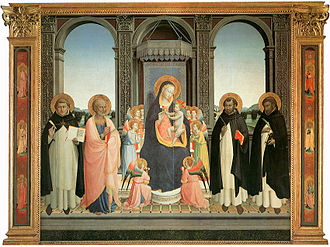 Pala di Fiesole - Fra Angelico (1422)
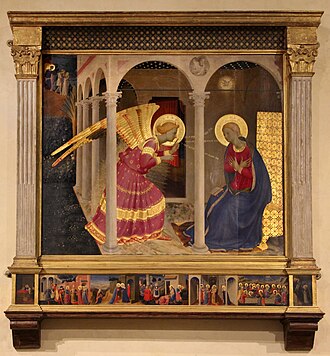 L'Annonciation de Cortone - Fra Angelico (1430s)
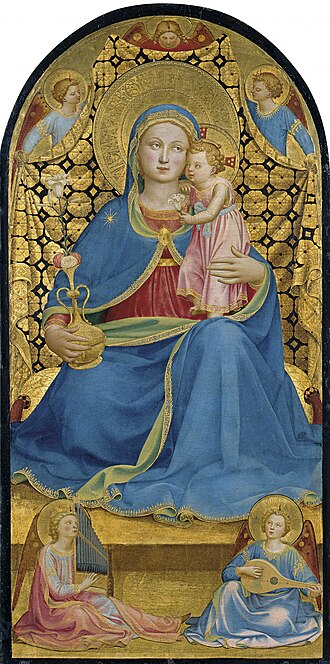 Madonna dell'Umiltà - Fra Angelico (1433)
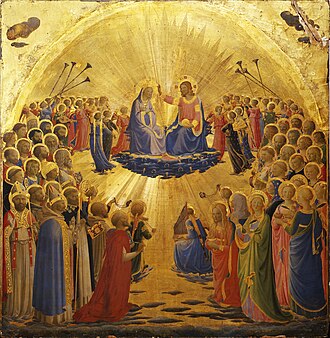 Le Couronnement de la Vierge - Fra Angelico (1430s)
Œuvres d'artistes liés
 La Joconde - Leonardo da Vinci (1503-1519)
 La Dame à l'hermine - Leonardo da Vinci (1490)
 Tondo Doni - Michelangelo (1500s)
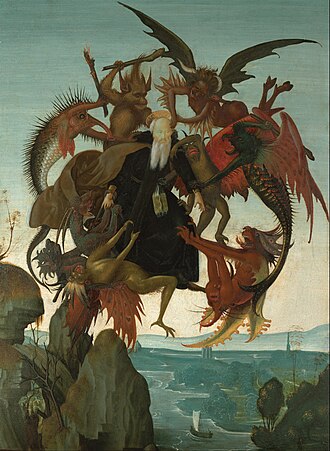 Le Tourment de saint Antoine - Michelangelo (1487)
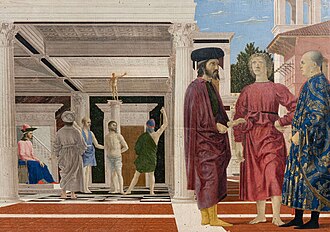 La Flagellation du Christ - Piero della Francesca (1450s)
 La Conversation sacrée - Piero della Francesca (1472)