L'Annonciation de Cortone
Fra Angelico · 1430s
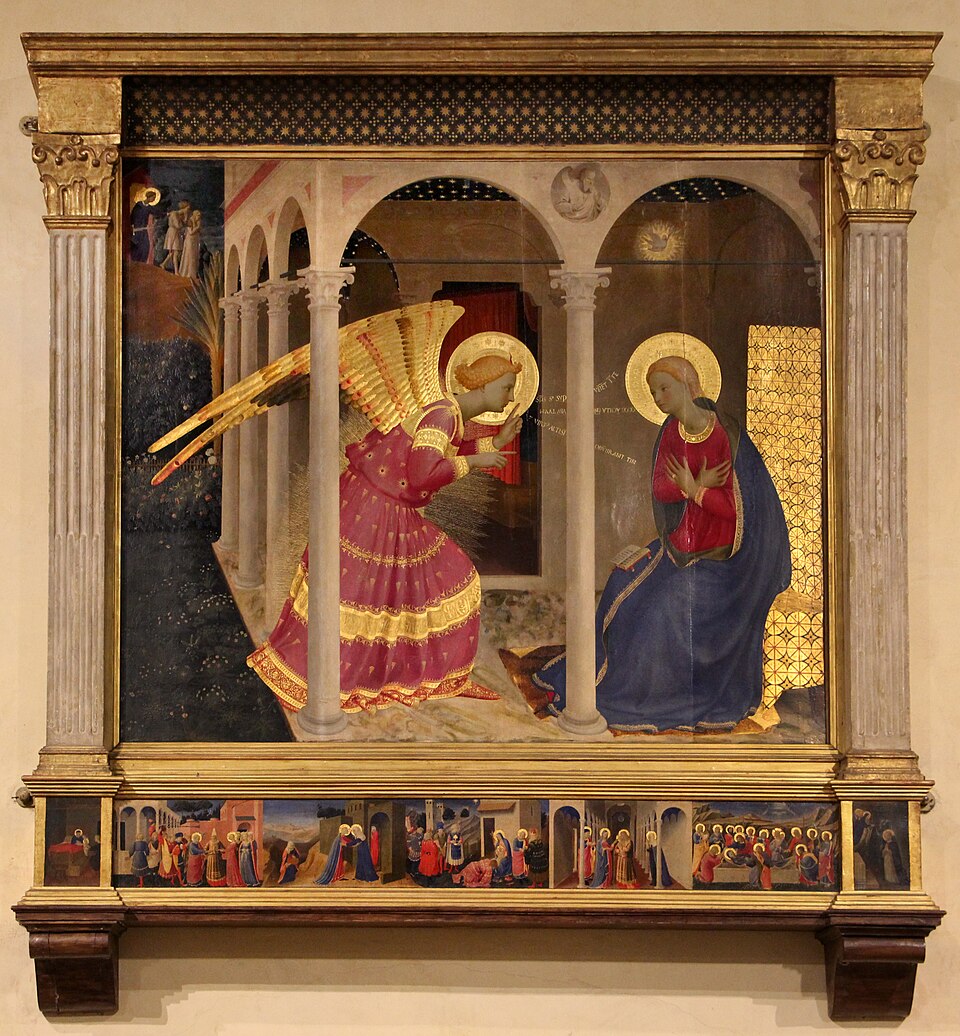
Golden words float between the angel and Mary, and her reply is painted upside down. In Fra Angelico's Cortona Annunciation, even the lettering knows who is meant to read it.
The story behind the painting
The Annunciation of Cortona is a panel altarpiece painted by Fra Angelico in tempera, dated in the source to 1433-1434; Wikidata gives the 1430s. It once stood in the Church of the Gesù in Cortona and is now in the Museo Diocesano there. It is one of three Annunciations Fra Angelico painted on panel, with those now in the Prado and in San Giovanni Valdarno, and he returned to the theme in frescoes at the convent of San Marco in Florence. The large panel, 175 by 180 centimetres, was the main part of a polyptych with predella scenes from the life of the Virgin: the Marriage of the Virgin, the Adoration of the Magi, the Presentation in the Temple and the Dormition. Those predella panels are attributed to Zanobi Strozzi, Fra Angelico's assistant.
What to look for
Start with the lines of golden writing between the Archangel on the left and the Virgin on the right. The angel's words run in two lines, left to right. Mary's reply sits between them and is written upside down, so you would need to turn a photograph over to read her words comfortably: Ecce Ancilla Domini, Behold the Handmaid of the Lord. Then look to the far left. On a hill beyond a fence, outside Mary's walled garden, Adam and Eve are being expelled from Paradise. Unlike Fra Angelico's other Annunciations, the vanishing point here sits toward the left of the panel, close to that small scene of the first sin.
Meaning and intent
The theme follows Christian tradition as told in the Gospels and in detail in The Golden Legend of Jacobus de Voragine, a reference book for Renaissance painters. Its familiar symbols appear: the walled garden, the column, the Holy Spirit and the memory of Adam and Eve. Placing the expulsion outside the garden of Mary keeps it consistent with that tradition, setting the old fall beside the new beginning. The upside-down words carry a quiet message: Mary's answer is not addressed to us, the viewers, but to God, who from above would be better placed to read it.
Legacy
According to the source, this textual device seems to have been entirely new in Italy, though it had been used somewhat earlier in Flanders, notably by Jan and Hubert van Eyck on the outer panels of the Ghent Altarpiece and soon after in the so-called Washington Annunciation. Fra Angelico's adoption of it in Cortona makes the panel a small meeting point between Italian and Flemish painting. Today it remains in Cortona, in the town's Diocesan Museum, where visitors can stand before it and try, as so many have, to read Mary's inverted reply.
Le saviez-vous ?
- Painted 1433-1434 according to Wikipedia; Wikidata gives the 1430s.
- Tempera on panel, 175 x 180 cm.
- Predella panels attributed to Zanobi Strozzi.
- Museo Diocesano, Cortona.
À propos de l'artiste
Fra Angelico (1400-1455)
art religieux · femme · Marie · Première Renaissance · ange · Annonciation
Autres œuvres de Fra Angelico
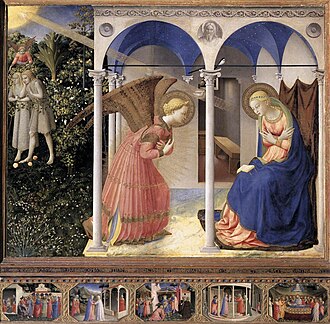 L'Annonciation - Fra Angelico (1425)
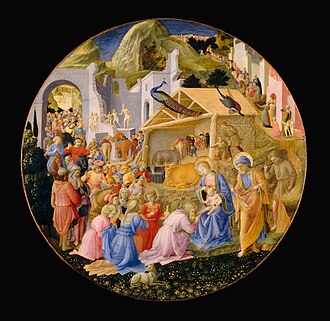 Tondo Cook - Fra Angelico (1430)
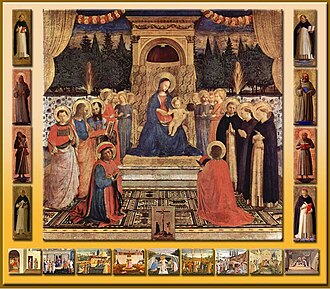 Pala di San Marco - Fra Angelico
%2C%20ante%201432%2C%2001.jpg) La Descente de Croix - Fra Angelico (1432)
La Descente de Croix - Fra Angelico (1432)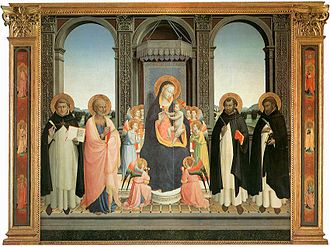 Pala di Fiesole - Fra Angelico (1422)
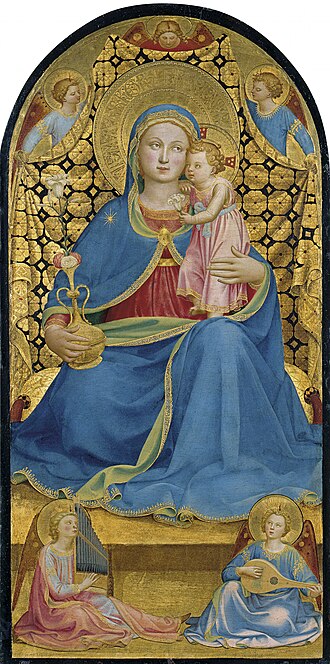 Madonna dell'Umiltà - Fra Angelico (1433)
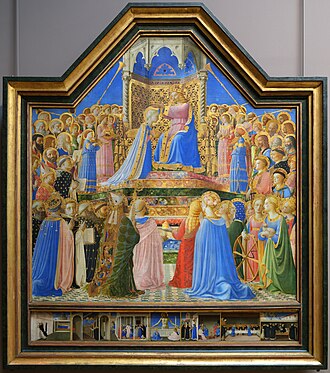 Le Couronnement de la Vierge - Fra Angelico
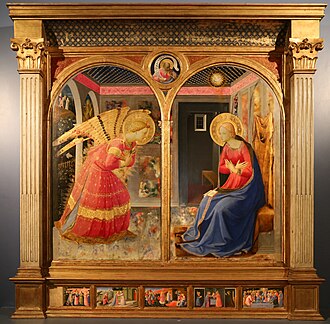 L'Annonciation de San Giovanni Valdarno - Fra Angelico (1430)
Œuvres d'artistes liés
 La Joconde - Leonardo da Vinci (1503-1519)
 La Dame à l'hermine - Leonardo da Vinci (1490)
 Tondo Doni - Michelangelo (1500s)
 Le Tourment de saint Antoine - Michelangelo (1487)