L'Orchestre de l'Opéra
Edgar Degas · 1868
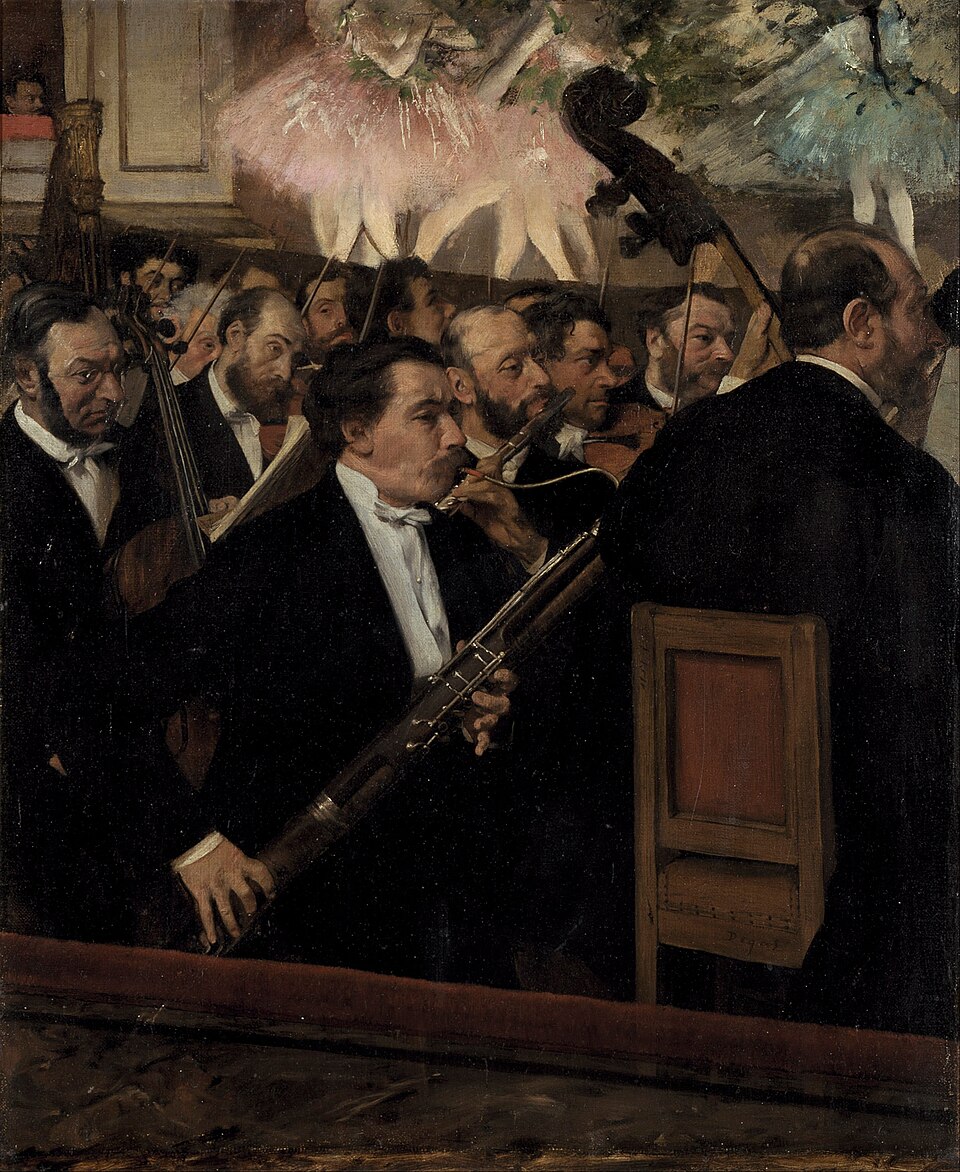
Fourteen musicians crowd the orchestra pit, a bassoonist at their centre, while above them only the legs and tutus of dancers flash in the light. This is the first picture in which Degas painted the ballet.
The story behind the painting
The musicians sit in the pit of the Salle Le Peletier, home of the Paris Opera from 1821 until it burned down in 1873. Most of them are portraits of Degas's friends. Foremost is the bassoonist and composer Désiré Dihau, who commissioned the painting, shown at work on his instrument, along with the cellist Louis-Marie Pilet. English Wikipedia dates it about 1870, while Wikidata gives 1868. The canvas was handed to Dihau with no chance for further retouching, and he exhibited it in Lille.
What to look for
The pit is seen as if by someone in the audience. Dihau is one of fourteen musicians packed close together, faces and instruments crowding the lower part of the picture. Above them, cut off by the top edge of the canvas, you see only the legs and tutus of the dancers on stage. Look at how the frame slices the scene, so that the bright stage and the dark pit meet in a single glance, as if your eyes had drifted from the music to the dance.
Meaning and intent
Degas blurred the line between portrait and genre scene: this is both a picture of real friends and a picture of a night at the opera. The art historian Charles Stuckey compared the viewpoint to that of a distracted ballet spectator. He argued that Degas's fascination with movement, including the movement of a viewer's eyes in a random glance, is what is properly Impressionist about the work. The cropped dancers are not decoration but part of that wandering look.
Legacy
When Dihau showed the painting in Lille, Degas's family, until then doubtful about the art of their Raphael, said it was thanks to him that Edgar had finally produced and completed a real painting. It is the first work in which ballet dancers appear in Degas's art. He would paint dancers again and again for the rest of his career, and it is for his ballet pictures that he is best known. The canvas, about 56 by 45 cm, is in the Musée d'Orsay.
Le saviez-vous ?
- Shows the pit of the Salle Le Peletier, Paris Opera.
- Commissioned by the bassoonist Désiré Dihau.
- Dated about 1870 (Wikidata: 1868).
- Degas's first painting with ballet dancers.
À propos de l'artiste
Edgar Degas (1834-1917)
portrait · scène de genre · musée d'Orsay
Autres œuvres de Edgar Degas
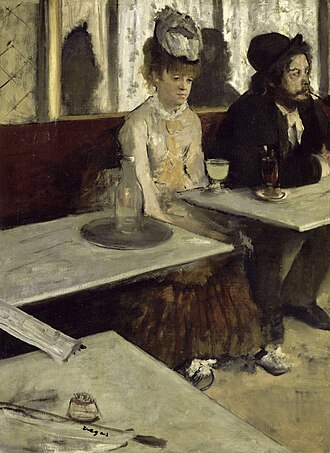 L'Absinthe - Edgar Degas (1875)
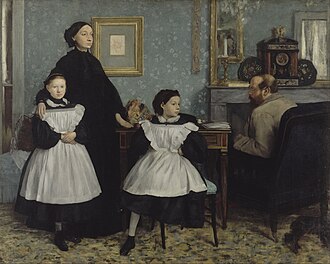 La Famille Bellelli - Edgar Degas (1858)
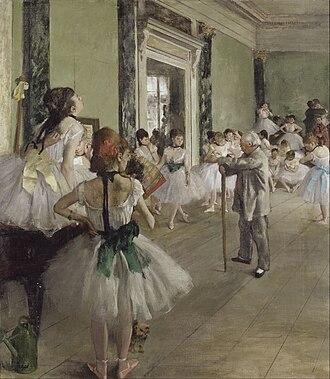 La Classe de danse - Edgar Degas (1871)
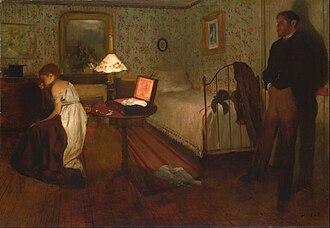 Intérieur - Edgar Degas (1868)
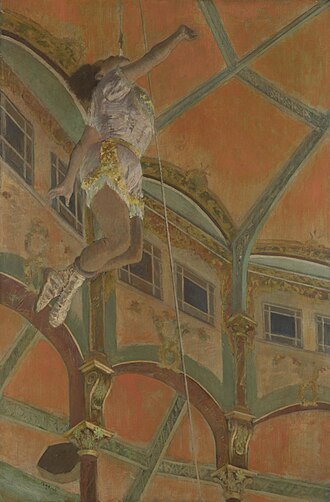 Mademoiselle La La au cirque Fernando - Edgar Degas (1879)
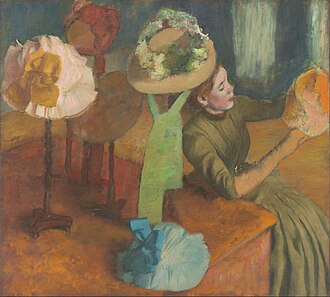 Chez la modiste - Edgar Degas
.jpg) Le Tub - Edgar Degas (1886)
Le Tub - Edgar Degas (1886)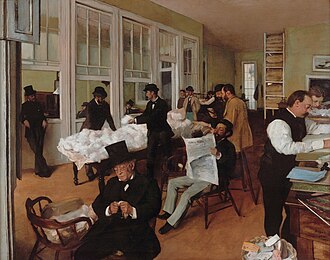 Le Bureau de coton à La Nouvelle-Orléans - Edgar Degas (1873)
Œuvres d'artistes liés
 Impression, soleil levant - Claude Monet (1872)
 Nymphéas - Claude Monet (1906)
 Le Déjeuner sur l'herbe - Édouard Manet (1863)
 Olympia - Édouard Manet (1863)
 Bal du moulin de la Galette - Pierre-Auguste Renoir (1876)
 Le Déjeuner des canotiers - Pierre-Auguste Renoir (1881)
 La Nuit étoilée - Vincent van Gogh (1889)
.jpg) Terrasse du café le soir - Vincent van Gogh (1888)
Terrasse du café le soir - Vincent van Gogh (1888) Le Dernier Voyage du Téméraire - J. M. W. Turner (1839)
 Pluie, Vapeur et Vitesse - J. M. W. Turner (1844)
 D'où venons-nous ? Que sommes-nous ? Où allons-nous ? - Paul Gauguin (1897-1898)
%201889.jpg) Le Christ jaune - Paul Gauguin (1889)
Le Christ jaune - Paul Gauguin (1889)