Le Bureau de coton à La Nouvelle-Orléans
Edgar Degas · 1873
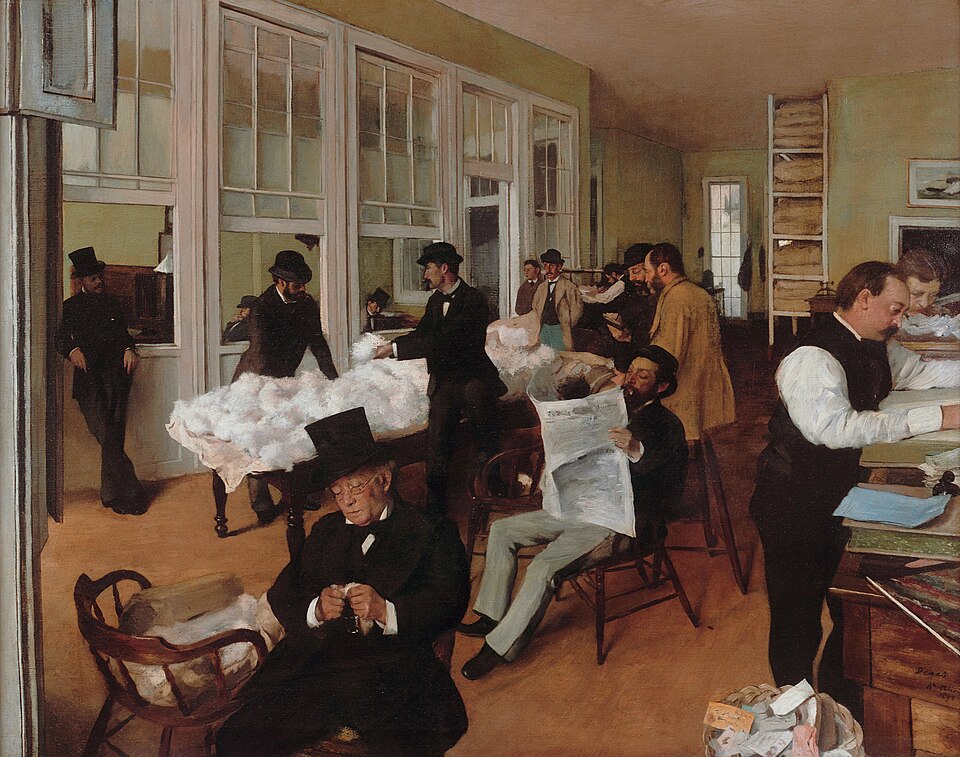
A room full of men in black suits, and in the middle a white sea of raw cotton. Degas painted his uncle's office in New Orleans during his only trip to America, and the picture holds both a family portrait and the hidden history of the cotton trade.
The story behind the painting
Degas's mother was born in New Orleans, and in the fall of 1872 his brother René persuaded him to make his first and only trip to the United States. He stayed in the Esplanade Avenue mansion of his uncle Michel Musson, painting family members, especially Estelle, but he was unhappy with those portraits. Each day he spent time in his brothers' office, reading newspapers and listening to talk of business. He wrote to James Tissot that in New Orleans one speaks of nothing but cotton. Before leaving around March 1873 he found his subject, and it is now known that he finished the picture in America.
What to look for
The scene is Musson, Prestidge, and Company on Carondelet Street. Michel Musson sits in the foreground testing cotton, his legs cut off by the lower frame. René Degas reads The Daily Picayune, Achille Degas leans against an open window at the far left, and William Bell stands by the long table, cotton in his hands, inviting a customer to try it. In the centre a table is covered with a sea of cotton, and a small tuft has fallen near Bell's foot. Brown paper samples fill the shelves, and a picture of a steamship hangs above a safe at top right. An empty chair holds more raw cotton.
Meaning and intent
The art historian Michelle Foa reads the painting as the life cycle of cotton: raw fibre on the table, finished cloth in the men's suits, the steamship carrying it across the Atlantic. The sloping floor and balletic poses also echo Degas's dance rehearsal pictures. But the source is clear about what lies outside the frame. New Orleans was the country's main cotton port and largest slave market, and members of the Musson and Degas families had owned slaves and backed the Confederacy; Musson, René Degas and Bell later led the White League. Marilyn Brown argues the painting erases the black labour behind the white product sold by anxious white men.
Legacy
Degas showed the painting at the 1876 Impressionist Exhibition in Paris. He hoped a textile manufacturer in Manchester would take it, but that plan failed, and in 1878 it went to the municipal museum in Pau, where it remains. He also painted a looser oil sketch of the same subject, Cotton Merchants in New Orleans, which he described as less complicated and more spontaneous. Degas was the only major French Impressionist to travel to the United States and paint American subjects, which makes this office of cotton buyers a singular moment in his work.
Le saviez-vous ?
- Painted in New Orleans in early 1873, during Degas's only trip to America.
- Shows his uncle Michel Musson and his brothers René and Achille.
- Exhibited at the 1876 Impressionist Exhibition in Paris.
- In the museum of Pau, France, since 1878.
À propos de l'artiste
Edgar Degas (1834-1917)
Autres œuvres de Edgar Degas
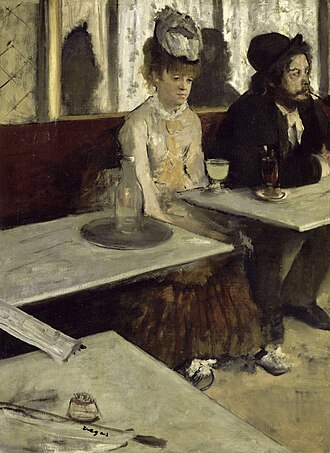 L'Absinthe - Edgar Degas (1875)
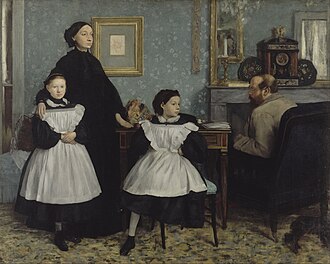 La Famille Bellelli - Edgar Degas (1858)
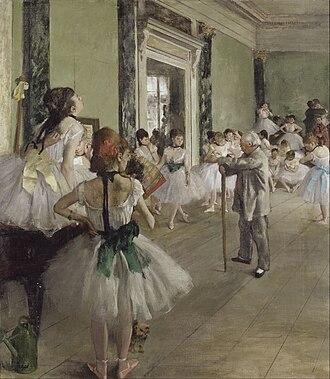 La Classe de danse - Edgar Degas (1871)
 Intérieur - Edgar Degas (1868)
 Mademoiselle La La au cirque Fernando - Edgar Degas (1879)
 Chez la modiste - Edgar Degas
.jpg) Le Tub - Edgar Degas (1886)
Le Tub - Edgar Degas (1886) Monsieur et Madame Édouard Manet - Edgar Degas (1868)
Œuvres d'artistes liés
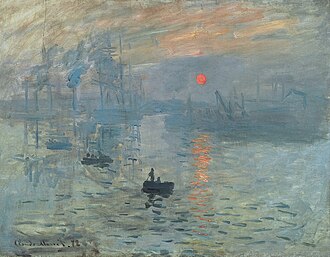 Impression, soleil levant - Claude Monet (1872)
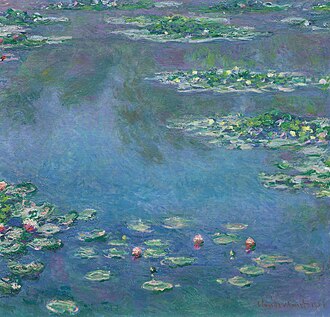 Nymphéas - Claude Monet (1906)
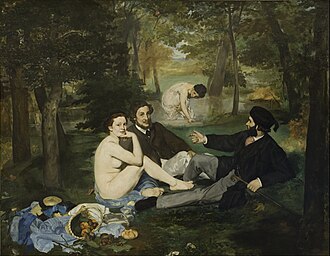 Le Déjeuner sur l'herbe - Édouard Manet (1863)
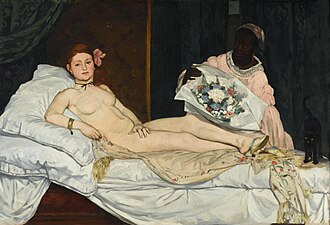 Olympia - Édouard Manet (1863)
 Bal du moulin de la Galette - Pierre-Auguste Renoir (1876)
 Le Déjeuner des canotiers - Pierre-Auguste Renoir (1881)
 La Nuit étoilée - Vincent van Gogh (1889)
.jpg) Terrasse du café le soir - Vincent van Gogh (1888)
Terrasse du café le soir - Vincent van Gogh (1888) Le Dernier Voyage du Téméraire - J. M. W. Turner (1839)
 Pluie, Vapeur et Vitesse - J. M. W. Turner (1844)
 D'où venons-nous ? Que sommes-nous ? Où allons-nous ? - Paul Gauguin (1897-1898)
%201889.jpg) Le Christ jaune - Paul Gauguin (1889)
Le Christ jaune - Paul Gauguin (1889)