L'Italienne
Vincent van Gogh · 1887
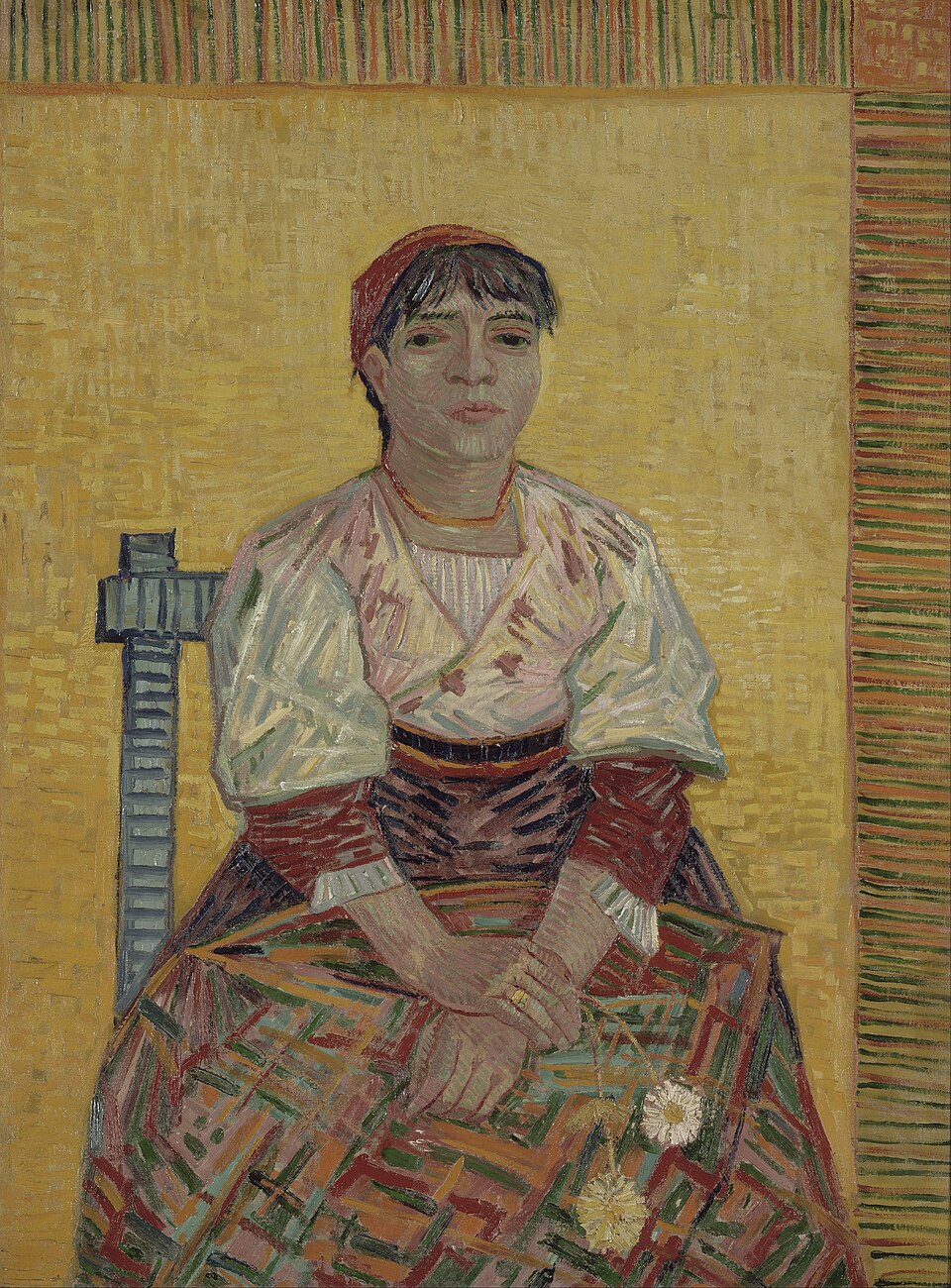
A woman in a red headscarf sits against a blaze of flat yellow, gazing straight at us. She was probably someone Van Gogh had loved only months before.
The story behind the painting
Van Gogh painted L'Italienne in Paris in 1887, during the two years he spent in the city after arriving in March 1886. There he shared his brother Theo's lodgings in Montmartre, studied at Fernand Cormon's studio, and painted more than 200 pictures, many of them portraits. The sitter is probably Agostina Segatori, a former model and the owner of the Café du Tambourin on the boulevard de Clichy. According to the French Wikipedia article, Van Gogh had a brief love affair with her a few months before painting this portrait. In the same Paris years he was collecting hundreds of Japanese ukiyo-e woodblock prints, an enthusiasm that would leave its mark on how he treated colour and space here.
What to look for
The woman is shown from the front, seated, in folk costume, with a red scarf over her head covering her black hair. Wikidata identifies the dress as Ciociaro costume, from Italy, and lists a flower among the picture's subjects. Behind her, look for a blue chair, of which only one corner is visible. Then let the background fill your eye: a uniform, flat yellow, recalling the pure, opaque colour of prints. Because there is almost no perspective, the sitter seems to press forward and gain importance. Finally, trace the right side and the top of the canvas, where Van Gogh painted a hatched border whose colours echo those of her skirt. The canvas measures 81 by 60 centimetres.
Meaning and intent
The flat yellow ground and the hatched border show Van Gogh borrowing from the world of prints, treating the portrait less as a window into a room than as a bold, decorative surface. Removing depth places all the weight on the woman herself, frank and frontal. The title, The Italian Woman, and the folk costume present her through her Italian identity. Knowing that the sitter was probably Agostina Segatori, with whom Van Gogh had been briefly involved, adds a personal dimension, though the sources do not tell us what feelings he meant to express. What remains certain is a striking meeting of a real person, folk dress and a new language of colour.
Legacy
L'Italienne belongs to the Musée d'Orsay in Paris, the city where it was painted. It stands as a document of Van Gogh's Paris years, when, after seeing the work of Monticelli, he took up a brighter palette and a bolder attack, and when his fascination with Japanese prints was reshaping his eye. He met artists such as Émile Bernard, Toulouse-Lautrec and Paul Gauguin in this period, connections that proved important to his development. A few months later, in February 1888, exhausted by Paris life, he left the city. This portrait captures that turning point, with a sitter from his own circle and a style moving decisively towards strong, flat colour.
Le saviez-vous ?
- Painted in Paris, 1887
- Sitter probably Agostina Segatori, owner of the Café du Tambourin
- 81 × 60 cm (Wikidata)
- Musée d'Orsay, Paris
Wikipedia (fr) · Wikipedia (Vincent van Gogh) · Wikidata
À propos de l'artiste
Vincent van Gogh (1853-1890)
femme · portrait · musée d'Orsay · position assise · fleur
Autres œuvres de Vincent van Gogh
 La Nuit étoilée - Vincent van Gogh (1889)
.jpg) Terrasse du café le soir - Vincent van Gogh (1888)
Terrasse du café le soir - Vincent van Gogh (1888) Les Tournesols - Vincent van Gogh (1888)
 Amandier en fleurs - Vincent van Gogh (1890)
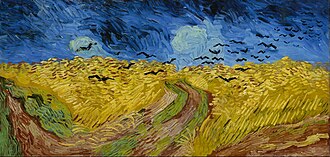 Champ de blé aux corbeaux - Vincent van Gogh (1890)
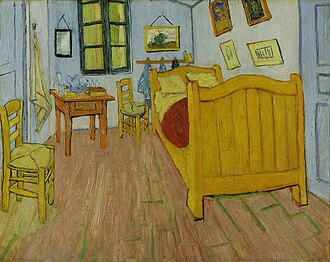 La Chambre à coucher - Vincent van Gogh (1888)
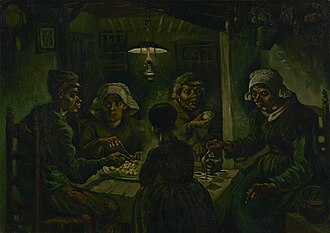 Les Mangeurs de pommes de terre - Vincent van Gogh (1885)
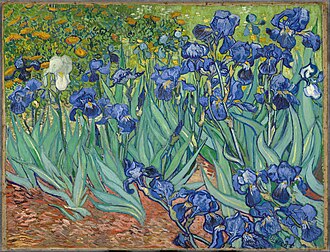 Iris - Vincent van Gogh (1889)
Œuvres d'artistes liés
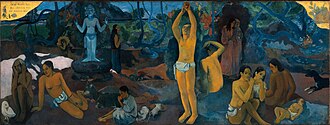 D'où venons-nous ? Que sommes-nous ? Où allons-nous ? - Paul Gauguin (1897-1898)
%201889.jpg) Le Christ jaune - Paul Gauguin (1889)
Le Christ jaune - Paul Gauguin (1889)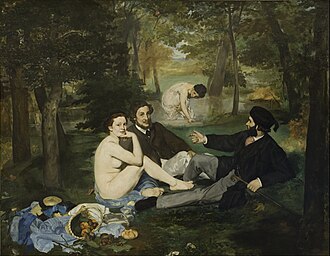 Le Déjeuner sur l'herbe - Édouard Manet (1863)
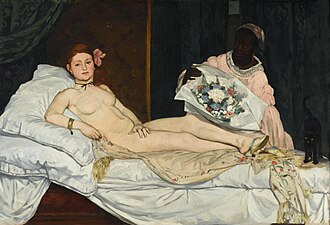 Olympia - Édouard Manet (1863)