Intérieur d'un restaurant à Arles
Vincent van Gogh · 1888
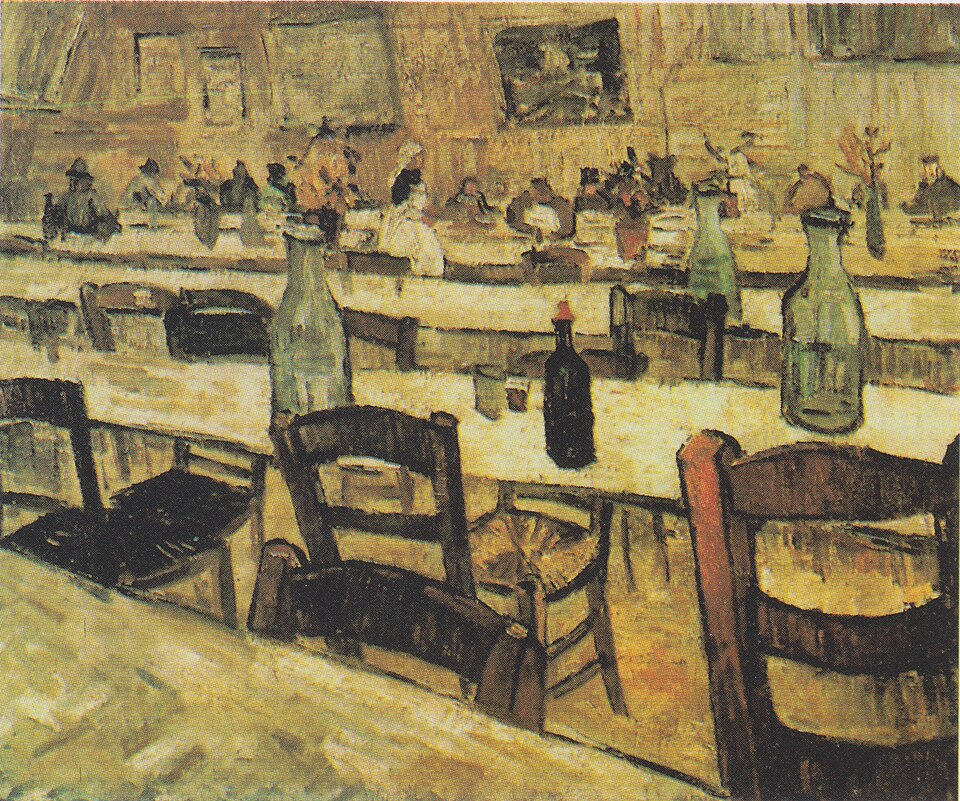
Diners sit along a long table in Arles, wine carafes catch the light, empty chairs wait. Van Gogh never mentioned this painting in a single surviving letter, yet some see in it the first step towards a Last Supper.
The story behind the painting
Van Gogh painted this interior in Arles in the summer of 1888, in oil on an industrially primed canvas of the standard size 25. Dating it has been difficult because he never mentioned it in any surviving letter. Pierre Leprohon placed it in late August 1888, partly because of the blossoming sunflowers, and scholars such as Jan Hulsker have generally accepted that date. It is one of two studies Van Gogh made of the restaurant, the other being Interior of the Restaurant Carrel in Arles. The scene was long assumed to be inside the Hotel Carrel, but de la Faille remarked that it was probably the restaurant next to the Yellow House.
What to look for
Start at the centre, where a serving figure stands. Most of the diners are stretched along the far side of the table, and three wine carafes stand out in the foreground. Around the room, look for the empty chairs, the same kind of chair that is immediately recognisable from Vincent's Chair and from his Bedroom in Arles. Note too the flowers in the room, since the sunflowers are part of how the painting was dated. It is a modest, everyday scene of people eating in Arles, painted on a canvas Van Gogh did not even bother to describe to anyone in writing.
Meaning and intent
Whatever the café, this is certainly a picture of diners in Arles. But in an article titled Van Gogh's Last Supper, Baxter argues that it is Van Gogh's first attempt at a Symbolist or sacred realist Last Supper. He points to similarities with Renaissance Last Suppers: the serving figure in the middle, the diners lined up along the far side, the three carafes up front. Baxter himself admits this is not much, but calls it a start. The reading is one scholar's argument, not a settled fact, and the painting can be enjoyed simply as a warm room full of people at table.
Legacy
Hulsker held that saying which of the two restaurant paintings came first would be speculation. Baxter argues this one came first, because the second version is painted in a Cloisonnist style with a stained glass effect, and adds bread and a new wine bottle before the central figure, more diners, and a figure that echoes Leonardo's leaning apostle John. In that reading, this canvas is the plainer seed of a larger idea. The empty chairs also connect it to the twelve chairs Van Gogh had just bought to furnish the Yellow House.
Le saviez-vous ?
- Painted in Arles, generally dated late August 1888.
- Van Gogh never mentions it in any surviving letter.
- One of two studies of the same restaurant.
- Read by one scholar as a first step towards a Last Supper.
À propos de l'artiste
Vincent van Gogh (1853-1890)
Autres œuvres de Vincent van Gogh
 La Nuit étoilée - Vincent van Gogh (1889)
 Terrasse du café le soir - Vincent van Gogh (1888)
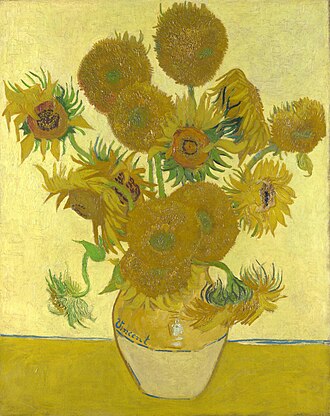 Les Tournesols - Vincent van Gogh (1888)
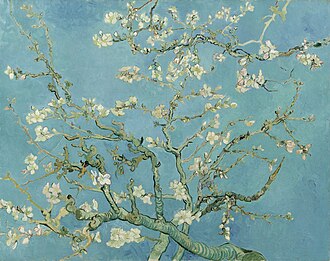 Amandier en fleurs - Vincent van Gogh (1890)
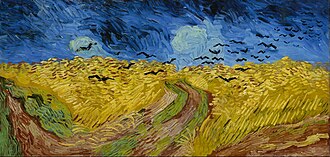 Champ de blé aux corbeaux - Vincent van Gogh (1890)
 La Chambre à coucher - Vincent van Gogh (1888)
 Les Mangeurs de pommes de terre - Vincent van Gogh (1885)
 Iris - Vincent van Gogh (1889)
Œuvres d'artistes liés
 Les Grandes Baigneuses - Paul Cézanne (1900s)
 Le Garçon au gilet rouge - Paul Cézanne
 D'où venons-nous ? Que sommes-nous ? Où allons-nous ? - Paul Gauguin (1897-1898)
 Le Christ jaune - Paul Gauguin (1889)
 L'Érection de la croix - Peter Paul Rubens (1609)
 L'Enlèvement des filles de Leucippe - Peter Paul Rubens (1618)
 Promenade au bord de la mer - Joaquín Sorolla (1909)
 Triste héritage - Joaquín Sorolla (1898)
 Bal du moulin de la Galette - Pierre-Auguste Renoir (1876)
 Le Déjeuner des canotiers - Pierre-Auguste Renoir (1881)
 Au Moulin-Rouge - Henri de Toulouse-Lautrec (1892)
 La Toilette - Henri de Toulouse-Lautrec (1896)