Fritillaires couronne imperiale dans un vase de cuivre
Vincent van Gogh · 1887
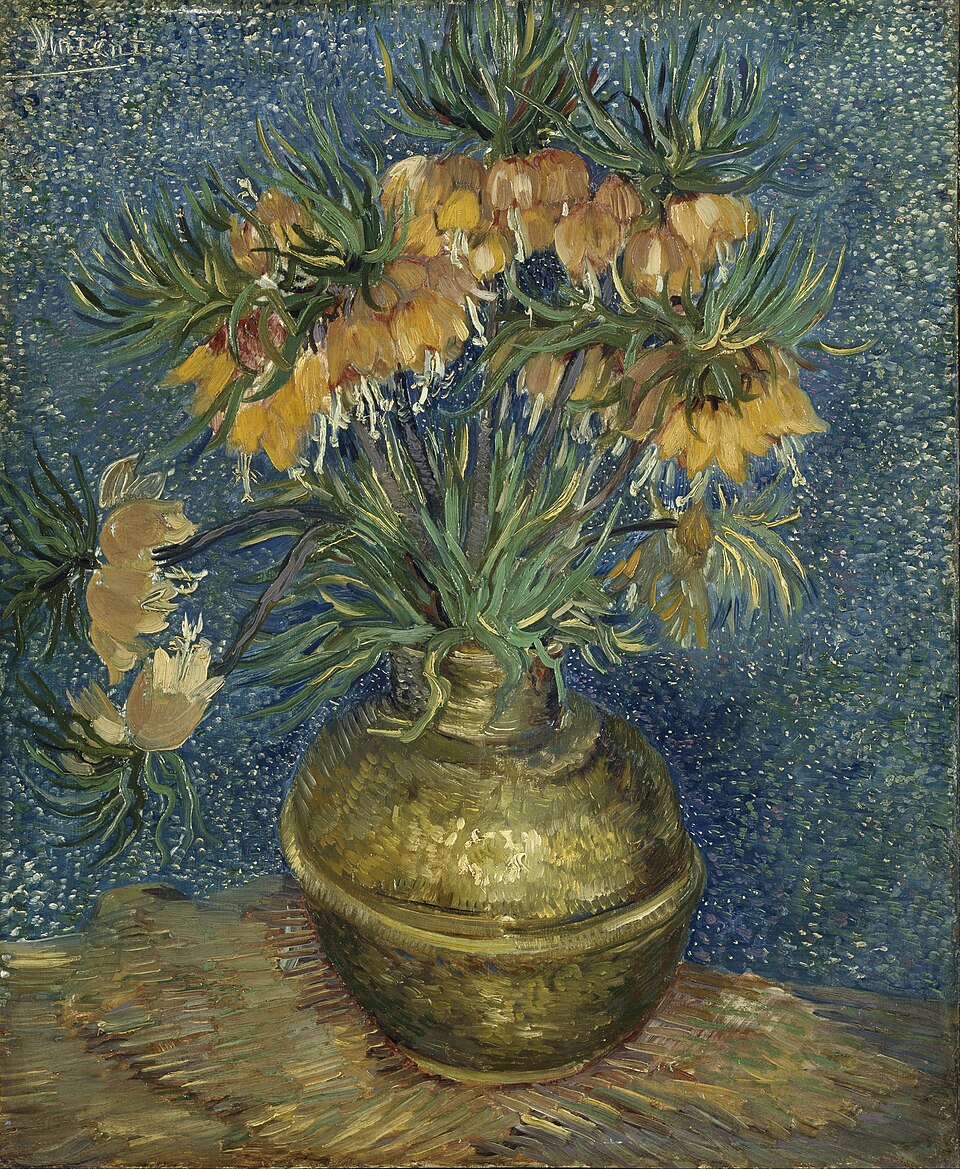
Orange crown imperials blaze in a gleaming copper vase against a wall flecked with blue. Painted in Paris in 1887, this bouquet already hints at the Sunflowers to come, and Van Gogh was proud enough to sign it.
The story behind the painting
Van Gogh painted this still life in Paris in 1887, during the years he lived with his brother Theo in Montmartre, from 1886 to 1888. It was the time when he first met the influence of the Impressionists and became aware of light and colour, bringing them into his own work. The flowers give a clue to the season: imperial fritillaries, also called crown imperials, bloom in European gardens in April and May, so it is assumed he painted the work in spring. Each bulb grows three to ten flowers, so he probably used one or two bulbs for this bouquet.
What to look for
Golden imperial fritillaries stand in a copper vase whose shiny patina, ringed with lavender highlights, reflects the colour of the flowers. The mottled wall mixes blue, green and yellow with flecks of white like sparkling lights. Notice how the paint changes from place to place: dashes in the background, directional strokes on the table, thick impasto highlights on the metal. The background uses a pointillist touch while the flowers and vase are painted in an Impressionist manner. Wikipedia gives 73.5 by 60.5 cm, while Wikidata records 76 by 60 cm. The signature Vincent is at the upper left.
Meaning and intent
Van Gogh wanted to render intense colour, in his words, and not a grey harmony. The painter Archibald Standish Hartrick recalled his interest in a theory that the eye carries part of its last sensation into the next. His choice of orange against blue came from noticing that entering a lamplit room out of the night strengthens the orange of the light. The colour is said to express his elevated mood in Paris. Out of about 900 works he signed only about 130, and signing this one suggests he saw it as a picture that could find a buyer.
Legacy
The painting has been called a riotous celebration of colour, texture and light, and its thick paint and swirling brushstrokes presage his famous Sunflowers. Its moody blues and vibrant golds return in works such as The Starry Night and Bedroom in Arles. It was once owned by Eugène Murer, a painter of the time, who considered Van Gogh the greatest colourist of the century after Renoir. Today the painting belongs to the Musée d'Orsay in Paris, and Wikidata also lists the Louvre's Department of Paintings among its collections.
Le saviez-vous ?
- Painted in Paris in 1887, probably in spring.
- Orange flowers set against blue: a deliberate complementary pairing.
- Signed Vincent, one of only about 130 signed works.
- Musée d'Orsay, Paris.
À propos de l'artiste
Vincent van Gogh (1853-1890)
département des peintures du musée du Louvre · musée d'Orsay · nature morte · fleur · vase · mur · peinture de fleurs · bouquet de fleurs
Autres œuvres de Vincent van Gogh
 La Nuit étoilée - Vincent van Gogh (1889)
 Terrasse du café le soir - Vincent van Gogh (1888)
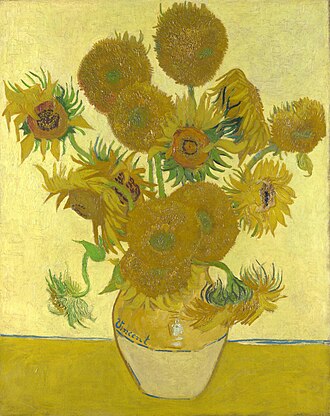 Les Tournesols - Vincent van Gogh (1888)
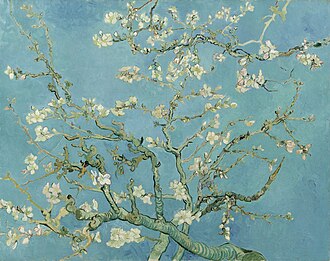 Amandier en fleurs - Vincent van Gogh (1890)
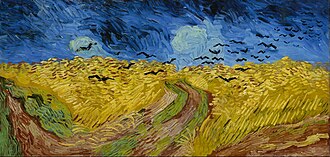 Champ de blé aux corbeaux - Vincent van Gogh (1890)
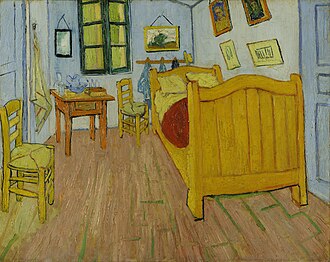 La Chambre à coucher - Vincent van Gogh (1888)
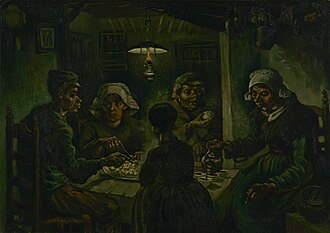 Les Mangeurs de pommes de terre - Vincent van Gogh (1885)
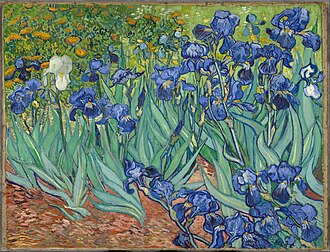 Iris - Vincent van Gogh (1889)
Œuvres d'artistes liés
 Les Grandes Baigneuses - Paul Cézanne (1900s)
 Le Garçon au gilet rouge - Paul Cézanne
 D'où venons-nous ? Que sommes-nous ? Où allons-nous ? - Paul Gauguin (1897-1898)
 Le Christ jaune - Paul Gauguin (1889)
 L'Érection de la croix - Peter Paul Rubens (1609)
 L'Enlèvement des filles de Leucippe - Peter Paul Rubens (1618)
 Promenade au bord de la mer - Joaquín Sorolla (1909)
 Triste héritage - Joaquín Sorolla (1898)
 Bal du moulin de la Galette - Pierre-Auguste Renoir (1876)
 Le Déjeuner des canotiers - Pierre-Auguste Renoir (1881)
 Au Moulin-Rouge - Henri de Toulouse-Lautrec (1892)
 La Toilette - Henri de Toulouse-Lautrec (1896)