David Garrick en Richard III
William Hogarth · 1745
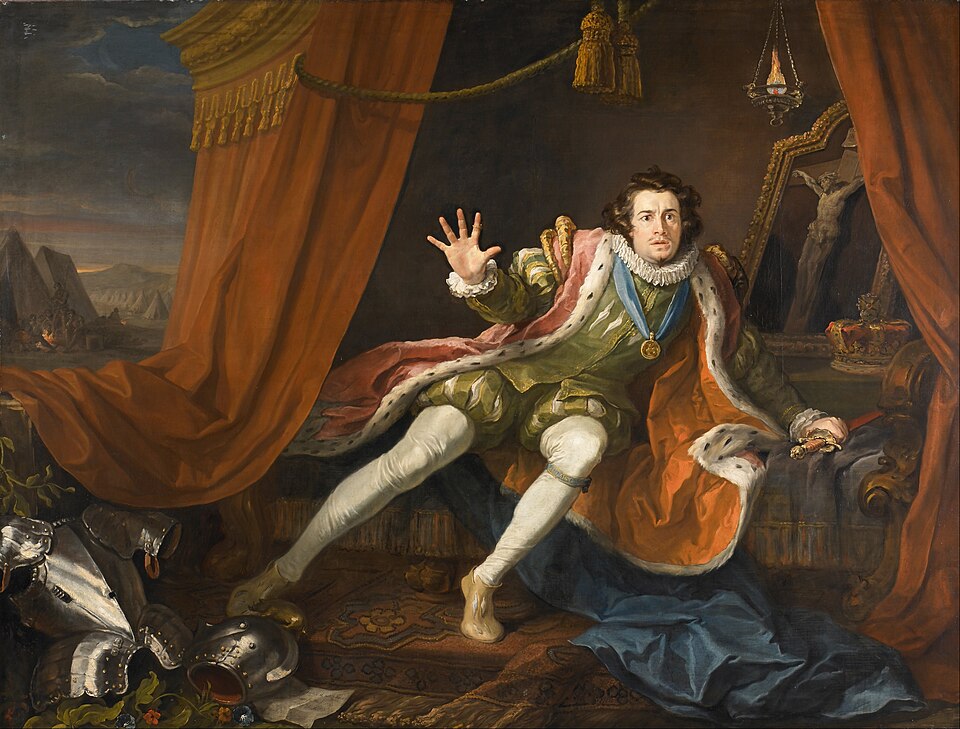
A king starts up from his bed, one hand raised, his face frozen in fear. Hogarth painted his friend David Garrick in the role that made him famous, and in doing so helped invent a new kind of portrait.
The story behind the painting
Hogarth painted the picture in 1745. It is usually said to show the actor and theatre manager David Garrick as Shakespeare's Richard III, but in fact it records his performance in Colley Cibber's heavily adapted version of the play, which held the stage from 1700 until 1896. Garrick had won fame in this role at the Drury Lane Theatre in London, and he both made his London debut and retired from acting as Richard III. Hogarth was his friend, and the painting is a record of a celebrated performance as much as of a man.
What to look for
The scene is the eve of the Battle of Bosworth in 1485. The king, asleep in his tent on the battlefield, has just woken from a dream in which he saw the ghosts of the people he had murdered. Garrick is shown in fear and alarm, one arm raised, his face shocked. Look at the shape of his body: Hogarth called this pose the serpentine line, made of two contrasting curves. The canvas is large, 190.5 by 250.8 cm, giving the moment the scale of a history painting.
Meaning and intent
Hogarth is best remembered for his satirical prints on social themes, but he was also a skilled painter and portraitist. This work is more than a likeness: it shows the sitter at a key moment in history and in a theatrical pose, so it falls between portraiture and history painting. In his 1753 treatise The Analysis of Beauty he argued that the serpentine line was particularly beautiful because it gives play to the imagination and delights the eye. Here that idea becomes the shape of terror.
Legacy
The pose Hogarth used resembles that used for other portraits of actors, especially by Johann Zoffany. Comparing it with Reynolds's portraits of Garrick, the scholar Gill Parry concludes that Hogarth helped establish a new subgenre, the theatrical portrait. The painting belongs to the Walker Art Gallery in Liverpool, which bought it in 1956 with help from the National Art Collections Fund. Visitors there can still meet Garrick at the instant he wakes in fear, as audiences saw him on stage.
Le saviez-vous ?
- Painted in 1745.
- Shows Garrick in Colley Cibber's adaptation of Richard III.
- Hogarth called the pose the serpentine line.
- Walker Art Gallery, Liverpool, since 1956.
À propos de l'artiste
William Hogarth (1697-1764)
portrait · homme · Walker Art Gallery
Autres œuvres de William Hogarth
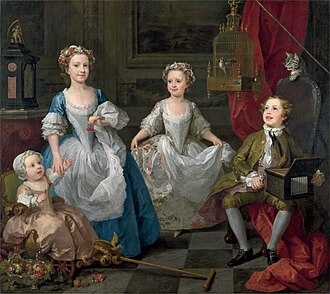 Les Enfants Graham - William Hogarth (1742)
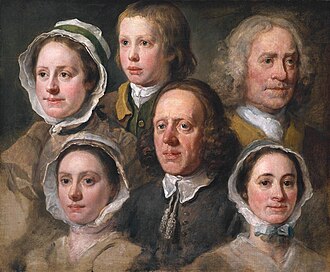 Hogarth's Servants - William Hogarth (1750s)
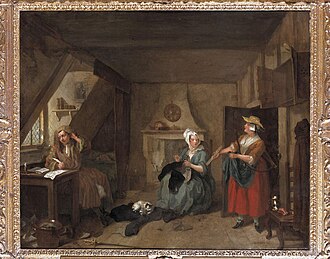 The Distrest Poet - William Hogarth (1730s)
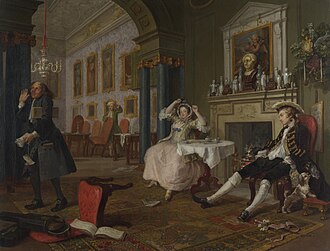 Mariage à la mode 2 : le tête-à-tête - William Hogarth (1743)
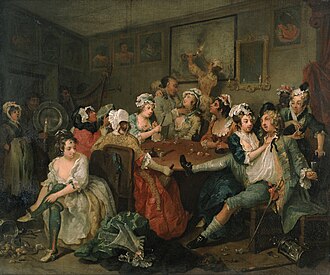 The Orgy - William Hogarth (1735)
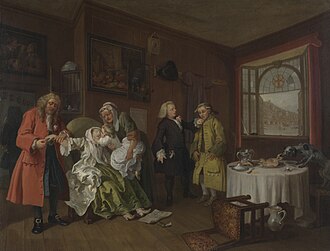 Marriage A-la-Mode: 6. The Lady's Death - William Hogarth (1743)
Le Dernier Enjeu de la dame - William Hogarth (1759)
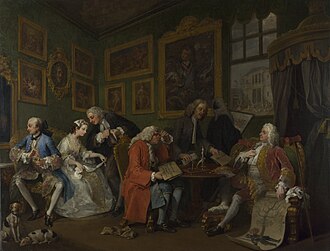 Marriage A-la-Mode: 1. The Marriage Settlement - William Hogarth (1743)