Saint Laurent devant Valérien
Fra Angelico · 1447
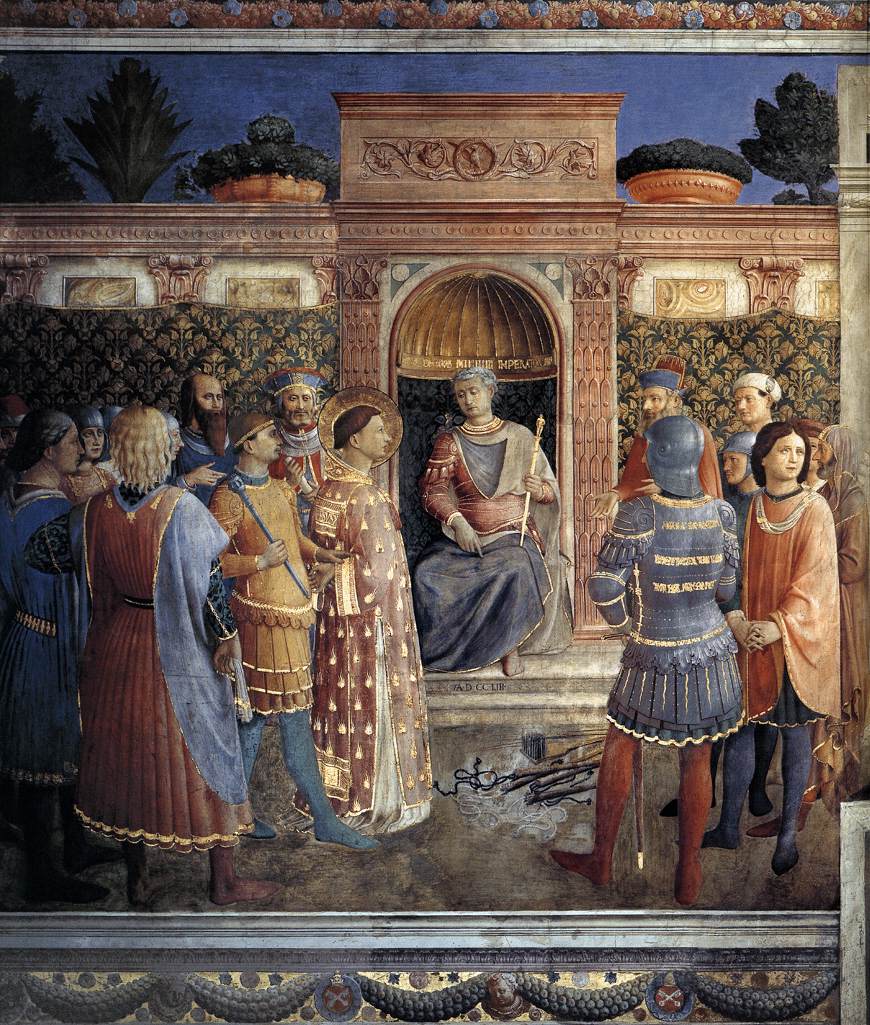
An emperor on a golden throne points to the instruments of torture at the feet of a young deacon. Fra Angelico painted this scene for the private chapel of Pope Nicholas V, wrapping it in the colours of ancient Rome.
The story behind the painting
The fresco, about 271 by 235 cm, is in the Niccoline Chapel in the Apostolic Palace of the Vatican, painted by Fra Angelico and his assistants, among them Benozzo Gozzoli, around 1447 to 1448. It is the fourth episode of the Stories of Saint Lawrence, on the left of the middle register of the right wall. Angelico worked on the chapel during his stay in Rome between 1445 and 1450. The first documents are dated 9 May and 1 June 1447, under Pope Nicholas V, though work may have begun earlier under Eugene IV. After a summer break in Orvieto in 1447, the frescoes were to be finished by the end of 1448.
What to look for
The emperor sits enthroned at the centre among soldiers and officials, threatening Lawrence, who stands as a prisoner, by showing him the instruments of torture at his feet. The throne rises on a few steps where the year 253 can be read, under a golden niche flanked by pink pilasters with plant motifs, an invention of Angelico, and topped by an attic with a garland framing the imperial eagle. An inscription in the shell-shaped half-dome names the emperor. Precious golden cloth hangs from the capitals over marble panels, and above the wall rise two vases and tufts of trees, including a palm, the symbol of coming martyrdom.
Meaning and intent
Lawrence was a deacon of Pope Sixtus II who, during Valerian's persecution, gathered the goods of the Church and gave them to the poor. When the emperor demanded the Christians' riches, Lawrence brought forward a group of poor people, the true treasure of the Church. Angelico leaves out the poor and concentrates on the trial. The sumptuous, colourful architecture recalls the splendour of ancient Rome that the papacy of Nicholas V wanted to revive. John Pope-Hennessy argued that the richness of these frescoes, so unlike Angelico's work at San Marco, reflects their purpose: there they aided monks' meditation, here they celebrated papal power after the city's neglect during the Avignon exile.
Legacy
The scene is joined to the next, the Martyrdom of Saint Lawrence, by a figure that crosses the line of buildings between them, and both share one frame. The source notes, though, that Angelico did not fully exploit this chance to unify the space, as he did in the chapel's lunettes. Similar backgrounds appear with variations in his panel paintings, such as the Annalena altarpiece, the San Marco altarpiece and the predella scene of Saints Cosmas and Damian before Lysias. As in his other works, the clear, diffused light is the heart of the picture.
Le saviez-vous ?
- Fresco in the Niccoline Chapel, Vatican, around 1447 to 1448.
- Painted with assistants including Benozzo Gozzoli.
- The year 253 is inscribed on the throne steps.
- Fourth episode of the Stories of Saint Lawrence.
À propos de l'artiste
Fra Angelico (1400-1455)
art religieux · Renaissance italienne · palais du Vatican
Autres œuvres de Fra Angelico
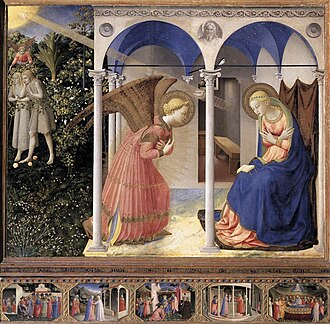 L'Annonciation - Fra Angelico (1425)
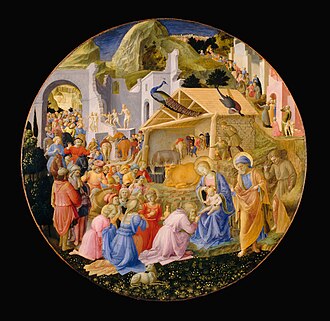 Tondo Cook - Fra Angelico (1430)
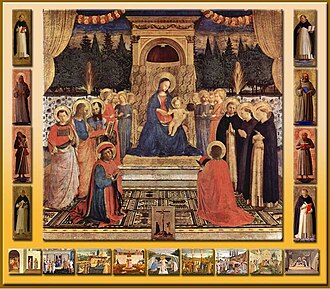 Pala di San Marco - Fra Angelico
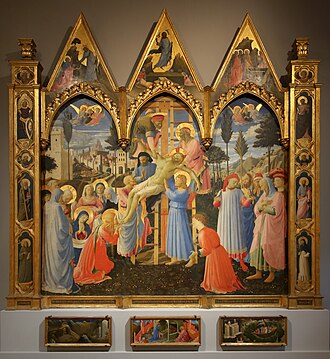 La Descente de Croix - Fra Angelico (1432)
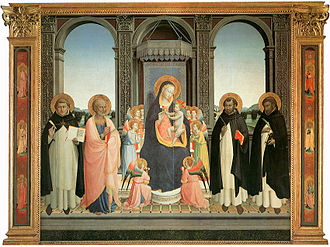 Pala di Fiesole - Fra Angelico (1422)
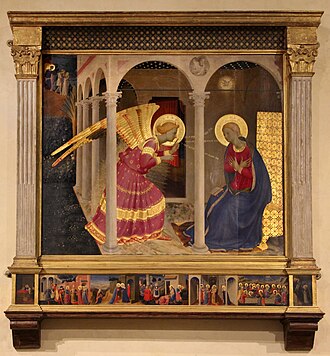 L'Annonciation de Cortone - Fra Angelico (1430s)
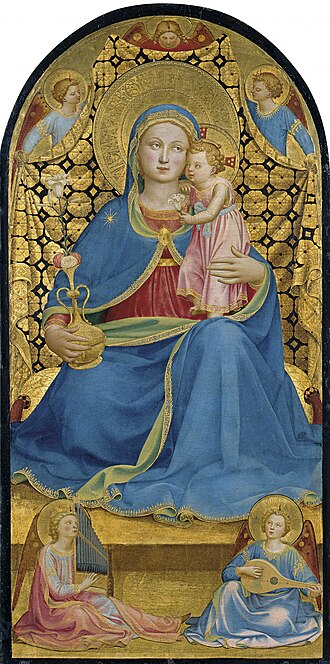 Madonna dell'Umiltà - Fra Angelico (1433)
 Le Couronnement de la Vierge - Fra Angelico (1430s)
Œuvres d'artistes liés
 La Joconde - Leonardo da Vinci (1503-1519)
 La Dame à l'hermine - Leonardo da Vinci (1490)
 Tondo Doni - Michelangelo (1500s)
 Le Tourment de saint Antoine - Michelangelo (1487)
 La Flagellation du Christ - Piero della Francesca (1450s)
 La Conversation sacrée - Piero della Francesca (1472)