La Poule aveugle
Francisco Goya · 1788
%20por%20Francisco%20de%20Goya.jpg)
A ring of young people dance and dodge around a blindfolded player armed with a giant spoon. Goya turned a simple game into a light-filled moment of flirtation.
The story behind the painting
Blind Man's Bluff, in Spanish La gallina ciega, is one of the cartoons Francisco de Goya painted in oil on linen as designs for tapestries for the Royal Palace of El Pardo. A tapestry cartoon was a full-size model that weavers would follow, so this large picture, about 269 by 350 cm, was made to become woven decoration for a royal residence. Wikidata dates it to 1788. Goya also made an earlier sketch for the composition, and both the sketch and the finished cartoon are now held by the Museo del Prado. The subject is drawn from everyday leisure: a popular game played outdoors by young men and women.
What to look for
In the middle of the ring stands one figure, blindfolded and holding a large spoon, trying to catch the others as they dance around in a circle. Follow the composition and you will see that Goya alternates the players, placing figures in the gaps left between those in front and those behind. Look to the right, where a young man crouches to dodge the ladle, and compare him with a woman leaning back and another young man leaning forward. Some players wear velvet jackets and feathered headdresses. The colors are soft roses, the women's skirts have a gauzy texture, and behind the group opens a luminous landscape.
Meaning and intent
The young people are dressed as majos and majas, the attire of the humble classes of Spanish society, which aristocrats like those shown here enjoyed wearing. Some also follow the fashion of the French upper classes. So this is play in two senses: a game of blind man's bluff, and a game of costume, in which the elite borrow the dress of ordinary people. The painting is an example of the Rococo style, with its vivacity, immediacy and curiosity, and above all its depiction of a flirtatious moment. The blindfold and the circling dancers capture the playful tension of wanting to catch and wanting to escape.
Legacy
As a tapestry design, the cartoon was intended for the Royal Palace of El Pardo, part of Goya's work producing images for royal tapestries. Today both the finished cartoon and the preparatory sketch belong to the Museo del Prado in Madrid, allowing visitors to compare Goya's first idea with the full-scale result. The work is often cited as an example of the Rococo style, showing a lighter, sunnier side of an artist whose later paintings would grow much darker. Standing before its large surface, you can still sense the movement of the ring, as if the game had paused only for a moment.
Le saviez-vous ?
- Tapestry cartoon for the Royal Palace of El Pardo.
- Oil on linen, about 269 × 350 cm; Wikidata dates it 1788.
- The cartoon and its sketch are both at the Prado.
- Figures are dressed as majos and majas.
À propos de l'artiste
Francisco Goya (1746-1828)
scène de genre · musée du Prado · chapeau
Autres œuvres de Francisco Goya
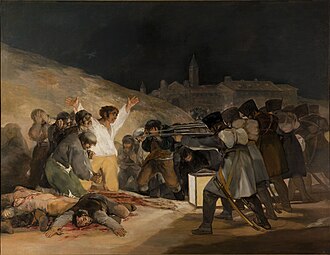 Tres de Mayo - Francisco Goya (1814)
.jpg) La Maja nue - Francisco Goya (1800)
La Maja nue - Francisco Goya (1800).jpg) Saturne dévorant un de ses enfants - Francisco Goya (1819)
Saturne dévorant un de ses enfants - Francisco Goya (1819)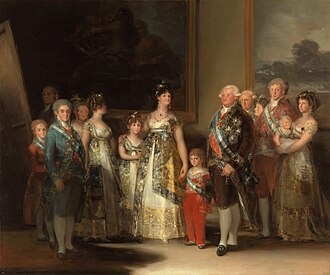 La Famille de Charles IV - Francisco Goya (1800)
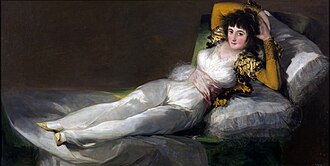 La Maja vêtue - Francisco Goya (1800)
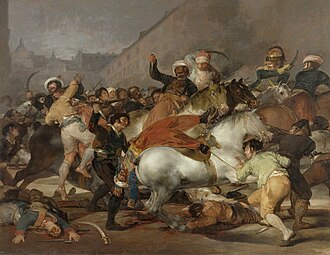 Dos de Mayo - Francisco Goya (1814)
 Le Chien - Francisco Goya (1819)
 Le Sabbat des sorcières - Francisco Goya (1820s)