Autoportrait
Artemisia Gentileschi · 1630s
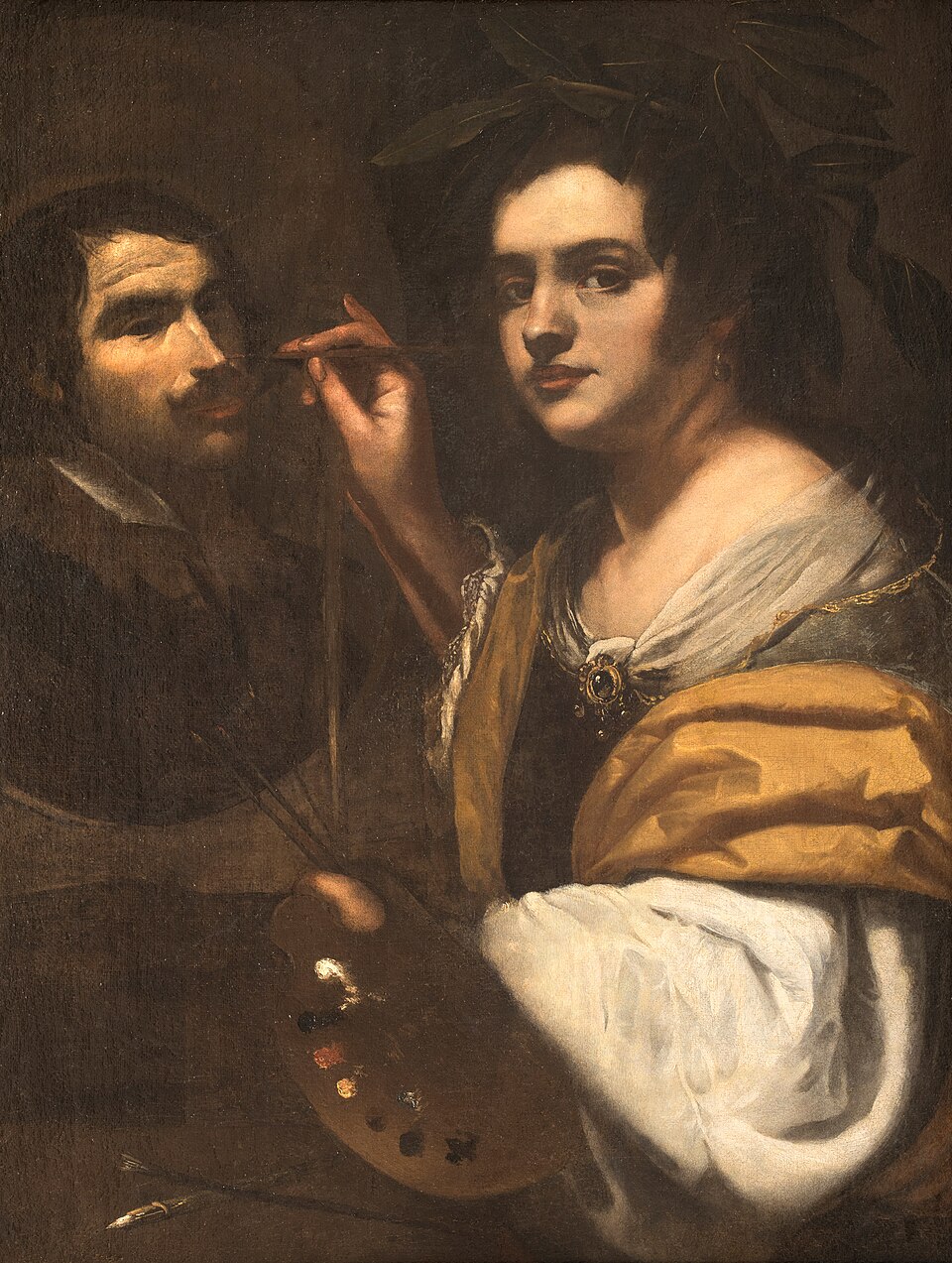
A woman at her easel turns toward us, brush in hand, while the man she paints waits on the canvas. Artemisia Gentileschi placed herself at work in the early 1630s, and historians still read her pose as a challenge.
The story behind the painting
Artemisia Gentileschi painted herself many times, and her allegorical and religious pictures often show her in different guises. This self portrait dates to the early 1630s and hangs today in the Palazzo Barberini in Rome. Its early history is almost blank: the earliest point it can be traced with certainty is 1935, when the Barberini collection entered the state Galleria Nazionale d'Arte Antica. Wikidata gives the date simply as the 1630s and records a man, an easel and a palette among its subjects, and names Simon Vouet among the depicted figures.
What to look for
Look first at the painter herself, shown at work in front of the canvas, and at the shape of her painting hand. Then look at the clothing and the lace, details that the scholar Jesse M. Locker compares with other works by Artemisia. Be patient with the surface: the painting is in poor condition. Locker writes that the flesh tones, especially in the face, are abraded and badly deteriorated, despite a restoration in the 1950s. What survives is the strong design of a woman turning from her work, holding our gaze.
Meaning and intent
The man on the canvas is assumed to be the patron who commissioned the picture, but no evidence supports a clear identification. Art historians see Artemisia's pose as a direct challenge to the viewer. Mary Garrard reads it through her gender, as a challenge to the male artists of her time, pointing to the gesture of the painting hand, which in the seventeenth century signalled the confidence of those sure of their abilities. Locker also sees a challenge, but places it in the literary culture of the day, with Artemisia answering poets whose spoken paintings cannot rival her painted poems.
Legacy
The attribution has not always been secure. Raymond Ward Bissell included it in his catalogue raisonne of the artist, but the 2001 exhibition catalogue on Artemisia and her father Orazio assigned it to the workshop of Simon Vouet. Later research has come down firmly on the side of Artemisia, with Locker pointing to the clothing and lace shared with her other paintings. Wikidata still records the title as a woman painting a man and names Vouet among its subjects, a reminder that the debate left its mark. Today the work is in the Galleria Nazionale d'Arte Antica in Rome.
Le saviez-vous ?
- Painted in the early 1630s.
- Traced with certainty only from 1935.
- Once given to Simon Vouet's workshop, now generally accepted as Artemisia's.
- Now in the Palazzo Barberini, Rome.
À propos de l'artiste
Artemisia Gentileschi (1593-1653)
femme · portrait · homme · autoportrait · Galerie nationale d'art ancien · chevalet · palette · Artemisia Gentileschi
Autres œuvres de Artemisia Gentileschi
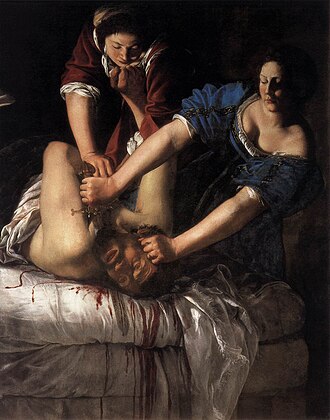 Judith décapitant Holopherne - Artemisia Gentileschi (1613)
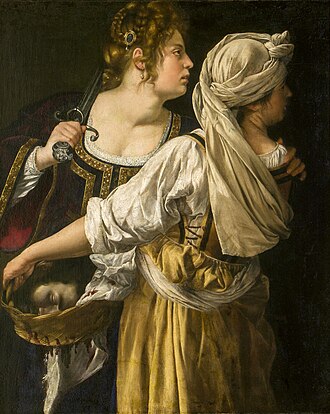 Judith et sa Servante - Artemisia Gentileschi (1618)
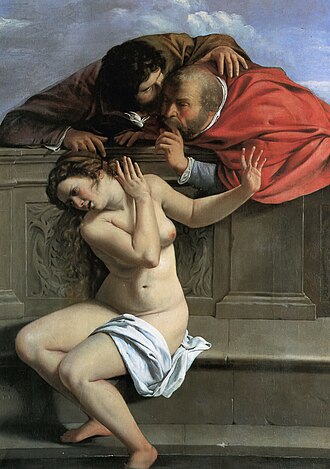 Suzanne et les Vieillards - Artemisia Gentileschi (1610)
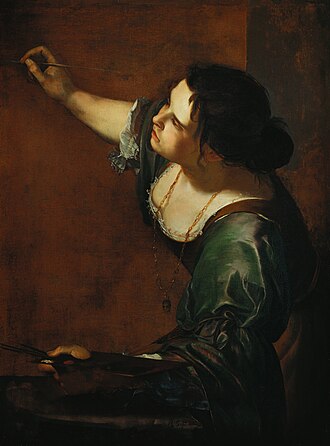 Autoportrait en allégorie de la Peinture - Artemisia Gentileschi (1638)
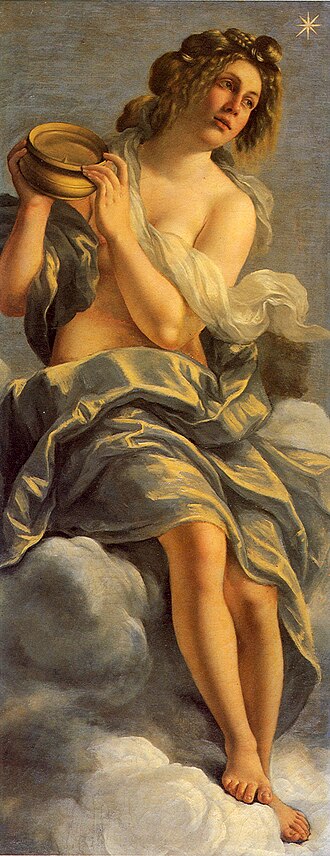 Allégorie de l'Inclination - Artemisia Gentileschi (1615)
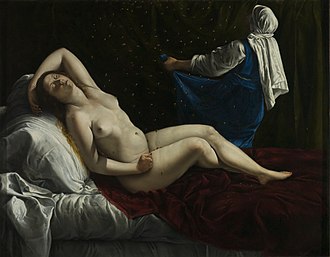 Danaé - Artemisia Gentileschi (1612)
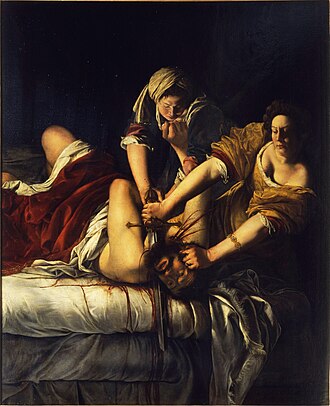 Judith décapitant Holopherne - Artemisia Gentileschi (1620)
 Esther et Assuérus - Artemisia Gentileschi (1620s)
Œuvres d'artistes liés
 Le Souper à Emmaüs - Caravaggio (1601)
 La Vocation de saint Matthieu - Caravaggio (1609)
 Les Ménines - Diego Velázquez (1656)
 La Reddition de Bréda - Diego Velázquez (1635)
 Saint Francis in Meditation - Francisco de Zurbarán (1639)
 The Immaculate Conception - Francisco de Zurbarán (1661)
 Triple portrait de Charles Ier - Anthony van Dyck (1635)
 Charles Ier à cheval avec Monsieur de Saint Antoine - Anthony van Dyck (1636)
 L'Érection de la croix - Peter Paul Rubens (1609)
 L'Enlèvement des filles de Leucippe - Peter Paul Rubens (1618)
 La Ronde de nuit - Rembrandt van Rijn (1642)
 Autoportrait - Rembrandt van Rijn (1659)