Corrida dans un village
Francisco Goya · 1815
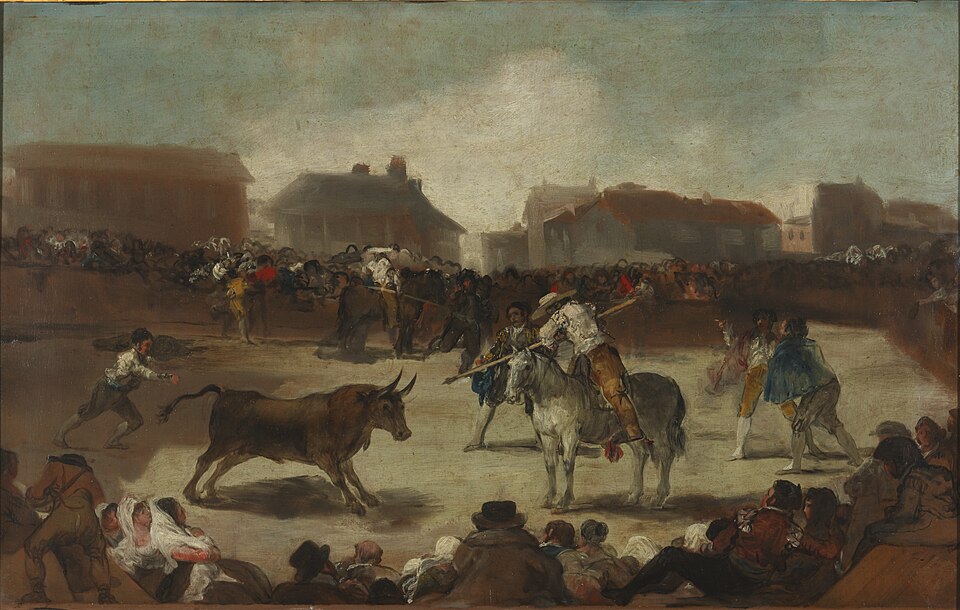
A whole town packs a makeshift ring of wooden beams to watch a picador face a bull. Only one woman turns away from the fight and looks straight at us, wide-eyed, as if she alone sees the madness.
The story behind the painting
Goya painted this scene on a small tropical wood panel as part of a series of four cabinet pictures, with A Procession of Flagellants, The Inquisition Tribunal and The Madhouse. They were probably not commissioned, but born of his own invention, and their common theme is madness. There is no precise date: the first record is the 1836 will of the collector Manuel Garcia de la Prada. Style, themes and costumes point to 1814 to 1816, after the war and the return of Ferdinand VII, a time of purges when Goya himself waited months to be cleared for having served Joseph Bonaparte. His wife Josefa Bayeu had died in 1812.
What to look for
A fence of rough wooden beams surrounds the ring, and the crowd is tense with excitement. At the centre a mounted picador prepares to drive his lance into the alert bull, and the lance point and the horns sit right at the heart of the picture. The fighters stand out as clear patches of colour, while the spectators and houses behind are only sketched and blurred. Seen from the height of the stands, the front row has its back to us. Look for a mother nursing her child, a couple in love, a Benedictine monk and children. On the right, a woman with wide-open eyes gazes out at the viewer.
Meaning and intent
Goya loved bullfighting and painted bullfighters many times, yet his bullfight pictures carry a clear critique of irrational brutality. Royal decrees since Philip V had tried to forbid killing bulls, and Charles IV repeated the ban in 1805, but ordinary people kept flocking to the ring. Among the four scenes this is the least terrifying and the easiest to read. Still, the light falls brightest on the duel while shadow turns the crowd into an anonymous mass, and the staring woman seems the only person aware of the cruelty and the madness around her. A similar figure appears in A Procession of Flagellants.
Legacy
The panel is linked to Goya's print series La Tauromaquia of 1815 to 1816, and closely resembles print 27, showing Fernando del Toro forcing the bull with his garrocha. X-rays show the support was pieced together from four boards of hard tropical mahogany, perhaps from colonial cigar boxes, a sign of post-war shortages. Elias Tormo reviewed a copy shown in Zaragoza in 1908, and Enrique Lafuente Ferrari states that the painter Francisco Lameyer made faithful copies of all four works. The original remains in the Real Academia de Bellas Artes de San Fernando in Madrid.
Le saviez-vous ?
- One of four small panels by Goya on the theme of madness.
- Probably painted between 1814 and 1816.
- First documented in a collector's will of 1836.
- Painted on tropical mahogany, perhaps from cigar boxes.
À propos de l'artiste
Francisco Goya (1746-1828)
Académie royale des Beaux-Arts Saint-Ferdinand
Autres œuvres de Francisco Goya
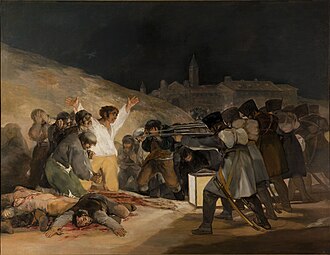 Tres de Mayo - Francisco Goya (1814)
.jpg) La Maja nue - Francisco Goya (1800)
La Maja nue - Francisco Goya (1800).jpg) Saturne dévorant un de ses enfants - Francisco Goya (1819)
Saturne dévorant un de ses enfants - Francisco Goya (1819)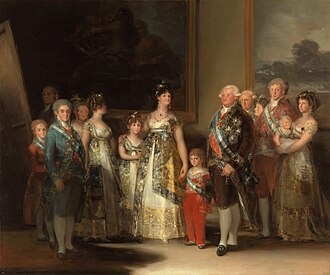 La Famille de Charles IV - Francisco Goya (1800)
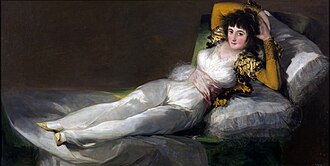 La Maja vêtue - Francisco Goya (1800)
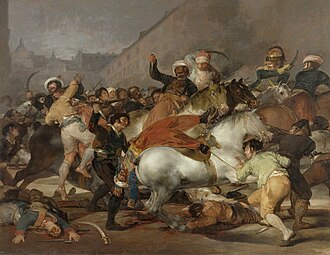 Dos de Mayo - Francisco Goya (1814)
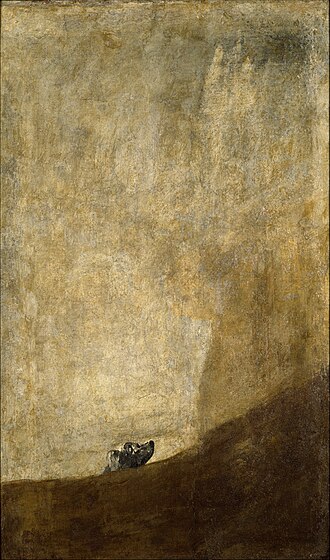 Le Chien - Francisco Goya (1819)
 Le Sabbat des sorcières - Francisco Goya (1820s)
Œuvres d'artistes liés
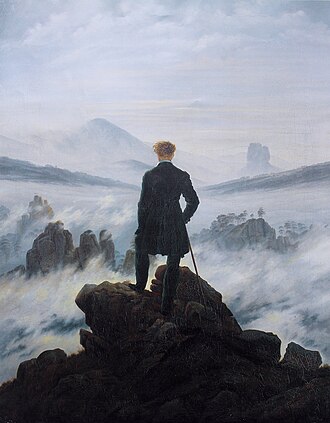 Le Voyageur contemplant une mer de nuages - Caspar David Friedrich (c. 1818)
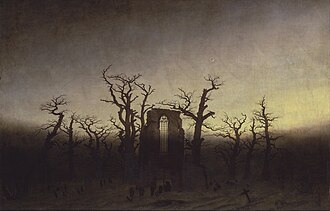 L'Abbaye dans une forêt de chênes - Caspar David Friedrich (1800s)
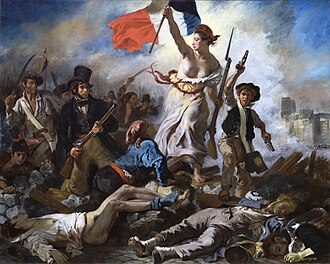 La Liberté guidant le peuple - Eugène Delacroix (1830)
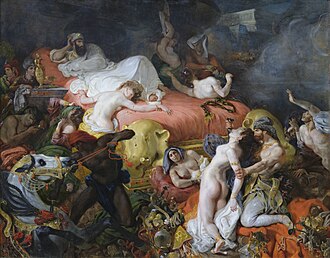 La Mort de Sardanapale - Eugène Delacroix (1827)
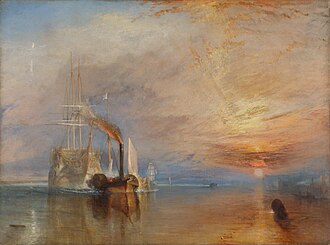 Le Dernier Voyage du Téméraire - J. M. W. Turner (1839)
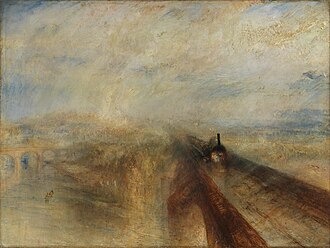 Pluie, Vapeur et Vitesse - J. M. W. Turner (1844)
.jpg) L'Enfant bleu - Thomas Gainsborough (1770)
L'Enfant bleu - Thomas Gainsborough (1770).jpg) Les Époux Andrews - Thomas Gainsborough (1748)
Les Époux Andrews - Thomas Gainsborough (1748)