Un noble polonais
Rembrandt van Rijn · 1637
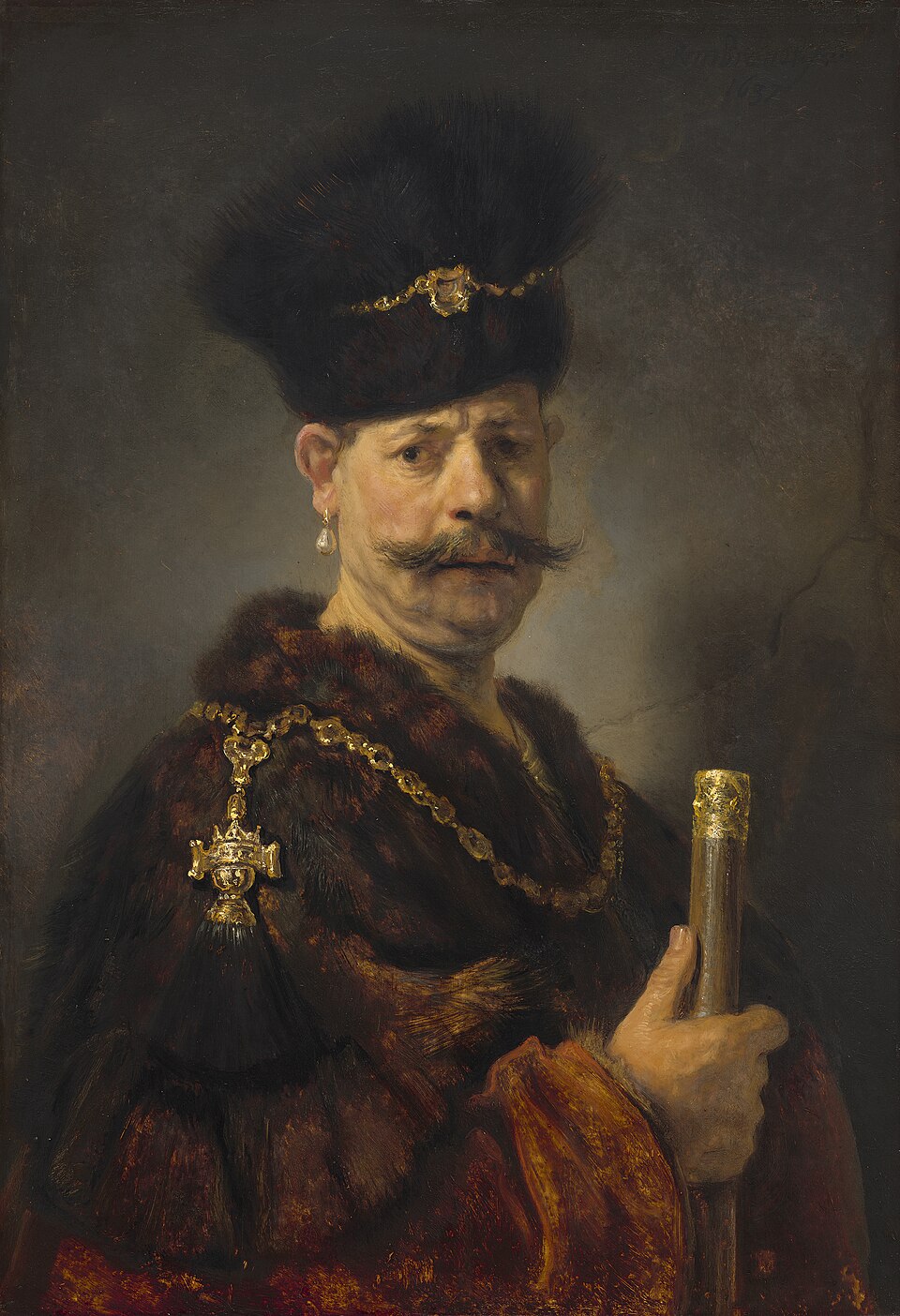
A man in a tall fur cap, a pearl hanging from his ear, raises a gold-capped baton and fixes us with a commanding look. For more than a century scholars have asked who he is: a Polish noble, a Muscovite boyar, or Rembrandt himself in costume.
The story behind the painting
A Polish Nobleman was painted by Rembrandt in 1637 and was never given an official title. Earlier names include Portrait of a Slav Prince, Portrait d'un Turc and Man in Russian Costume. Analysis of the oak panel showed it was cut from a tree felled around 1635, wood also used in Rembrandt's River Landscape with Ruins, which supports the attribution. The panel was restored in 1985 and X-rayed. Its first owner is unclear, though it may have belonged to a certain Harman van Swole.
What to look for
The man, estimated by some to be about 45, stands turned to the right and looks straight at us. In his raised right hand is a baton with a golden cap. He has a thick moustache and a high fur cap with a gold chain, precious stones and a coat of arms. A large pear-shaped pearl hangs from his ear. Over his reddish-brown fur-collared mantle lies a heavy gold chain with an order of three horse tails on his right shoulder. Full light from the left falls on his face against a brownish-grey ground.
Meaning and intent
Some critics call it a tronie, a study of a stock character in costume; Melissa Percival notes that the lopsided hat and tufted moustache suggest it should not be taken too seriously. Ideas that he is John III Sobieski or Stephen Bathory have been discredited. Otakar Odlozilik suggested the diplomat Andrzej Rej. Kenneth Clark saw an idealised self-portrait in fancy dress, Walter Liedtke called the hat Russian, and Marieke de Winkel a Muscovite boyar. The National Gallery notes a strong resemblance to Rembrandt himself, and X-rays show he changed the jowls while painting. Marcin Latka proposes Jan Stanislaw Jablonowski, Marshal of the Sejm of 1637.
Legacy
The painting was part of the collection of Johann Karl Philipp von Cobenzl, Maria Theresa's minister in the Austrian Netherlands. After his bankruptcy, Catherine the Great bought it in 1768 and it hung in the Hermitage in Saint Petersburg. In 1931 Andrew Mellon bought it, one of 21 works he acquired from the Hermitage in the 1930s, a purchase he denied until 1935. The Mellon Trust gave it to the National Gallery of Art in Washington in 1937, where it remains.
Le saviez-vous ?
- Painted by Rembrandt in 1637 on an oak panel.
- The sitter's identity is still debated; he may be Rembrandt himself.
- Owned by Catherine the Great from 1768.
- Bought by Andrew Mellon in 1931; in the National Gallery of Art since 1937.
À propos de l'artiste
Rembrandt van Rijn (1606-1669)
portrait · homme · âge d'or de la peinture néerlandaise · National Gallery of Art · musée de l'Ermitage · Rembrandt
Autres œuvres de Rembrandt van Rijn
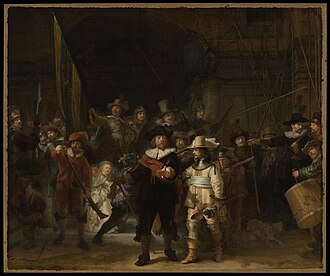 La Ronde de nuit - Rembrandt van Rijn (1642)
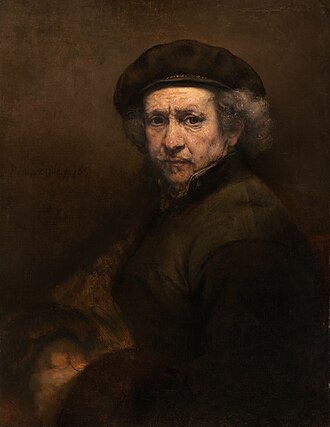 Autoportrait - Rembrandt van Rijn (1659)
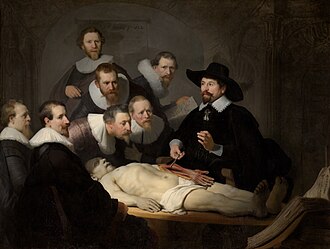 La Leçon d'anatomie du docteur Tulp - Rembrandt van Rijn (1632)
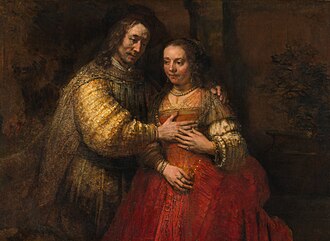 La Fiancée juive - Rembrandt van Rijn (1660s)
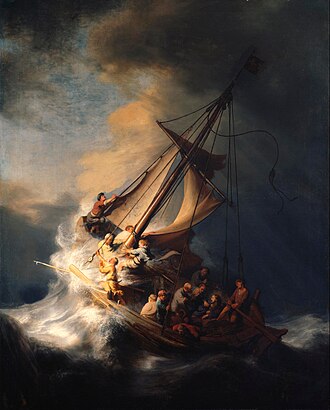 La Tempête sur la mer de Galilée - Rembrandt van Rijn (1633)
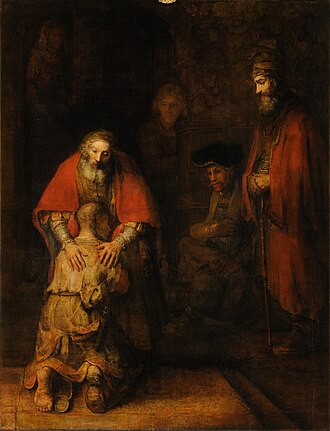 Le Retour du fils prodigue - Rembrandt van Rijn (1668)
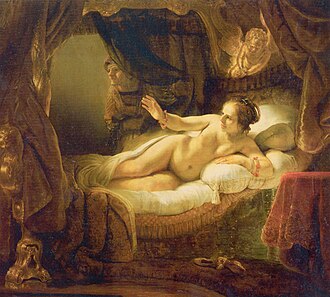 Danaé - Rembrandt van Rijn (1636)
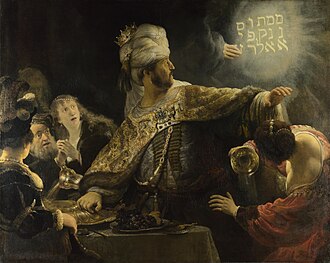 Le Festin de Balthazar - Rembrandt van Rijn (1636)
Œuvres d'artistes liés
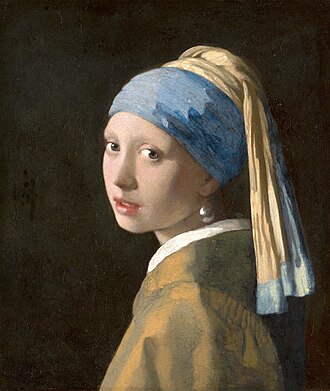 La Jeune Fille à la perle - Johannes Vermeer (1665)
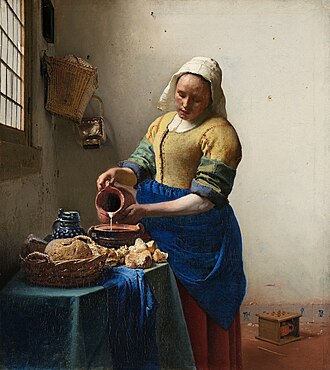 La Laitière - Johannes Vermeer (c. 1658)