The Parc Monceau
Claude Monet · 1878
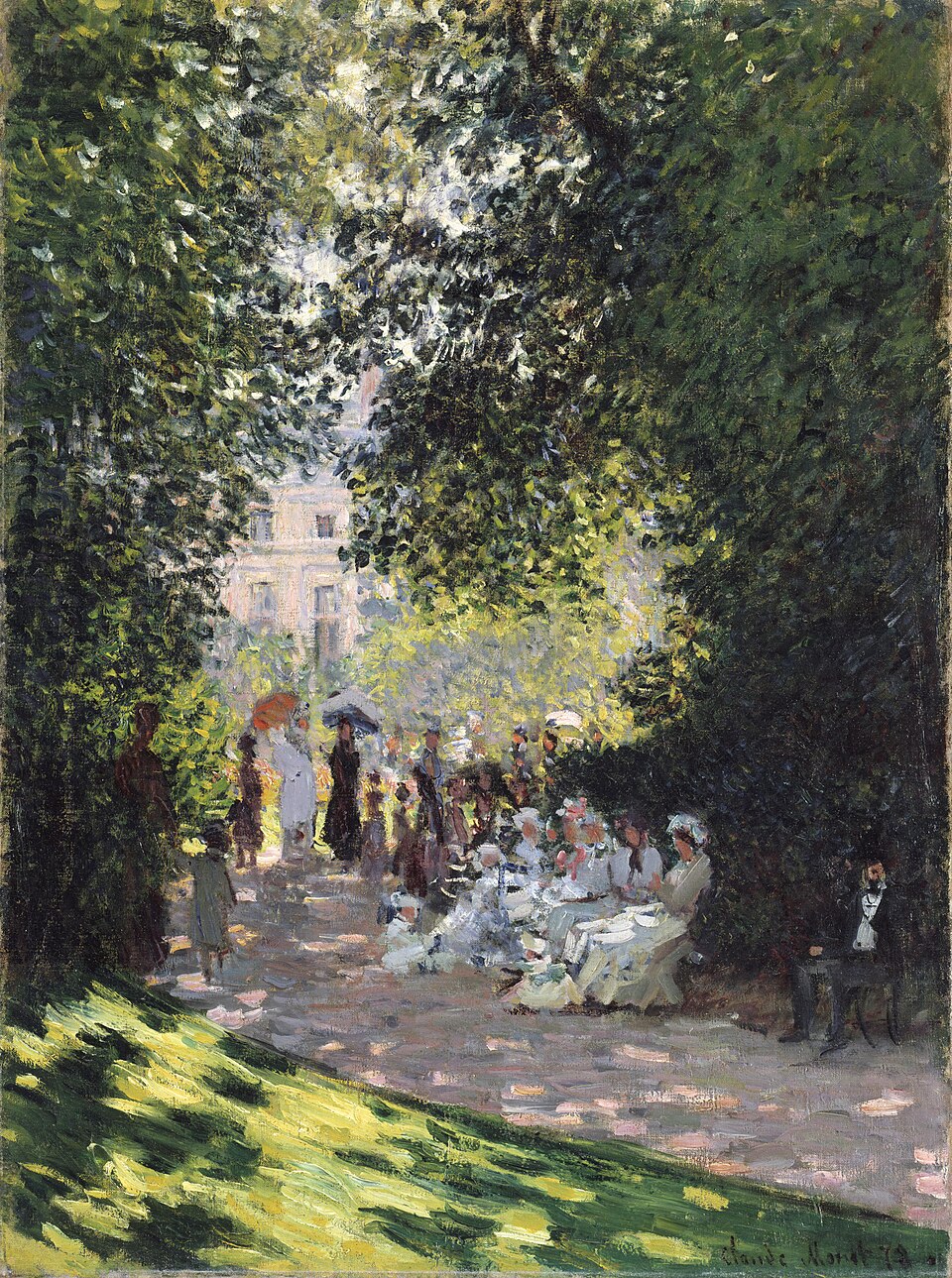
Sunlight slips through the leaves of a Paris park, and the strollers become little touches of colour in the landscape. Monet painted it in 1878 while hiding from his creditors, a short walk from the wealthy walkers he painted.
The story behind the painting
Parc Monceau, on the boulevard de Courcelles in Paris's 8th arrondissement, is a large city park lined with grand private mansions. Philippe d'Orléans had it laid out in the English style at the end of the 18th century, and it opened to the public only in 1861. In January 1878 Monet came back to Paris from Argenteuil to escape his creditors and look for new commissions, and he found refuge on rue d'Edimbourg, not far from the park. The contrast between his own money troubles and the wealthy people strolling there must have been great.
What to look for
Monet had already painted the park three times in 1876. In early 1878 he made three very similar pictures of a park path with walkers; this one, 72.7 by 54.3 cm, is number W466 in the Wildenstein catalogue of his work. Look at how the sunlight comes through the foliage. That interest links it to Renoir's pictures of the time, such as his famous Swing. But unlike Renoir, Monet often treats his human figures as just coloured elements of the landscape, part of the same play of light as the trees and lawns.
Meaning and intent
The painting is a picture of modern leisure in a newly public space, seen by an artist who was himself in difficulty. A year later Gustave Caillebotte painted a view of Parc Monceau with a path and figures reduced to extras, and the source notes a likeness. The two men were friends, both keen gardeners, and each bought paintings by the other for his own collection. Monet may have shown this picture at the fourth Impressionist exhibition in 1879, though the source says only that he perhaps did.
Legacy
Monet probably sold the painting on 2 June 1878 to a buyer named Collot, and in 1879 it probably passed to the collector Georges de Bellio. Later owners included the dealer Durand-Ruel and Georges Bernheim. In 1931 it went to Alfred Lindenbaum, later Lindon, in Paris. In 1940 it was stolen by the Nazis, and Wikidata lists it in the Hermann Göring collection. On 4 December 1946 it was returned to the Lindon family. In 1959 his son Jacques Lindon of New York sold it to the Metropolitan Museum of Art, where it remains.
¿Sabías que…?
- One of three similar park views Monet painted in early 1878.
- Catalogued as W466 by Wildenstein.
- Stolen by the Nazis in 1940, returned in 1946.
- In the Metropolitan Museum of Art since 1959.
Sobre el artista
Claude Monet (1840-1926)
mujer · varón · impresionismo · Museo Metropolitano de Arte
Más obras de Claude Monet
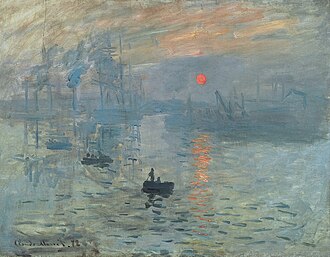 Impresión, sol naciente - Claude Monet (1872)
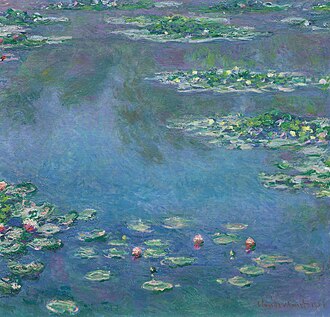 Nenúfares - Claude Monet (1906)
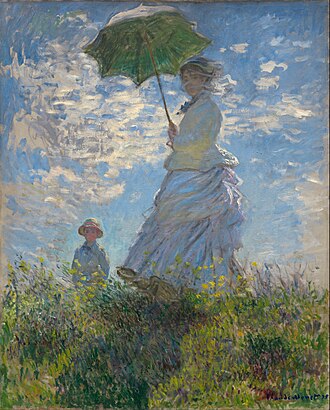 Mujer con sombrilla - Claude Monet (1875)
 La terraza de Sainte-Adresse - Claude Monet (1867)
 Mujeres en el jardín - Claude Monet (1866)
 La urraca - Claude Monet (1868)
 Mujer en el jardín - Claude Monet (1867)
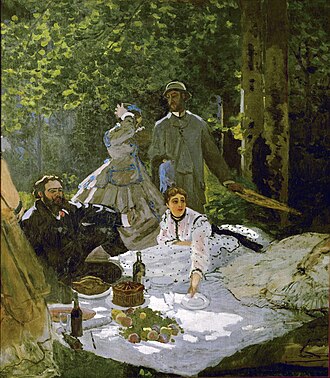 El almuerzo sobre la hierba - Claude Monet (1866)
Obras de artistas relacionados
 El Temerario remolcado - J. M. W. Turner (1839)
 Lluvia, vapor y velocidad. El gran ferrocarril del Oeste - J. M. W. Turner (1844)
 El origen del mundo - Gustave Courbet (1866)
 Entierro en Ornans - Gustave Courbet (2020)
 Almuerzo sobre la hierba - Édouard Manet (1863)
 Olympia - Édouard Manet (1863)
 Baile en el Moulin de la Galette - Pierre-Auguste Renoir (1876)
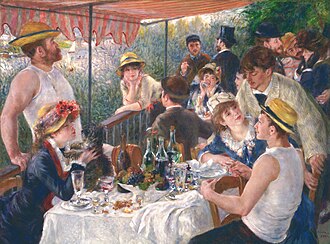 El almuerzo de los remeros - Pierre-Auguste Renoir (1881)
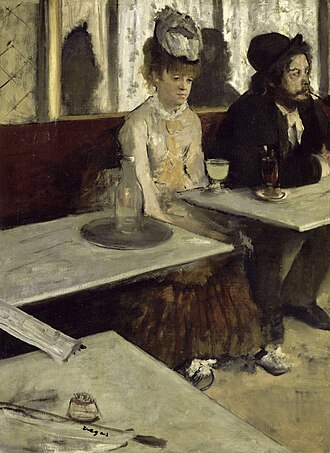 El ajenjo - Edgar Degas (1875)
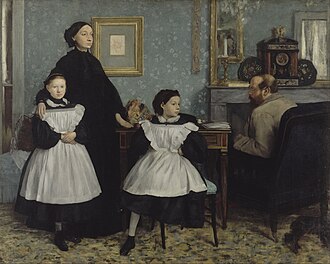 Die Bellelli Familie - Edgar Degas (1858)
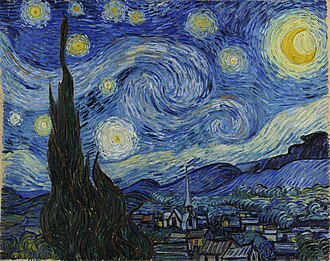 La noche estrellada - Vincent van Gogh (1889)
.jpg) Terraza de café por la noche - Vincent van Gogh (1888)
Terraza de café por la noche - Vincent van Gogh (1888)