The Healing of Justinian by Saint Cosmas and Saint Damian
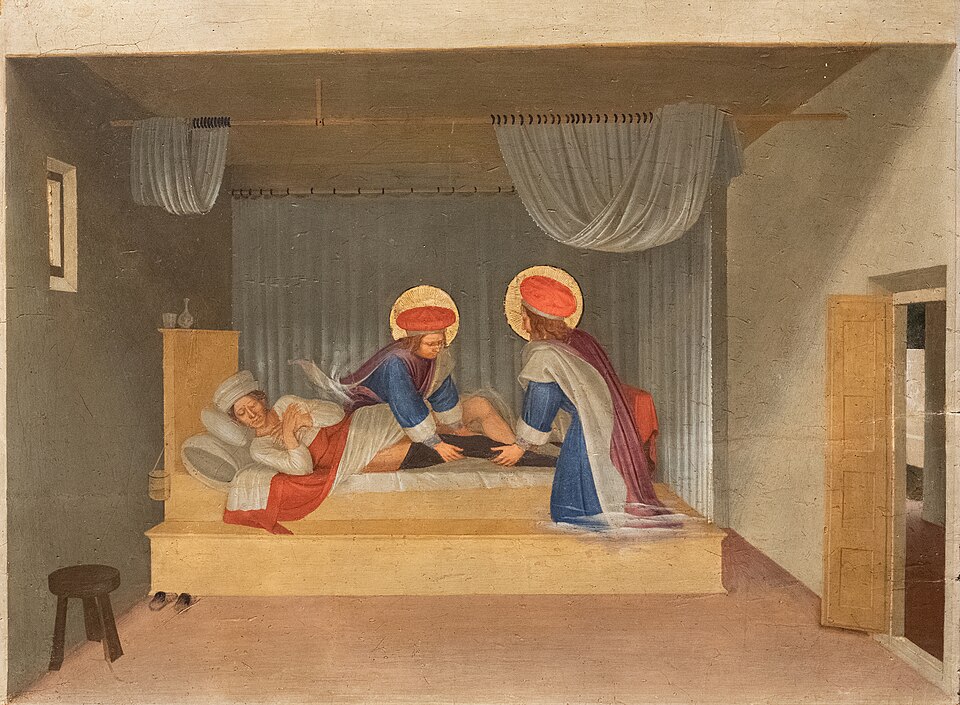
A deacon sleeps while two saintly doctors kneel at his bed, fitting him with a new leg. Fra Angelico painted one of the strangest miracles of the Golden Legend as a quiet night scene in a comfortable bedroom.
The story behind the painting
The Miracle of the Black Leg, or the Healing of the Deacon Justinian, is a tempera and gold panel painted by Fra Angelico between 1438 and 1442. It was part of the predella of the San Marco Altarpiece for the church of San Marco in Florence. The panel is now in the Museum of San Marco with the main panel, while other predella scenes from the lives of Saints Cosmas and Damian are spread across museums in Europe and America. Wikidata gives no date, and besides San Marco it also lists the National Museum of San Matteo in Pisa.
What to look for
The story comes from the Golden Legend. Pope Felix IV built a church in Rome for Cosmas and Damian, and the deacon Justinian served there. One of his legs was eaten by cancer. One night the saints came with surgical instruments, took the leg of an Ethiopian man buried that day, cut off the diseased leg and fitted the new one. When Justinian woke he felt no pain, held a candle to his leg, and wondered whether he was himself or someone else. In the painting he sleeps in a white nightshirt and cap, his hands folded, his right leg black almost to the hip.
Meaning and intent
The two saints kneel on either side of the bed in identical clothes: deep blue tunics, open over-tunics with a white strip, red doctor's hats and solid gold halos. They seem to be adjusting the black leg; the removed leg is not shown. The room is not spartan. The bed stands on a raised platform against the cold floor, with curtains, two plump pillows, a white sheet and a red wool cover. On the headboard stand a glass and a carafe, and a small glass vessel hangs on a nail. A stool, a pair of slippers, a small window and a low open door complete the scene, drawn in single-point perspective.
Legacy
Cosmas and Damian were twin doctors who, by tradition, were martyred under Diocletian, and the source notes their existence is not documented and the traditions contradict each other. After their burial in Cyrrhus, near a temple of Asclepius, the sick came to sleep by their graves hoping to be healed. Their relics spread across Europe, and in Florence the Medici especially venerated them. They became linked with surgery, and the source places this panel within humanity's long fascination with transplanting body parts, an idea known from sphinxes, centaurs and chimeras for thousands of years.
¿Sabías que…?
- Tempera and gold on panel, 1438-1442.
- Part of the predella of the San Marco Altarpiece in Florence.
- The story comes from the Golden Legend.
- Cosmas and Damian were especially venerated by the Medici.
Sobre el artista
Fra Angelico (1400-1455)
arte religioso · Renacimiento italiano · Museo Nacional de San Marcos
Más obras de Fra Angelico
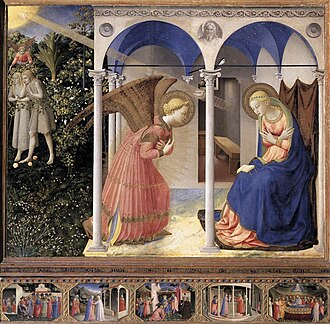 La Anunciación - Fra Angelico (1425)
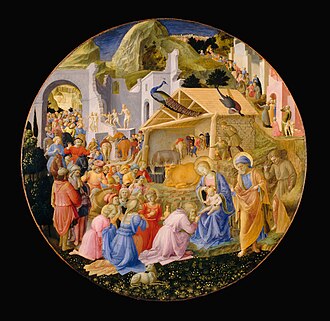 Adoración de los Reyes Magos - Fra Angelico (1430)
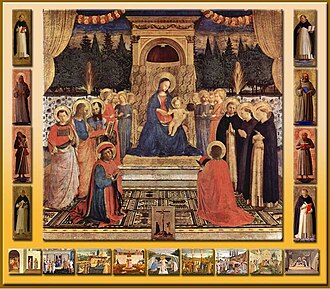 Retablo de San Marcos - Fra Angelico
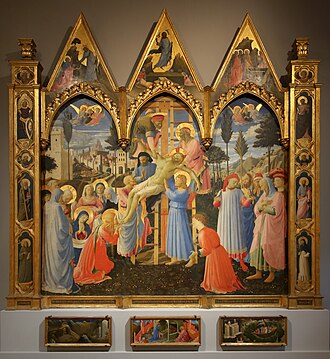 Descendimiento de la Cruz - Fra Angelico (1432)
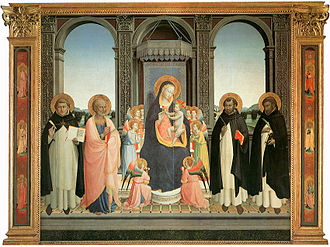 Retablo de Fiesole - Fra Angelico (1422)
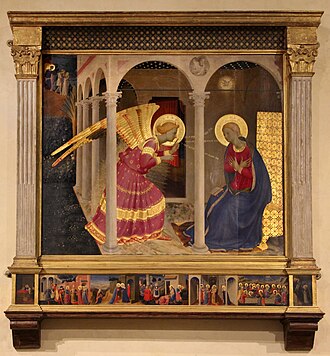 Anunciación de Cortona - Fra Angelico (1430s)
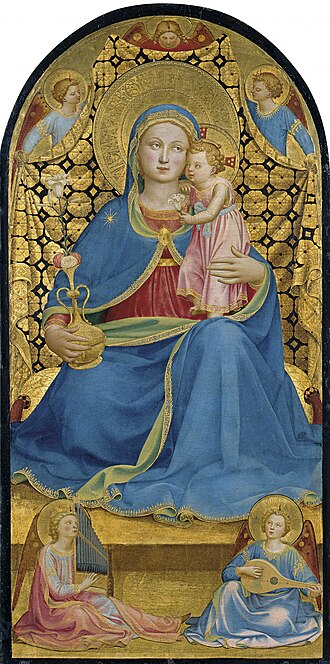 Virgen de la Humildad - Fra Angelico (1433)
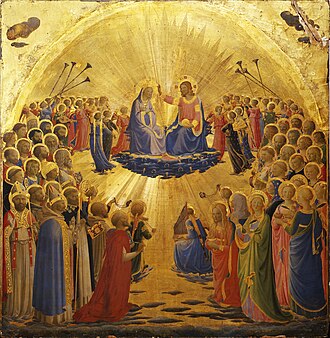 Coronación de la Virgen - Fra Angelico (1430s)
Obras de artistas relacionados
 La Gioconda - Leonardo da Vinci (1503-1519)
 La dama del armiño - Leonardo da Vinci (1490)
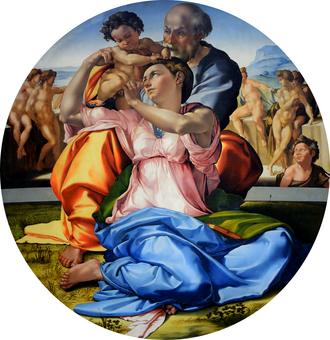 Tondo Doni - Michelangelo (1500s)
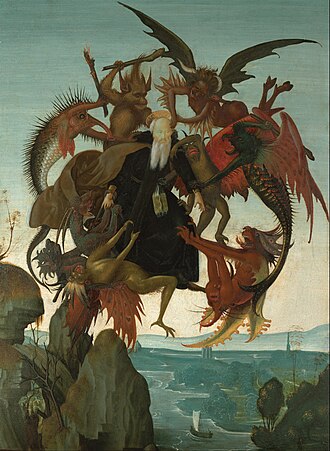 Los tormentos de San Antonio - Michelangelo (1487)
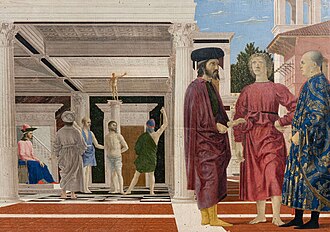 La flagelación - Piero della Francesca (1450s)
 Sacra Conversación - Piero della Francesca (1472)