La flagelación
Piero della Francesca · 1450s
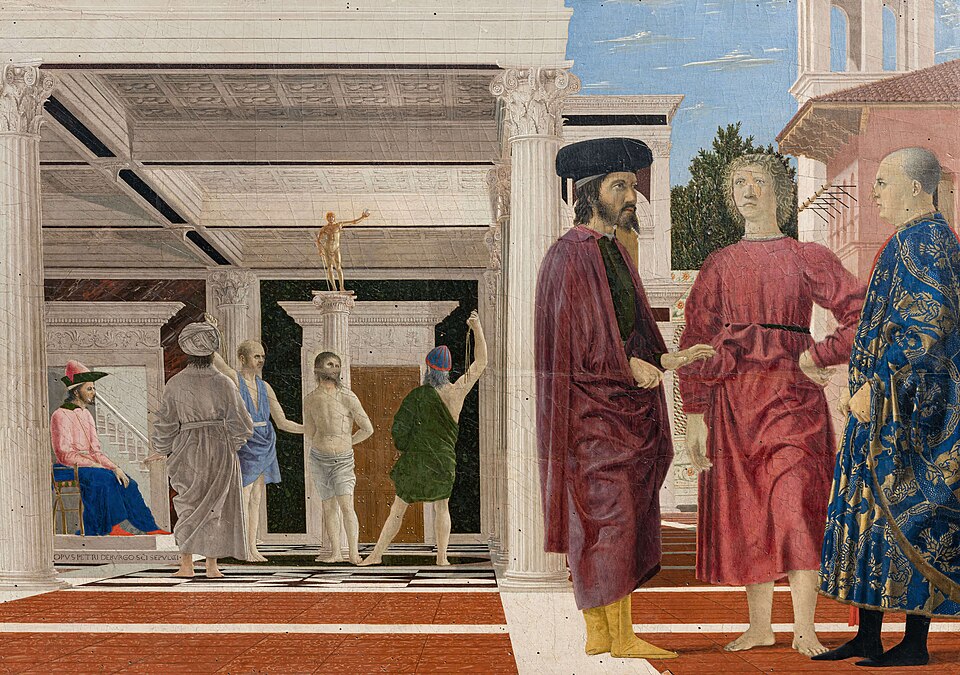
Christ is whipped in a pillared hall at the back, while three men in the foreground talk as if nothing were happening. Kenneth Clark called this small panel the greatest small painting in the world, and no one agrees on what it means.
The story behind the painting
Piero della Francesca painted the Flagellation around 1459 to 1460, according to Wikipedia, while Wikidata gives the 1450s. He signed it beneath the seated emperor: the work of Piero of Borgo Santo Sepolcro, his home town. The panel is small, about 67.5 by 91 cm, and hangs in the Galleria Nazionale delle Marche in Urbino. It once hung in Urbino Cathedral, where an 18th century inventory described it as the Flagellation with portraits of Duke Guidubaldo and Oddo Antonio. Originally its frame carried the Latin words Convenerunt in Unum, They came together, from Psalm 2.
What to look for
The scourging of Christ takes place in an open gallery in the middle distance, under a seated figure who is certainly, in one sense, Pontius Pilate. On the right, three men stand in the foreground and seem to pay no attention. The hall is drawn in precise linear perspective, its size exactly measured against the figures, and an air of stillness fills the whole panel. The flagellation is lit from the right, while the outdoor scene in front is lit from the left, suggesting two separate times. The bearded man at the front is painted with an intensity unusual for Piero's day.
Meaning and intent
Who the three men are is the great debate. A view still held in Urbino sees Duke Oddantonio da Montefeltro, murdered in 1444, between his advisers, his death compared to Christ's. Others see a dynastic tribute by Federico da Montefeltro. Carlo Ginzburg and Silvia Ronchey read a message from Cardinal Bessarion about Constantinople under the Ottomans, with the seated man as the Byzantine emperor John VIII. Kenneth Clark saw an allegory of the Church's suffering after 1453. Marilyn Aronberg Lavin sees two grieving fathers, Ludovico Gonzaga and Ottaviano Ubaldini, with a lost son between them. Adriano Marinazzo suggests past, present and future.
Legacy
The puzzle keeps growing. Lavin proposes the panel was made for Ottaviano's private chapel in the Ducal Palace of Urbino, whose altar is the exact size of the painting, so that its perspective would look correct only to someone kneeling before it. David King, through an acrostic on an astrolabe given to Cardinal Bessarion in 1462, links its hidden geometry to that gift. Each theory has objections: Federico had promised not to punish Oddantonio's death, and the dukes named in the inventory do not fit the dates. Called by one writer an enigmatic little painting, it remains a model of perspective and calm.
¿Sabías que…?
- Dated 1459 to 1460 by Wikipedia, the 1450s by Wikidata.
- Signed by Piero beneath the seated emperor.
- Kenneth Clark called it the greatest small painting in the world.
- In the Galleria Nazionale delle Marche, Urbino.
Sobre el artista
Piero della Francesca (1415-1492)
arte religioso · varón · Jesús de Nazaret · Primer Renacimiento
Más obras de Piero della Francesca
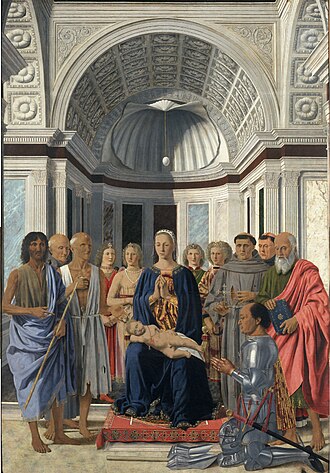 Sacra Conversación - Piero della Francesca (1472)
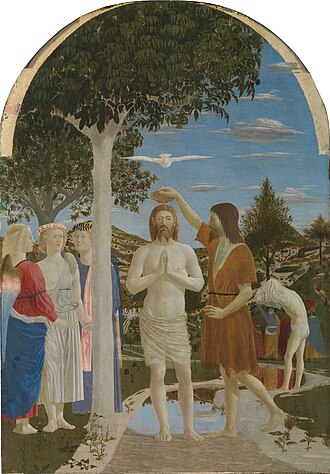 El bautismo de Cristo - Piero della Francesca (1448)
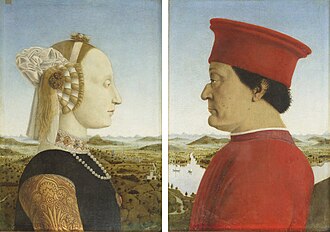 Duques de Urbino - Piero della Francesca (1465)
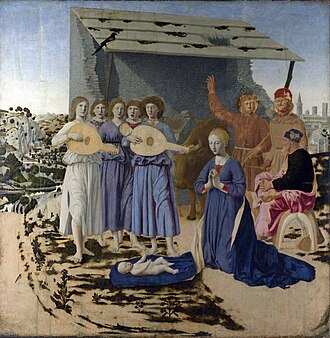 Natividad - Piero della Francesca (1480s)
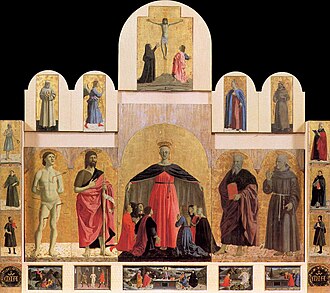 Políptico de la Misericordia - Piero della Francesca (1460s)
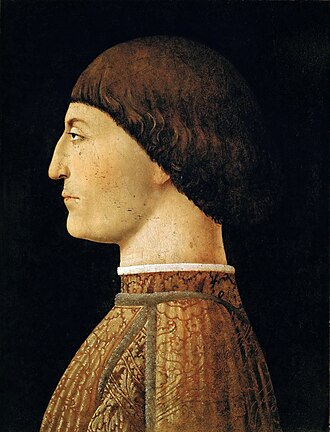 Retrato de Sigismondo Pandolfo Malatesta - Piero della Francesca (1450s)
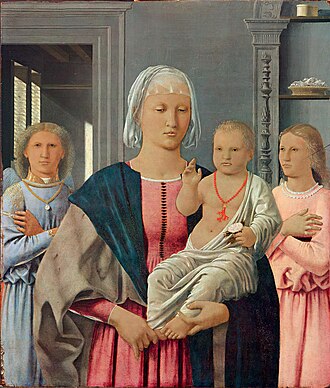 Madonna di Senigallia - Piero della Francesca (1470s)
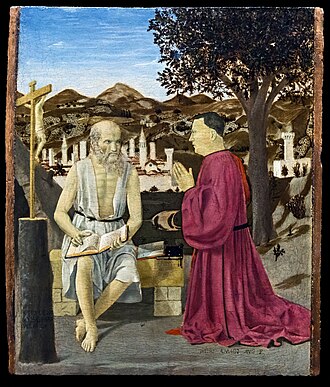 Saint Jerome and a Donor - Piero della Francesca (1440)
Obras de artistas relacionados
 El nacimiento de Venus - Sandro Botticelli (c. 1485)
 La primavera - Sandro Botticelli (1480s)
 La Gioconda - Leonardo da Vinci (1503-1519)
 La dama del armiño - Leonardo da Vinci (1490)
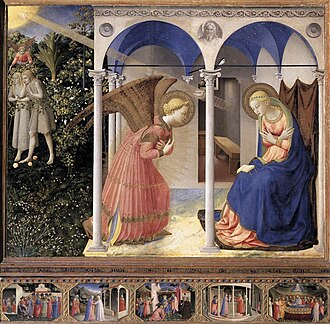 La Anunciación - Fra Angelico (1425)
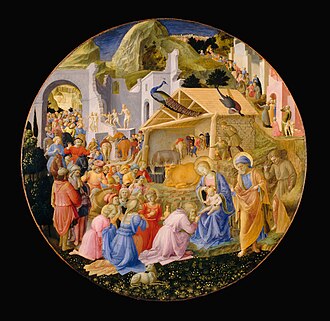 Adoración de los Reyes Magos - Fra Angelico (1430)
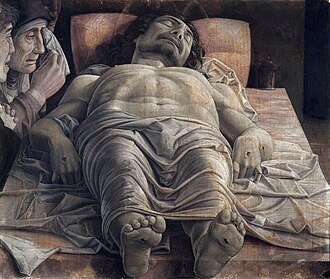 Lamentación sobre Cristo muerto - Andrea Mantegna (1483)
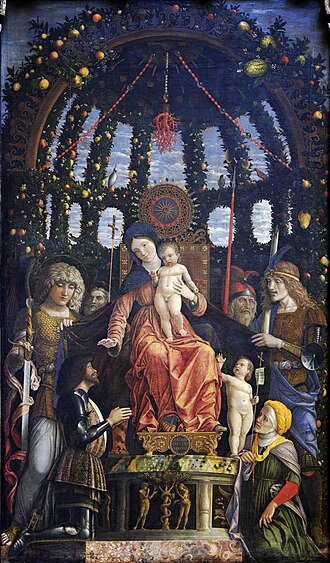 Madonna de la Victoria - Andrea Mantegna