The Argenteuil Bridge and the Seine
Gustave Caillebotte · 1883
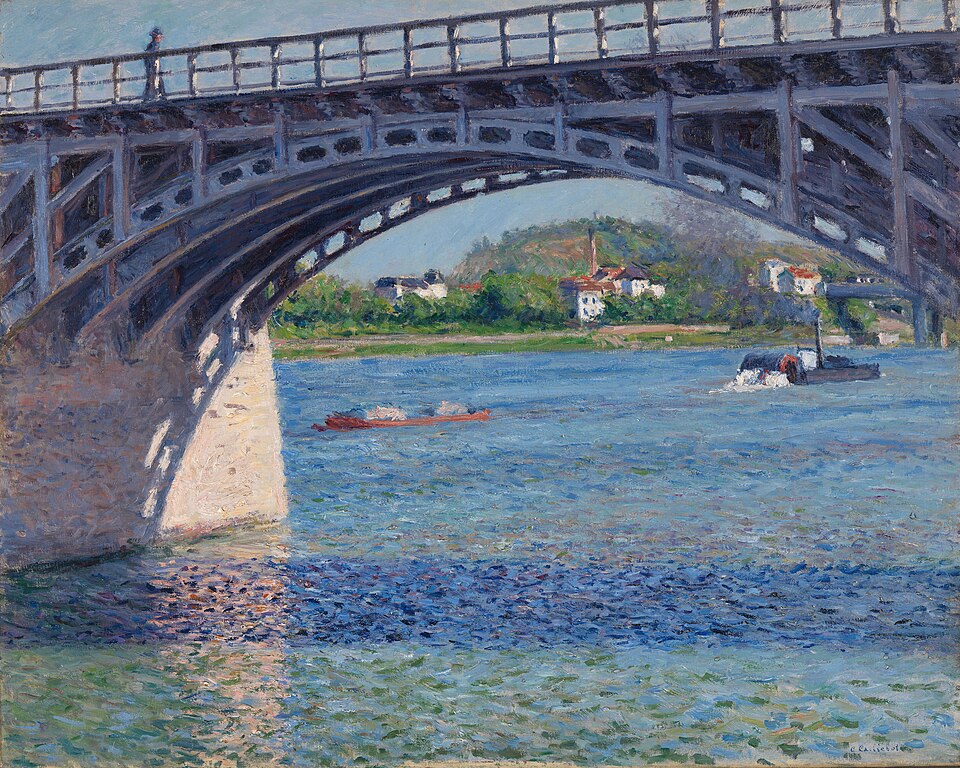
Caillebotte stood beneath an iron bridge and looked up. Five arches cross the whole canvas, held up, as one historian put it, only by our faith in a pier beyond the frame.
The story behind the painting
Argenteuil lies about eleven kilometres west of Paris, linked to the capital by a road bridge since 1831 and by rail since 1851. Monet lived there from 1871 to 1878, and Sisley, Renoir and Manet came to paint. Caillebotte knew the place as a sailing ground and bought Monet's Regatta at Argenteuil in 1876, yet he only painted the town years later. In 1881 he and his brother Martial bought a house in Petit Gennevilliers, right across the river, close to his boats. The exact date is unknown: an 1894 exhibition and the catalogue by Marie Berhaut say 1885, Kirk Varnedoe says around 1880 to 1885, others say 1883, which Wikidata also gives.
What to look for
The view runs through one arch of the road bridge, across the Seine to the far bank. Water fills most of the lower half and touches three edges, so we cannot tell where the painter stood. Short strokes of green, blue, orange and grey make the near water ripple, while long blue horizontals calm it further away. A dark grey paddle tug pushes upstream with a reddish wheel and white spray, towing a red-brown barge. A stone pier, cut by the left edge, carries five iron arches seen from below. A tiny walker on the bridge, almost hidden by the railing, shows how huge the structure is.
Meaning and intent
Caillebotte does not show the seven-arched bridge from a distance, set calmly in the landscape, as was usual. He crops it close and looks up at it in what the source calls a theatrical perspective. The art historian Paul Hayes Tucker remarked that the iron arches are held only by belief in a pier outside the frame and our trust in Caillebotte's art. The arch echoes the curve of the green Butte d'Orgemont hill, where a mill tower is hinted at. A factory chimney rises from the town. Nature and industry, river and traffic, sit together on a bright summer day in the Ile-de-France.
Legacy
Both bridges at Argenteuil had been destroyed in the war of 1870 to 1871 and rebuilt, and they became a recurring motif for the Impressionists. Monet painted two views of the road bridge in 1874, which Caillebotte surely knew and which may have served as models. Caillebotte's later Sailing Boats at Argenteuil, around 1888, in the Musee d'Orsay, shows the same road bridge from the Petit Gennevilliers bank. After his death the picture was shown in 1894 at the Galerie Durand-Ruel. Signed G. Caillebotte at lower right, the 65 by 82 cm canvas now belongs to the Hasso Plattner collection and hangs on long-term loan at the Museum Barberini in Potsdam.
¿Sabías que…?
- Painted from below one arch of the road bridge at Argenteuil.
- Date uncertain: sources range from about 1880 to 1885.
- Caillebotte had a house across the river in Petit Gennevilliers from 1881.
- Hasso Plattner collection, on loan to the Museum Barberini, Potsdam.
Sobre el artista
Gustave Caillebotte (1848-1894)
Impressionism: The Hasso Plattner Collection
Más obras de Gustave Caillebotte
 Calle de Paris, dia de lluvia - Gustave Caillebotte (1877)
 Los acuchilladores de parqué - Gustave Caillebotte (1875)
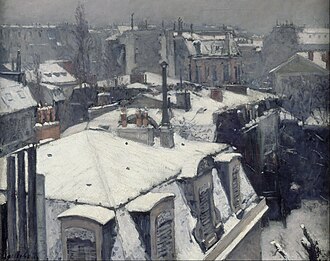 Vista sobre los techos, efecto de nieve - Gustave Caillebotte (1878)
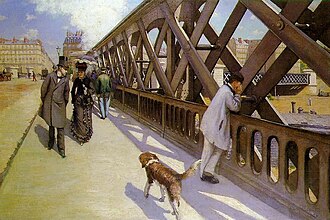 El puente de Europa - Gustave Caillebotte (1876)
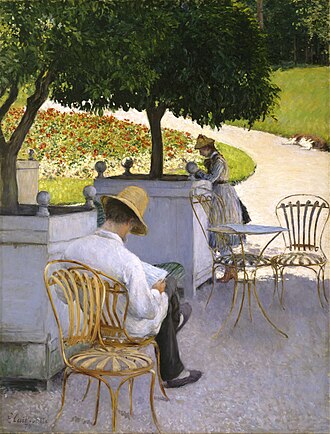 Los naranjos - Gustave Caillebotte (1878)
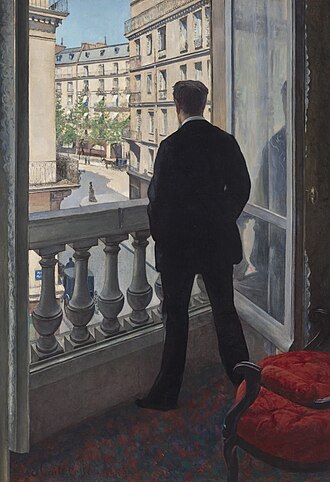 Hombre joven en la ventana - Gustave Caillebotte (1876)
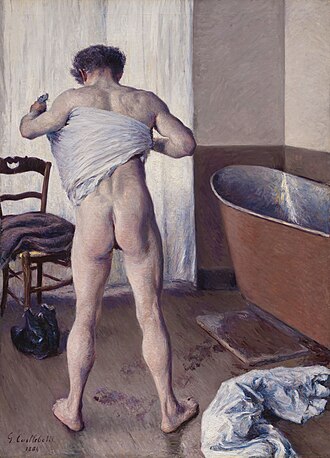 Hombre en el baño - Gustave Caillebotte (1884)
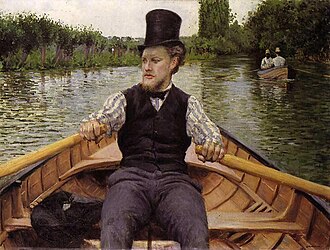 La partida del bote - Gustave Caillebotte (1878)
Obras de artistas relacionados
 Impresión, sol naciente - Claude Monet (1872)
 Nenúfares - Claude Monet (1906)
 Almuerzo sobre la hierba - Édouard Manet (1863)
 Olympia - Édouard Manet (1863)
 Baile en el Moulin de la Galette - Pierre-Auguste Renoir (1876)
 El almuerzo de los remeros - Pierre-Auguste Renoir (1881)
 La cuna - Berthe Morisot (1872)
 Summer's Day - Berthe Morisot (1879)
 El ajenjo - Edgar Degas (1875)
 Die Bellelli Familie - Edgar Degas (1858)
 El canal del Loing - Alfred Sisley (1892)
 The Watering Pond at Marly with Hoarfrost - Alfred Sisley (1876)