Santa Catalina de Alejandría
Artemisia Gentileschi · 1615
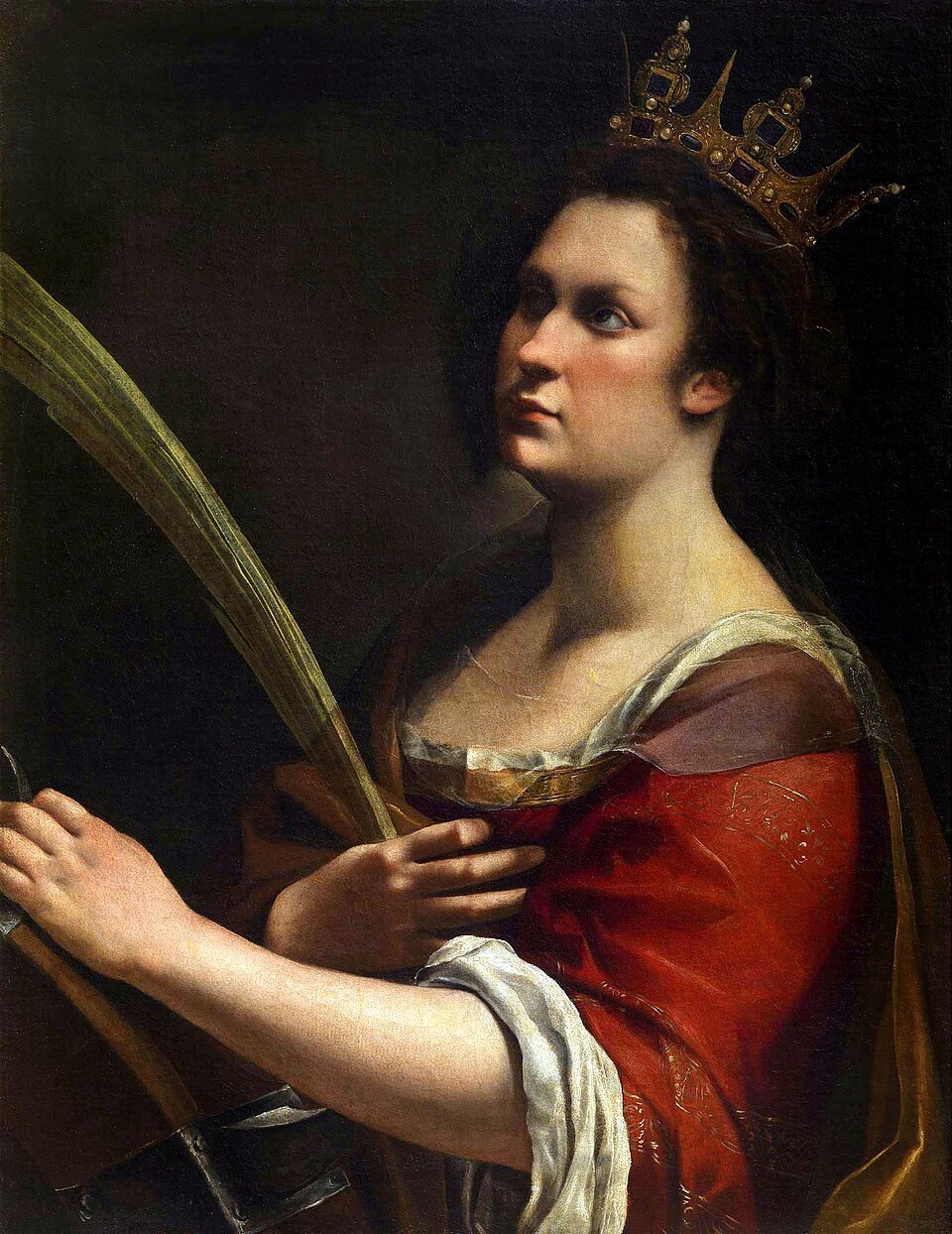
A crowned princess in red looks up toward heaven, holding the palm of martyrdom. X-rays later showed that underneath, Artemisia Gentileschi had first painted a woman in a turban looking straight at us.
The story behind the painting
Catherine was the daughter of King Costus of Alexandria and defied the emperor Maxentius by defending her Christian faith. Sentenced to die on a spiked wheel, she was saved when it miraculously broke, and was then beheaded. There is no clear evidence for the painting's date; Wikidata gives 1615, and art historians place it in Artemisia's Florentine years, when Caterina de' Medici lived in the city. Pictures of a saint famous for beauty and modesty became popular there as artists sought Medici patronage.
What to look for
Catherine wears a striking red gown with gold embellishment and an elaborate crown encrusted with gems, and she holds the martyr's palm frond. Researchers have noted that the crown resembles one made for Ferdinand I de' Medici. She looks upward, toward heaven. The painting is fairly small, about 77 by 63 cm, so the figure fills the space closely. Look at the contrast between the rich surface of the dress and jewels and the inward, lifted gaze of the face.
Meaning and intent
In 2019 conservators at the Opificio delle Pietre Dure in Florence examined the painting with infrared, ultraviolet and x-rays. Underneath they found a female head in a turban, facing the viewer, which matches tracings of Artemisia's Self-Portrait as Saint Catherine of Alexandria in the National Gallery, London. The study concluded she used the same cartoon for both, evidence that she used herself as a model for female martyrs. A third face, fully painted over, suggests she reused canvases. The final face may depict Caterina de' Medici, Maria Maddalena of Austria, or the artist herself.
Legacy
By 1683 the painting was recorded in the Medici collection at Villa Artimino, in the apartment of the court ladies, and by 1890 it was in the Galleria dell'Accademia. Once thought too fragile to show, it was recovered by a major restoration completed in 1966. It was damaged again by the 1993 bombing near the Uffizi and restored once more. Today it belongs to the Uffizi in Florence, and its hidden layers have made it a key piece in understanding how Artemisia worked.
¿Sabías que…?
- Painted in Florence; Wikidata gives 1615.
- Shares a cartoon with her Self-Portrait as Saint Catherine in London.
- Scans in 2019 revealed a turbaned head and a third face underneath.
- Damaged in the 1993 bombing near the Uffizi and restored.
Sobre el artista
Artemisia Gentileschi (1593-1653)
arte religioso · Galería Uffizi · Catalina de Alejandría
Más obras de Artemisia Gentileschi
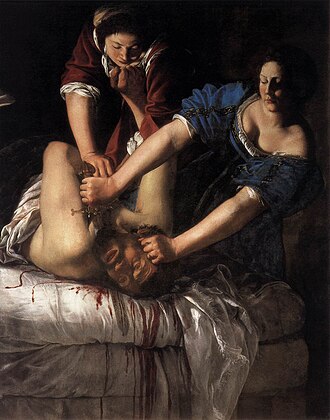 Judit decapitando a Holofernes - Artemisia Gentileschi (1613)
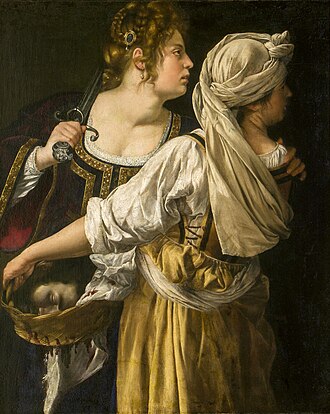 Judit y su doncella - Artemisia Gentileschi (1618)
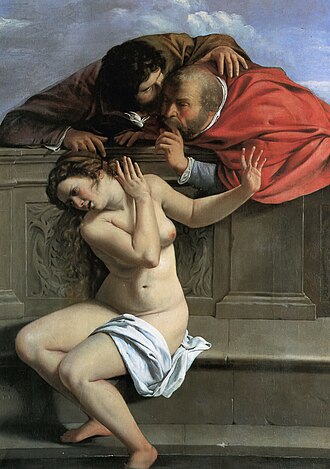 Susana y los viejos - Artemisia Gentileschi (1610)
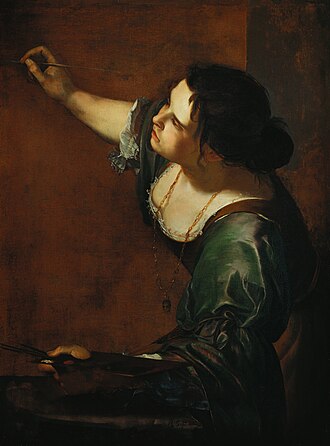 Autorretrato como alegoría de la pintura - Artemisia Gentileschi (1638)
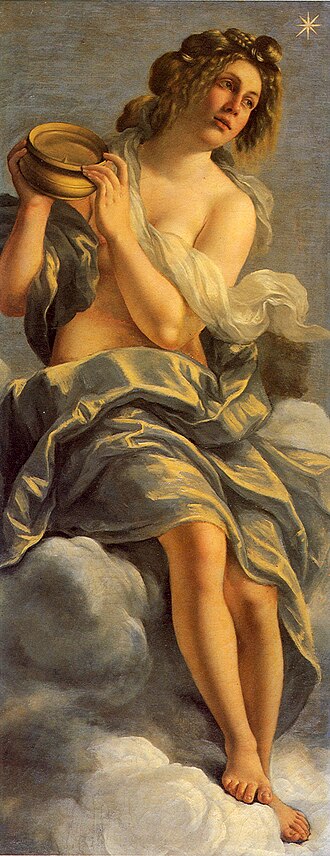 Alegoría de la inclinación - Artemisia Gentileschi (1615)
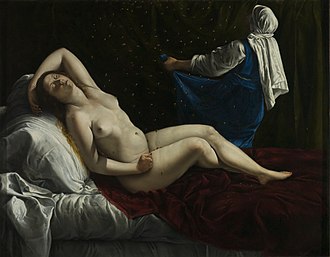 Dánae - Artemisia Gentileschi (1612)
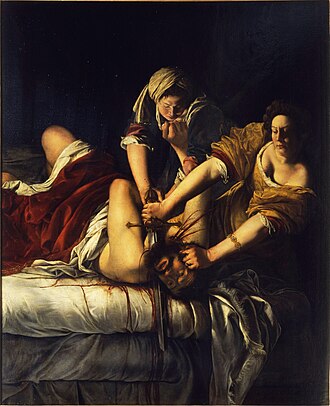 Judit decapitando a Holofernes - Artemisia Gentileschi (1620)
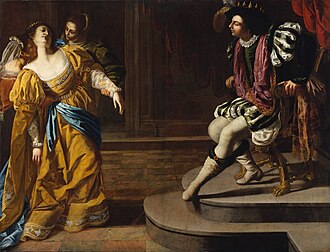 Ester y Asuero - Artemisia Gentileschi (1620s)
Obras de artistas relacionados
 La cena de Emaús - Caravaggio (1601)
 La vocación de San Mateo - Caravaggio (1609)
 Las meninas - Diego Velázquez (1656)
 La rendición de Breda - Diego Velázquez (1635)
 Saint Francis in Meditation - Francisco de Zurbarán (1639)
 Inmaculada Concepción - Francisco de Zurbarán (1661)
 Triple retrato de Carlos I - Anthony van Dyck (1635)
 Charles I (1600-1649) with M. de St Antoine - Anthony van Dyck (1636)
 La elevación de la cruz - Peter Paul Rubens (1609)
 Rapto de las hijas de Leucipo - Peter Paul Rubens (1618)
 La ronda de noche - Rembrandt van Rijn (1642)
 Autorretrato - Rembrandt van Rijn (1659)