Dánae
Artemisia Gentileschi · 1612
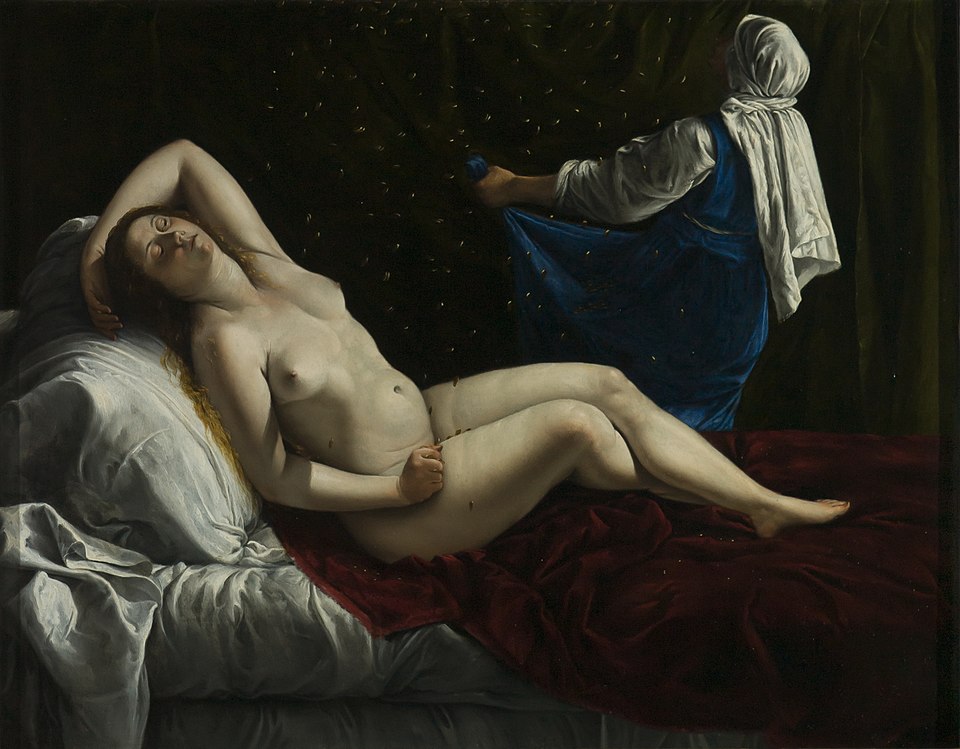
A young woman lies on a rich bed while gold coins rain down and her servant catches them in her skirts. Painted on a small sheet of copper around 1612, this Danaë first appeared on the market as the work of Artemisia's father.
The story behind the painting
The story is told in Ovid's Metamorphoses. King Acrisius of Argos was warned by a prophecy that his grandchild would cause his death, so he locked away his daughter Danaë to prevent any pregnancy. Zeus overcame the barrier by turning himself into a shower of gold, entering her room and seducing her. She bore a son, Perseus, who as a man killed his grandfather. Artemisia Gentileschi painted the scene around 1612, while she was living in Rome. It is assumed that the figure is a self-portrait of the artist.
What to look for
The nude Danaë reclines on a richly textiled bed in a dark room. In the background her servant, in a white headscarf, gathers gold coins in her blue skirts. The pose and design are based on Artemisia's own earlier Cleopatra. The work is small, about 41.3 by 52.7 cm, and painted on copper, unlike most of her surviving pictures. A cleaning completed in 1986 removed old, discoloured varnish and brought back the vivid colours of the servant's dress. Look closely at Danaë's hand and legs, which have divided scholars.
Meaning and intent
Art historians disagree about this Danaë. Some see an open, inviting posture; others point to her clenched fist and closed legs. Some scholars believe the painting refers directly to the rape the artist had suffered a few years earlier, while others argue that it shows a wider sympathy for women victimised by unwanted sexual pressure. The arguments for her authorship rest on the naturalistic rendering of the female body and on the sensitive portrayal of a woman's distress in the face of sexual violence.
Legacy
Because her father Orazio often painted on copper, scholars have debated whether this is his work or hers. The painting first appeared at a Sotheby's sale in Monaco on 22 February 1986, where it was offered as a work by Orazio. The Saint Louis Art Museum bought it on 1 August 1986, and it hangs there today, catalogued as Artemisia's. In a few months it went from a work sold under her father's name to one of her early paintings, a small copper panel at the centre of a large debate.
¿Sabías que…?
- Painted around 1612 in Rome, on copper.
- Based on the story of Danaë in Ovid's Metamorphoses.
- Sold in Monaco in 1986 as a work by Orazio Gentileschi.
- Saint Louis Art Museum since August 1986.
Sobre el artista
Artemisia Gentileschi (1593-1653)
mujer · pintura mitológica · desnudo · desnudo · melena · cama · decúbito · pelirrojo · cojín · Dánae
Más obras de Artemisia Gentileschi
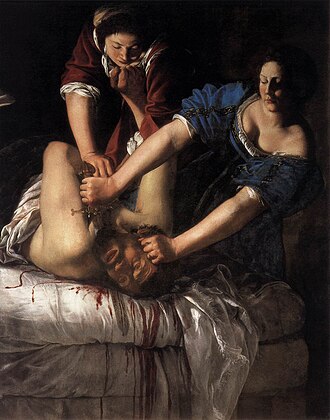 Judit decapitando a Holofernes - Artemisia Gentileschi (1613)
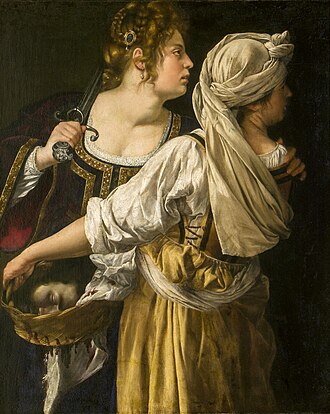 Judit y su doncella - Artemisia Gentileschi (1618)
%2C%20Artemisia%20GentileschiFXD.jpg) Susana y los viejos - Artemisia Gentileschi (1610)
Susana y los viejos - Artemisia Gentileschi (1610)%20-%20Artemisia%20Gentileschi.jpg) Autorretrato como alegoría de la pintura - Artemisia Gentileschi (1638)
Autorretrato como alegoría de la pintura - Artemisia Gentileschi (1638)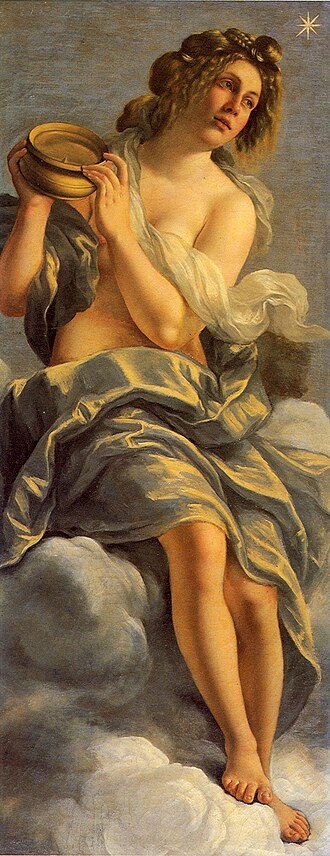 Alegoría de la inclinación - Artemisia Gentileschi (1615)
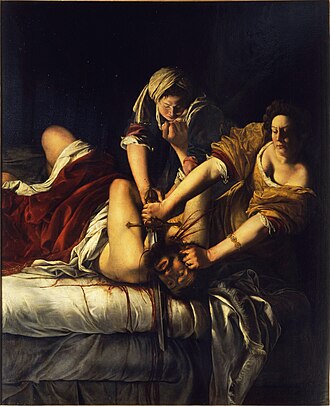 Judit decapitando a Holofernes - Artemisia Gentileschi (1620)
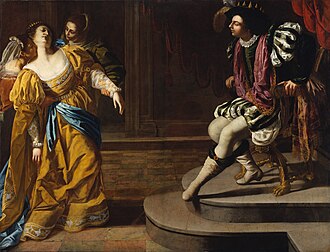 Ester y Asuero - Artemisia Gentileschi (1620s)
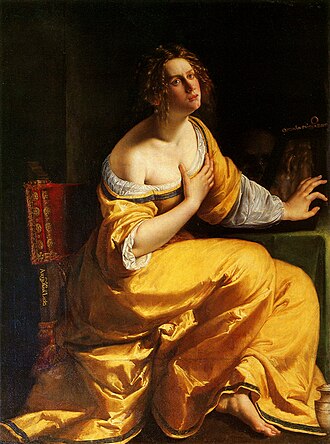 La conversión de la Magdalena - Artemisia Gentileschi (1616)