Madame Jeantaud en el espejo
Edgar Degas · 1875
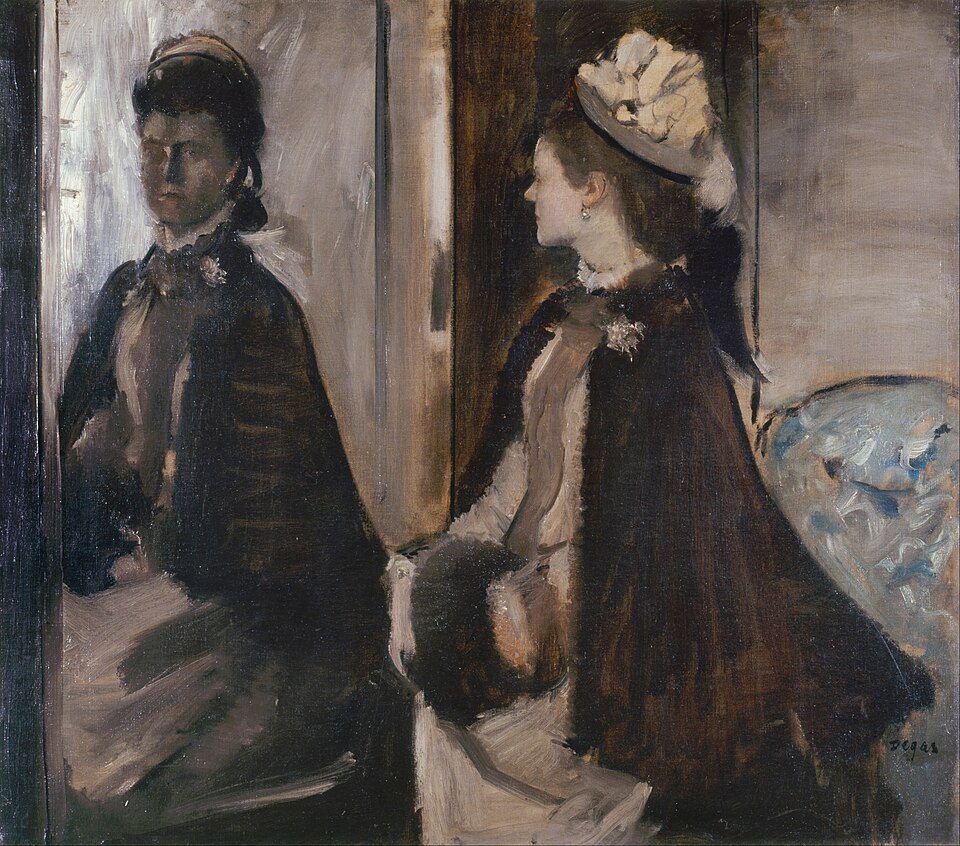
A fashionable woman glances into a mirror on her way in or out, muff pressed to her waist. We barely see her face, only her reflection looks back at us.
The story behind the painting
The woman is Berthe-Marie Bachoux, wife of Jean-Baptiste Jeantaud, a friend of Degas who had served alongside him as a comrade in arms during the Franco-Prussian War of 1870. Degas painted her in oil on canvas around 1875. She was not only his subject: the painter Jean-Jacques Henner also made a portrait of Madame Jeantaud, but in the frontal, still manner of an official portrait, which helps show how differently Degas chose to approach the same woman.
What to look for
Madame Jeantaud, elegantly dressed in the fashion of the day, has just come back to her apartment or is perhaps about to leave it. She glances furtively at the mirror while pressing a muff against her waist, in an intimate, everyday moment. Her own face is partly hidden, turned almost into a lost profile, but the mirror placed on the left shows her features from the front. Look at how the composition is cut and how the real woman and her reflection share the canvas.
Meaning and intent
Degas's style here is unusually intense and original. The bold cropping offers new, dynamic views in place of the frontal, iconic and motionless pose of official portraiture. Madame Jeantaud does look at the viewer, but indirectly, through the reflection. The mirror is a traditional symbol of the changeability and illusory nature of reality. Degas takes up a motif already known in the Renaissance, the portrait in the mirror, and breaks reality into different points of view.
Legacy
According to the Spanish Wikipedia article, this way of showing one person from several viewpoints at once foreshadows the Cubist art of Georges Braque and Pablo Picasso. The painting, about 70 by 84 cm, is kept in the Musée d'Orsay in Paris. It remains a portrait of a friend's wife caught between arriving and leaving, and a small experiment in seeing: one woman, two faces, and a glance that reaches us only by way of the glass.
¿Sabías que…?
- Painted around 1875.
- The sitter is the wife of Degas's war comrade Jean-Baptiste Jeantaud.
- Her face is seen mainly in the mirror.
- Musée d'Orsay, Paris.
Sobre el artista
Edgar Degas (1834-1917)
mujer · retrato · Museo de Orsay · sombrero · espejo
Más obras de Edgar Degas
 El ajenjo - Edgar Degas (1875)
 Die Bellelli Familie - Edgar Degas (1858)
 Clase de ballet - Edgar Degas (1871)
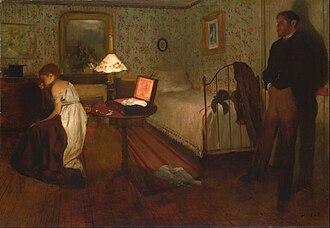 Interior - Edgar Degas (1868)
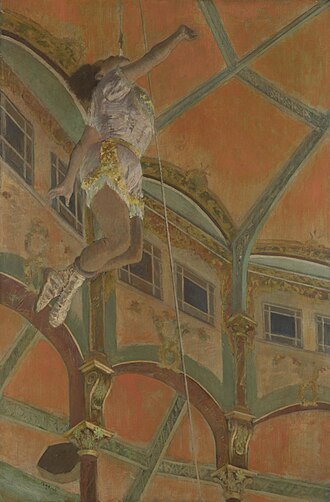 Miss La La en el Circo Fernando - Edgar Degas (1879)
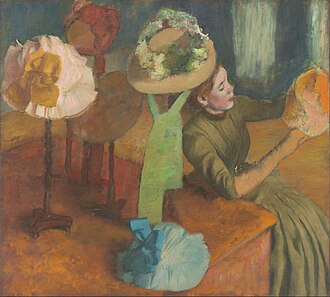 The Millinery Shop by Edgar Degas - Edgar Degas
.jpg) The Tub - Edgar Degas (1886)
The Tub - Edgar Degas (1886)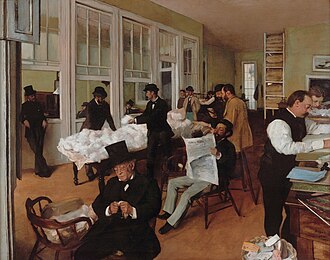 A Cotton Office in New Orleans - Edgar Degas (1873)
Obras de artistas relacionados
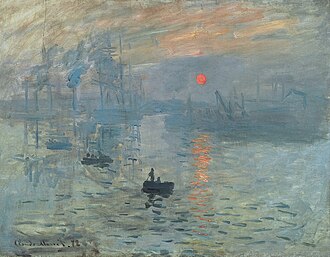 Impresión, sol naciente - Claude Monet (1872)
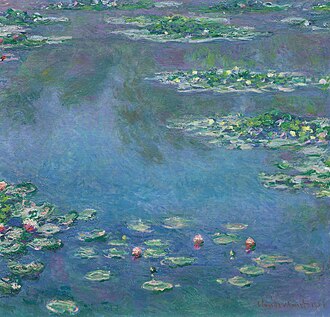 Nenúfares - Claude Monet (1906)
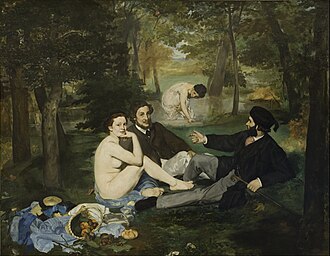 Almuerzo sobre la hierba - Édouard Manet (1863)
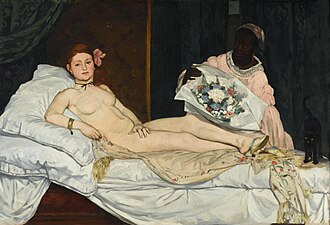 Olympia - Édouard Manet (1863)
 Baile en el Moulin de la Galette - Pierre-Auguste Renoir (1876)
 El almuerzo de los remeros - Pierre-Auguste Renoir (1881)
 La noche estrellada - Vincent van Gogh (1889)
.jpg) Terraza de café por la noche - Vincent van Gogh (1888)
Terraza de café por la noche - Vincent van Gogh (1888) El Temerario remolcado - J. M. W. Turner (1839)
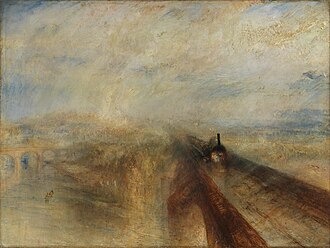 Lluvia, vapor y velocidad. El gran ferrocarril del Oeste - J. M. W. Turner (1844)
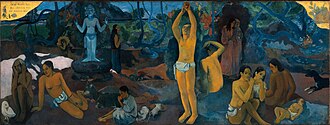 ¿De dónde venimos? ¿Qué somos? ¿Adónde vamos? - Paul Gauguin (1897-1898)
%201889.jpg) El Cristo amarillo - Paul Gauguin (1889)
El Cristo amarillo - Paul Gauguin (1889)