Leda y el cisne
Leonardo da Vinci · 1510
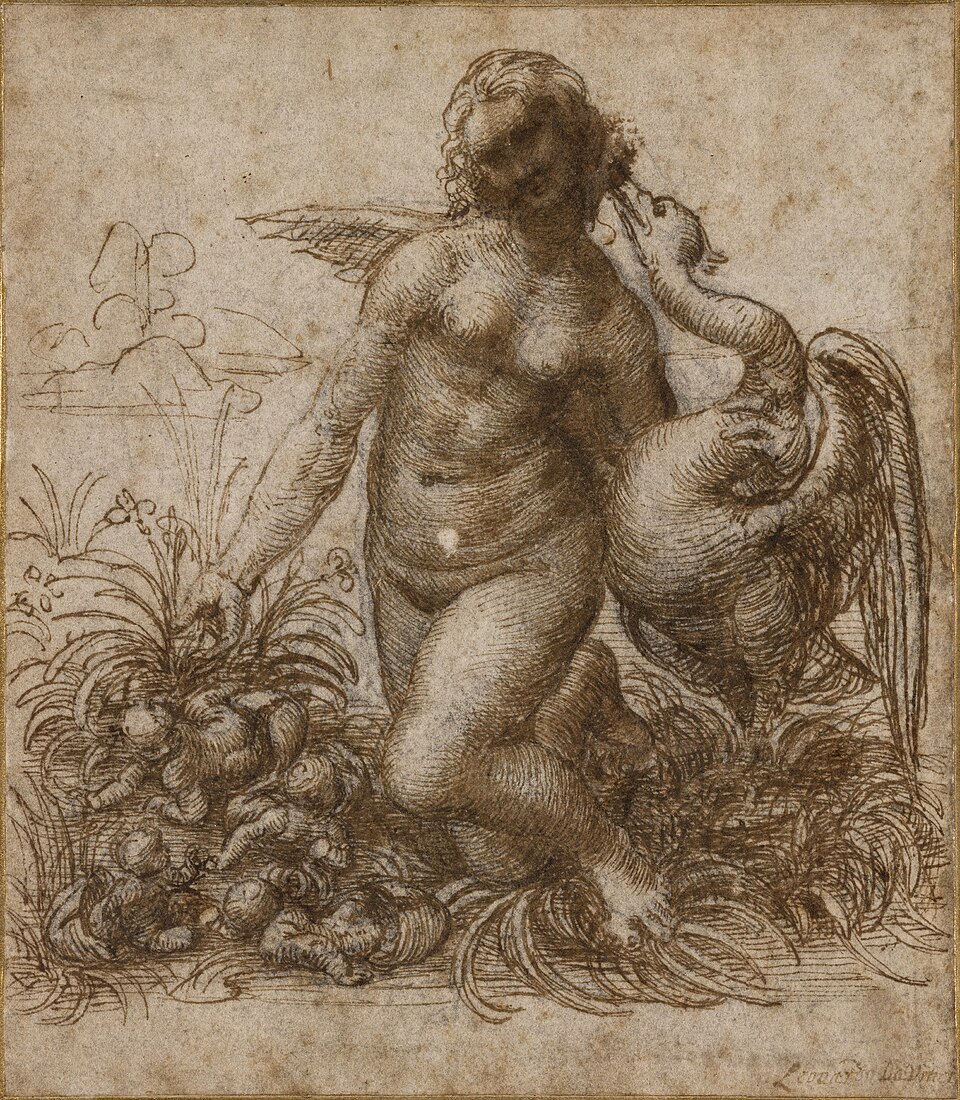
One of Leonardo da Vinci's most talked-about paintings is one nobody alive has ever seen. Leda and the Swan survives only in his drawings and in the copies of his followers.
The story behind the painting
Between about 1503 and 1510, Leonardo da Vinci worked on two different compositions telling the Greek myth of Leda, the queen seduced by Zeus in the form of a swan. In 1504 he began studies for a first version, apparently never painted, showing Leda kneeling or seated on the ground with her children. Three sketches survive, at Chatsworth, in Rotterdam and in the Royal Library at Windsor. It has been suggested that the Chatsworth sketch was inspired by the Laocoön Group, the ancient sculpture unearthed in 1506. Then, in 1508, Leonardo painted a second, different composition: a nude Leda standing and embracing the swan. That painting, the completed version, is the one this story follows, and its fate is one of the great losses of Renaissance art.
What to look for
Because Leonardo's painting is lost, we can only look through other eyes. The most valuable witness is Cassiano dal Pozzo, who saw it at the French royal Château de Fontainebleau in 1625. He described a standing Leda almost entirely naked, the swan beside her, and two eggs whose broken shells release four babies. He found the style somewhat dry but the work exquisitely finished, especially the woman's breast, and praised the landscape and plants as rendered with the greatest diligence. He also noted the damage: the picture was painted on three long panels that had split apart, losing paint. The many surviving copies by Leonardo's followers echo this arrangement, with the swan's curving neck answering the gentle twist of Leda's body.
Meaning and intent
Leda's story comes from Greek myth: Zeus, king of the gods, approached her disguised as a swan, and from their union came children hatched from eggs. Leonardo's two sets of infant twins and their enormous broken shells turn the tale into an image of fertility and birth as much as of seduction. The earlier studies show how intensely he thought about the twisting human figure; the proposed link with the Laocoön, where a similar twist of the body appears and a serpent coils like the swan's neck, suggests a dialogue with ancient sculpture. Beyond that, the sources say little about Leonardo's own intentions, and much of what the picture meant must be inferred from the drawings and copies that remain.
Legacy
The painting was last recorded at Fontainebleau in 1625 and is now lost, probably deliberately destroyed. Yet its composition lived on. The earliest copies are probably the Spiridon Leda, perhaps by a studio assistant and now in the Uffizi, and a version by Cesare da Sesto at Wilton House in England. Other followers of Leonardo, known as the Leonardeschi, made further versions, among them works attributed to Giampietrino and one in the Philadelphia Museum of Art. Giampietrino also completed a Kneeling Leda with her Children, now in Kassel, based on the first composition. Together these echoes make Leda one of the most influential lost images of the High Renaissance: a masterpiece known almost entirely by its reflections.
¿Sabías que…?
- Leonardo's original painting is lost, probably deliberately destroyed.
- It was last recorded at Fontainebleau in 1625.
- It was painted on three long panels that later split apart.
- The Spiridon Leda in the Uffizi is among the earliest copies.
Sobre el artista
Leonardo da Vinci (1452-1519)
mujer · pintura mitológica · Alto Renacimiento · desnudo · desnudo · Zeus
Más obras de Leonardo da Vinci
 La Gioconda - Leonardo da Vinci (1503-1519)
 La dama del armiño - Leonardo da Vinci (1490)
 Salvator Mundi - Leonardo da Vinci (1490)
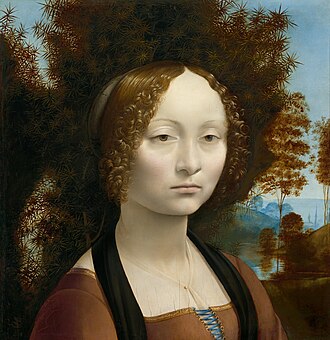 Retrato de Ginebra de Benci - Leonardo da Vinci (1470s)
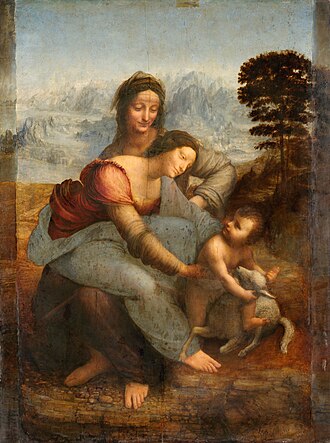 La Virgen, el Niño Jesús y Santa Ana - Leonardo da Vinci
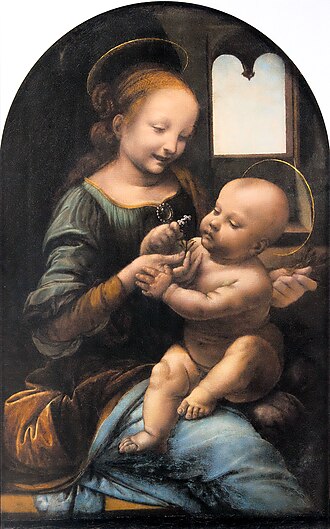 Madona Benois - Leonardo da Vinci
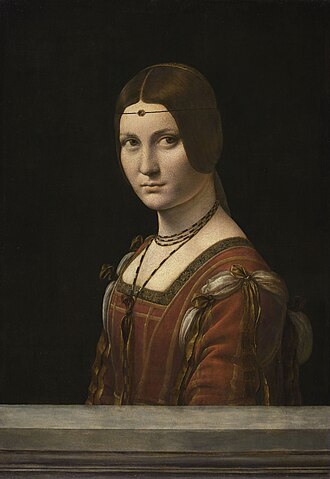 La Belle Ferronière - Leonardo da Vinci (1495)
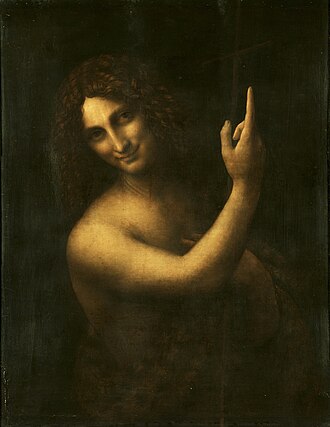 San Juan Bautista - Leonardo da Vinci (1510s)
Obras de artistas relacionados
.jpg) Venus de Urbino - Titian (1538)
Venus de Urbino - Titian (1538) La Asunción de la Virgen - Titian (1510s)
 Autorretrato de Durero - Albrecht Dürer (1500)
 Adoración de los Magos - Albrecht Dürer (1504)
 El nacimiento de Venus - Sandro Botticelli (c. 1485)
 La primavera - Sandro Botticelli (1480s)