L’inconnue
Édouard Manet · 1880
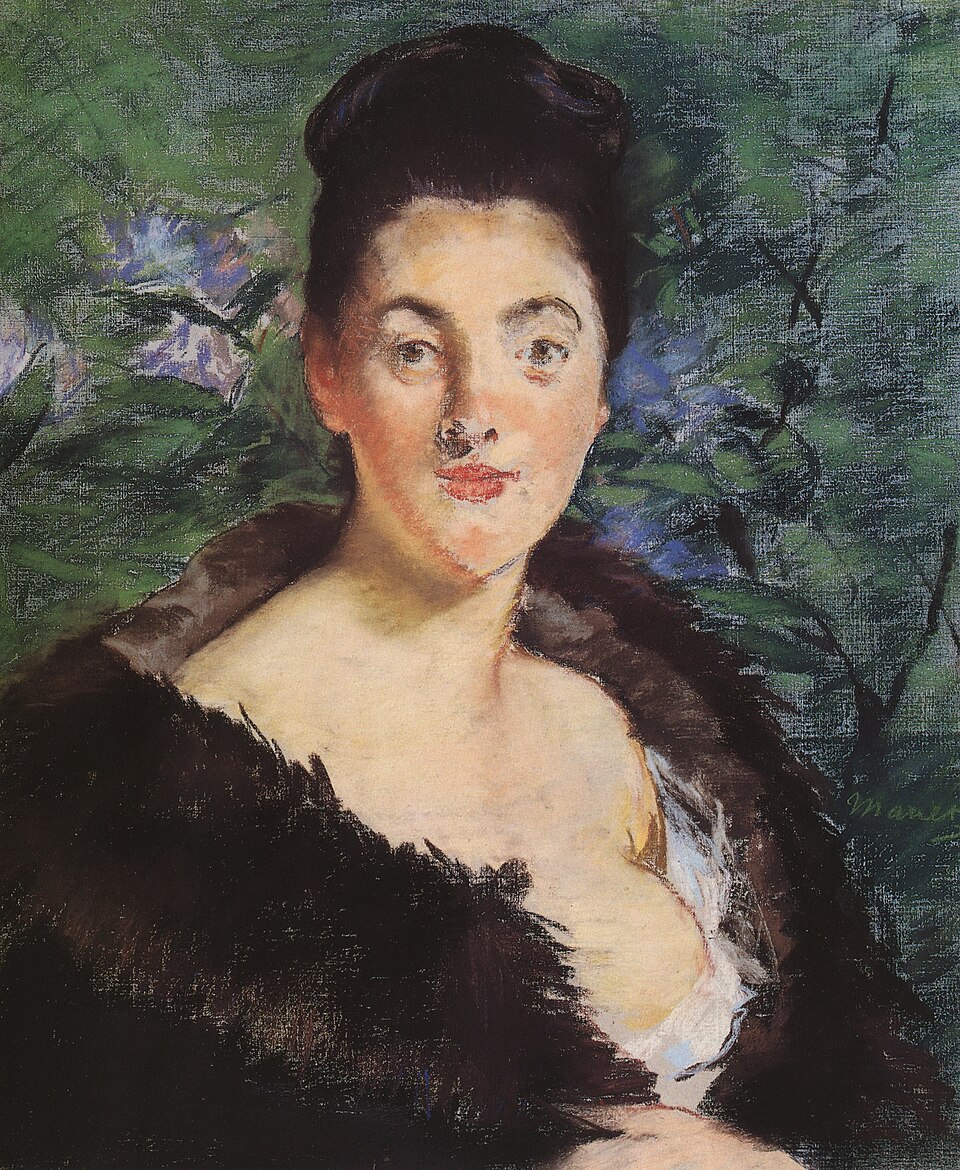
A young woman in a fur-collared coat looks straight at us from a screen of leaves and blue flowers. Manet drew her in pastel around 1880, and no one has ever been sure who she was.
The story behind the painting
This pastel on canvas, known as Lady in Fur, Madame Guillemet or L'inconnue, The Unknown Woman, was made by Édouard Manet around 1880. It belongs to a group of pastels in an Impressionist manner that he made a few years before his death. Wikipedia gives its size as 55.8 by 45.8 cm, Wikidata as 55 by 45 cm. The first owner is recorded as "Guillemet, Paris", which is why some authors think the sitter may be Jeanne Guillemet, who ran a fashion shop with her husband Jules on the Rue du Faubourg Saint-Honoré and was a friend of Manet's.
What to look for
She is shown half length, body turned slightly to the right, face fully toward us, eyes wide open beneath thin arched brows. Her dark hair is swept up, leaving forehead and ear free, her skin rendered in fine, delicate, breathed-on tones, with a touch of rouge and red lips. Her black coat with a brown fur collar falls open over bare shoulders and a little white fabric, and the contrast of pale skin against dark fibrous fur is striking. Behind her, green leaves, dark twigs and blue and white flowers form an almost abstract wallpaper. The signature Manet appears on a green band at the right.
Meaning and intent
The identity question is the heart of this picture. Jeanne Guillemet was known for beauty and elegance, and the plant background recalls Manet's double portrait of the Guillemets, In the Conservatory. Yet in her other portraits she wears high-necked dresses, and her letters with Manet were rather formal, which argues against such a revealing image. Manet had a real conservatory where he posed several sitters. His wife Suzanne is ruled out, Jeanne Demarsy looks different, and Madame Jacob looks strikingly similar. No sure identification is possible, which is why the name L'inconnue fits so well.
Legacy
After Guillemet, the picture belonged to Auguste Pellerin, whose Manet collection was sold in 1910 to a consortium of Bernheim-Jeune, Durand-Ruel and Paul Cassirer. It then went to the Berlin banker Robert von Mendelssohn, and after his death to his family. In 1935 much of the collection was moved to Schloss Kammer in Austria. In 1942 the widow, Giulietta von Mendelssohn-Gordigiani, had works sold through her agent Aldo Cima, and that year the pastel entered the Belvedere in Vienna. An Albertina exhibition in 2012 described it as Manet's tribute to female beauty, sensuality and elegance.
¿Sabías que…?
- A pastel by Manet, around 1880.
- The sitter's identity is unknown; Jeanne Guillemet is one suggestion.
- Once in the Pellerin and Mendelssohn collections.
- In the Belvedere, Vienna, since 1942.
Sobre el artista
Édouard Manet (1832-1883)
Más obras de Édouard Manet
 Almuerzo sobre la hierba - Édouard Manet (1863)
 Olympia - Édouard Manet (1863)
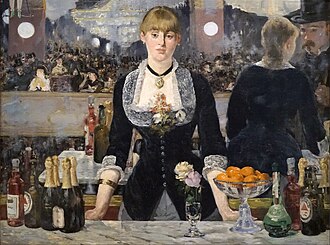 Un bar del Folies Bergère - Édouard Manet (1882)
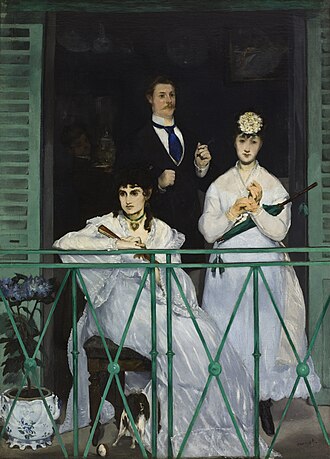 El balcón - Édouard Manet (1868)
 La música en las Tullerías - Édouard Manet (1862)
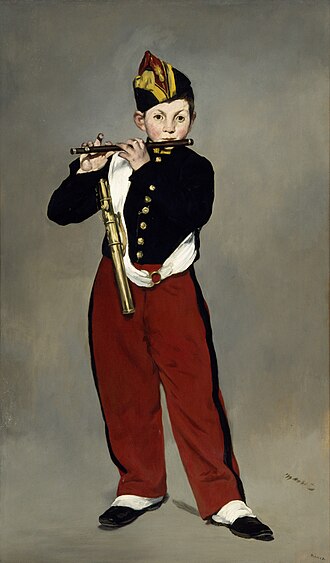 El pífano - Édouard Manet (1866)
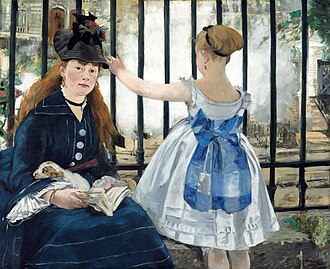 El Ferrocarril o El Camino de Hierro. - Édouard Manet (1873)
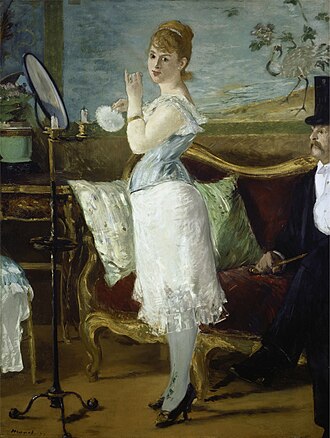 Nana - Édouard Manet (1877)
Obras de artistas relacionados
 Impresión, sol naciente - Claude Monet (1872)
 Nenúfares - Claude Monet (1906)
 Baile en el Moulin de la Galette - Pierre-Auguste Renoir (1876)
 El almuerzo de los remeros - Pierre-Auguste Renoir (1881)
 La cuna - Berthe Morisot (1872)
 Summer's Day - Berthe Morisot (1879)
 El ajenjo - Edgar Degas (1875)
 Die Bellelli Familie - Edgar Degas (1858)
 El canal del Loing - Alfred Sisley (1892)
 The Watering Pond at Marly with Hoarfrost - Alfred Sisley (1876)
 Calle de Paris, dia de lluvia - Gustave Caillebotte (1877)
 Los acuchilladores de parqué - Gustave Caillebotte (1875)