Jeune homme à barbe blonde
Édouard Manet · 1881
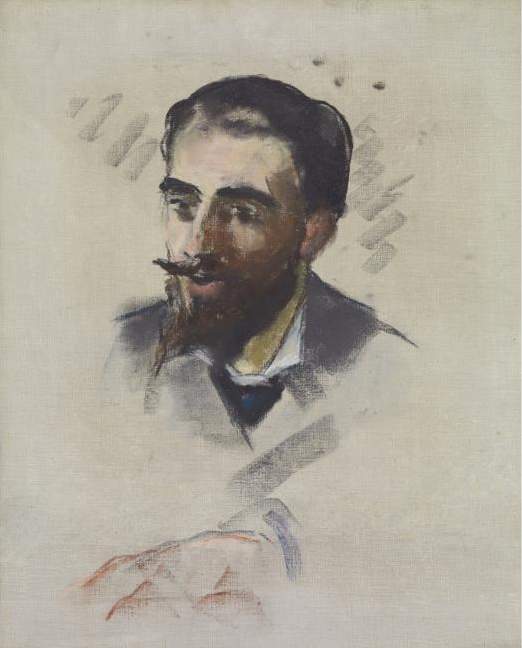
A young man with a twisted beard, lips parted as if mid-sentence, sketched in a few strokes of pastel. Manet never wrote down his name, and no one has managed to find it since.
The story behind the painting
Manet made this pastel on canvas around 1881, in the last years of his life, when he drew a series of men's portraits, mostly friends and acquaintances, since he usually did not take commissions. The series includes the writers René Maizeroy and George Moore, the composers Cabaner and Emmanuel Chabrier, his doctor Materne and the painters Constantin Guys and Julien de La Rochenoire. This young man, though, has no name. The picture is neither signed nor dated, and it was still in Manet's studio when he died in 1883.
What to look for
The head is shown bust length in half profile, turned to the left. His eyes do not meet ours but fix a point beyond the left edge, and his parted lips give the impression he is talking. Notice the full beard twisted into points, the parted short hair and the wide brows over dark eyes. The left side of his face is deep in shadow, the right and the forehead pale. Of his clothes Manet drew only the neck: a white shirt, a blue tie, a blue-grey suit. A few broad strokes suggest a background, and much of the primed canvas is left bare.
Meaning and intent
The German article describes the beard as brown, even though the title calls it blond, a small mismatch worth noticing. Sandra Orienti suggested the sitter might be Dr Materne, but his portrait in the Musée d'Orsay shows little likeness, especially in the beard. A pastel called Blond Man at the Fogg Art Museum is similar in treatment but clearly shows another man with much lighter hair. The features of Manet's portrait of Jean de Cabanès share the beard and brows, but this may be chance. What remains is Manet's evident pleasure in the wild beards of his contemporaries and the lively character they reveal.
Legacy
After Manet's death the pastel was sold at the auction of his estate at the Hôtel Drouot in February 1884, to the collector M. de la Narde. It then passed to Manet's brother Eugène and his wife Berthe Morisot, and their daughter Julie Manet-Rouart later inherited it. After the Rouart family sold it, it was offered by galleries in New York and Tokyo, spent time in a private collection in Japan, and went through auctions in New York and Paris between 2010 and 2015. It remains in a private collection, a quick, intimate sketch of a stranger Manet clearly found worth looking at.
¿Sabías que…?
- Pastel on canvas, about 1881, 56 by 46 cm.
- The sitter is unknown; proposed identifications do not match.
- Owned by Berthe Morisot and Eugène Manet, then their daughter Julie.
- Now in a private collection.
Sobre el artista
Édouard Manet (1832-1883)
Más obras de Édouard Manet
 Almuerzo sobre la hierba - Édouard Manet (1863)
 Olympia - Édouard Manet (1863)
 Un bar del Folies Bergère - Édouard Manet (1882)
 El balcón - Édouard Manet (1868)
 La música en las Tullerías - Édouard Manet (1862)
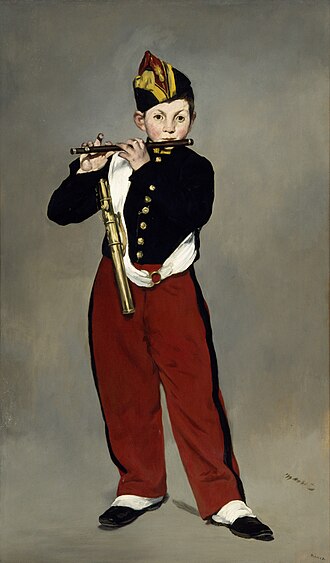 El pífano - Édouard Manet (1866)
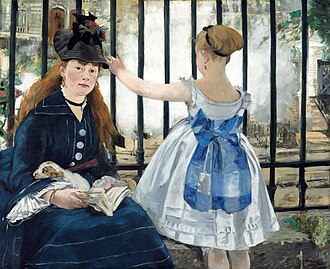 El Ferrocarril o El Camino de Hierro. - Édouard Manet (1873)
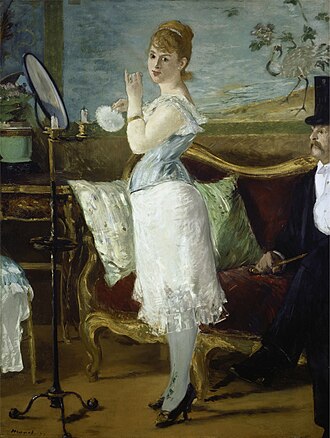 Nana - Édouard Manet (1877)
Obras de artistas relacionados
 Impresión, sol naciente - Claude Monet (1872)
 Nenúfares - Claude Monet (1906)
 Baile en el Moulin de la Galette - Pierre-Auguste Renoir (1876)
 El almuerzo de los remeros - Pierre-Auguste Renoir (1881)
 La cuna - Berthe Morisot (1872)
 Summer's Day - Berthe Morisot (1879)
 El ajenjo - Edgar Degas (1875)
 Die Bellelli Familie - Edgar Degas (1858)
 El canal del Loing - Alfred Sisley (1892)
 The Watering Pond at Marly with Hoarfrost - Alfred Sisley (1876)
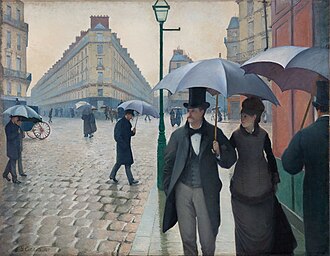 Calle de Paris, dia de lluvia - Gustave Caillebotte (1877)
 Los acuchilladores de parqué - Gustave Caillebotte (1875)