Hail Caesar! We Who Are about to Die Salute You
Jean-Léon Gérôme · 1859
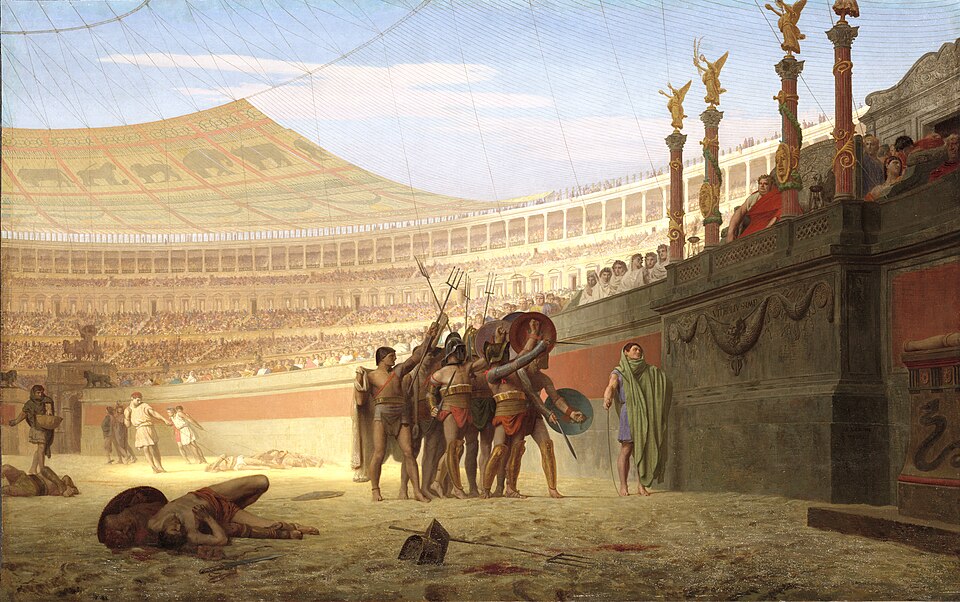
Gladiators raise their arms to the emperor while the fallen are dragged away with hooks. Gérôme puts us down on the bloody sand beside them, and once thought it his best picture.
The story behind the painting
Gérôme first saw the Colosseum in 1843 on a trip to Rome, and he went on to study ancient weapons and visit archaeological sites. In the late 1850s France wanted history painting that made past societies look alive, as the historian Prosper de Barante put it. Gérôme drew on Suetonius's Lives of the Twelve Caesars and painted this canvas in 1859. He showed it at the Paris Salon that year with The Death of Caesar and King Candaules. It was a success that helped make his name, and at the time he considered it his best work. It is signed J L GEROME and MDCCCLIX on the front of the imperial box.
What to look for
The canvas is about 93 by 145 cm. Before the fighting, a group of gladiators salute the emperor Vitellius, who lies on the imperial couch in his box beside the Vestal Virgins, while some of their fallen comrades are dragged out of the arena with iron hooks. The sand is covered with blood, weapons and bodies. Notice where you stand: as in Pollice Verso and The Christian Martyrs' Last Prayer, the viewpoint is on the sand itself, level with the gladiators, not in the stands with the Romans who watch the carnage in the shade of the awning.
Meaning and intent
That low viewpoint makes us side with the men about to die. Gérôme rejected idealised heroes, and the poet Charles Baudelaire described his Caesar as an obese wine merchant or butcher, unfit for an emperor's nobility. The scene is also anachronistic, because the Colosseum only opened in the year 80 under Titus. The famous salute is a modern myth as well: the phrase is known only from Suetonius, at a mock naval battle on the Fucine Lake under Claudius, spoken not by gladiators but by condemned men. The wrong link with gladiators still lives on in popular culture.
Legacy
Gérôme later changed his mind and felt the subject lacked historical accuracy. Keeping the earlier composition but reworking it from written sources and artefacts, in 1872 he painted Pollice Verso, where the victor stands over the loser awaiting the crowd's verdict. He painted many more scenes of the Roman games. The picture was even parodied by the Russian caricaturist Rayevsky, who replaced the emperor with the composer César Cui and the gladiators with characters from his works. In 1925 the painting was given to the Yale University Art Gallery in New Haven, where it remains.
¿Sabías que…?
- Painted in 1859 and shown at the Paris Salon the same year.
- The viewer stands on the arena sand, level with the gladiators.
- The famous salute was never a gladiators' custom.
- At the Yale University Art Gallery since 1925.
Sobre el artista
Jean-Léon Gérôme (1824-1904)
varón · pintura de historia · academicismo · gentío · Galería de Arte de la Universidad Yale
Más obras de Jean-Léon Gérôme
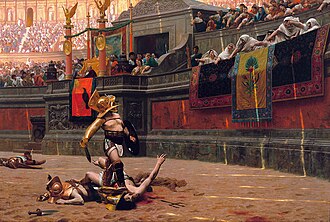 Pollice verso - Jean-Léon Gérôme (1872)
 El mercado de esclavos - Jean-Léon Gérôme (1866)
 Friné frente al Areópago - Jean-Léon Gérôme (1861)
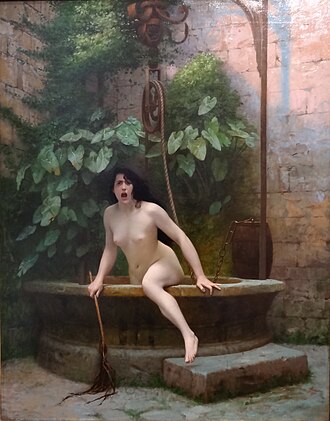 La verdad saliendo del pozo - Jean-Léon Gérôme (1896)
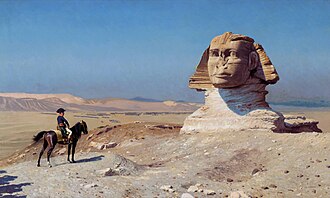 Bonaparte ante la Esfinge - Jean-Léon Gérôme (1867)
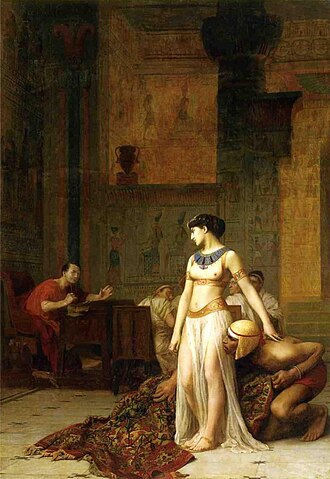 Cleopatra y César - Jean-Léon Gérôme (1866)
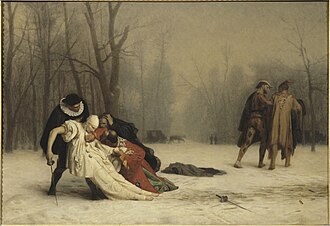 La salida del baile de máscaras - Jean-Léon Gérôme (1857)
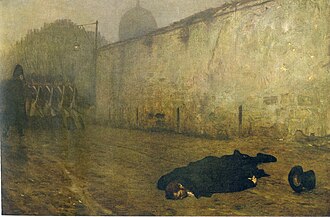 La Ejecución del mariscal Ney - Jean-Léon Gérôme (1868)
Obras de artistas relacionados
 Almuerzo sobre la hierba - Édouard Manet (1863)
 Olympia - Édouard Manet (1863)
 El origen del mundo - Gustave Courbet (1866)
 Entierro en Ornans - Gustave Courbet (2020)
 Clavel, lirio, lirio, rosa - John Singer Sargent (1885-1886)
 Retrato de Madame X - John Singer Sargent (1884)
 La Libertad guiando al pueblo - Eugène Delacroix (1830)
 La muerte de Sardanápalo - Eugène Delacroix (1827)
 La muerte de Sócrates - Jacques-Louis David (1787)
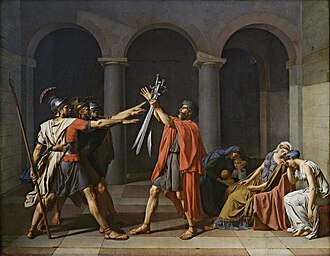 Juramento de los Horacios - Jacques-Louis David (1784)
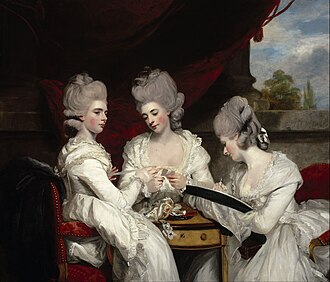 Las hermanas Waldgrave - Joshua Reynolds (1780)
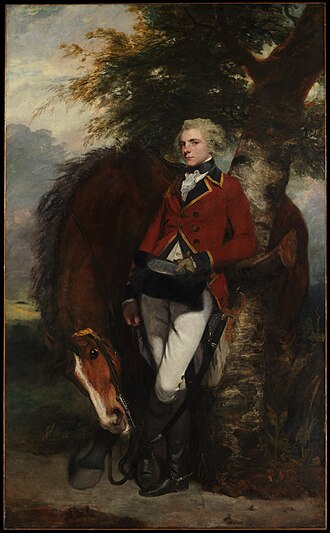 Capitán George K. H. Coussmaker - Joshua Reynolds (1782)