General Officers of World War I
John Singer Sargent · 1922
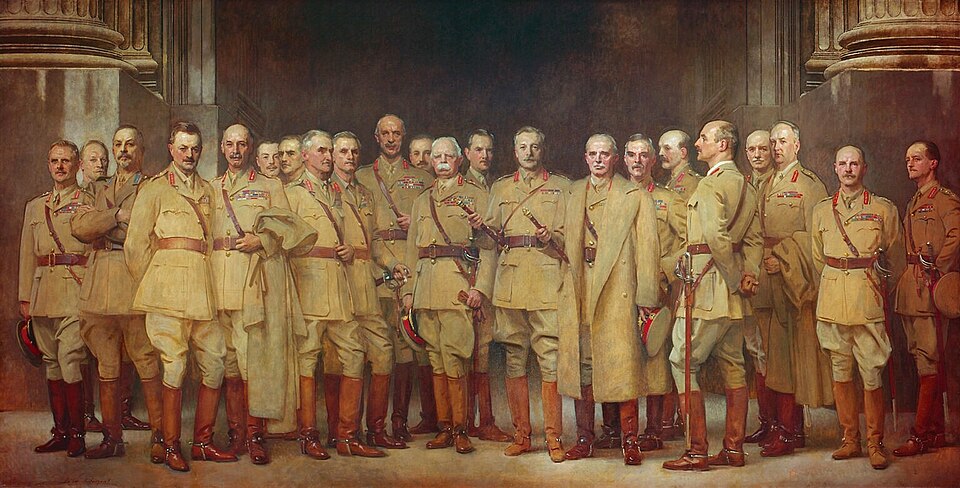
Twenty-two generals in khaki stand shoulder to shoulder, staring ahead as if none of them knows the others are there. Sargent feared a horrible failure, and called it painting them all standing up in a vacuum.
The story behind the painting
The painting, first titled Some General Officers of the Great War, was commissioned by the South African financier Sir Abraham Bailey to commemorate the generals who led British and Empire armies in the First World War. Sargent was unwilling to take on so large a project, but accepted in January 1919 and began in August 1920, after finishing his equally huge Gassed, while also working on murals for the Museum of Fine Arts in Boston. He struggled to compose so many full-length figures and foresaw a horrible failure. It was completed in 1922 and shown at the Royal Academy that year.
What to look for
The canvas is about 3.0 by 5.3 metres. Twenty-two men in khaki stand like pillars in front of an anonymous brownish void, perhaps an open doorway, with the bases of fluted columns at either side. Look for the details that set them apart: Haig and French both hold batons, French wearing a coat; Rawlinson and Currie carry coats; Plumer has a white moustache; Botha wears blue lapel flashes; and Allenby turns away, holding his sword. Most were commanders of armies or army corps; only Lukin and Russell commanded divisions.
Meaning and intent
The source judges the result unsatisfactory: the men look forward with blank stares and no discernible purpose, almost unaware of each other. Yet that stiffness is part of what the picture records, a row of individuals assembled for remembrance rather than a scene of action. The group was chosen from roughly 1,500 generals. Evan Charteris and Lord Harcourt drew up the list, which Bailey approved, and some names were left out on purpose: Ian Hamilton, blamed for Gallipoli, is absent, as are airmen and tank commanders. Smuts, Botha, Lukin, Currie, Dobell, Monash and Russell represent the Empire.
Legacy
Bailey commissioned two companion pictures, Statesmen of World War I by Sir James Guthrie and Naval Officers of World War I by Sir Arthur Stockdale Cope, and gave all three to the National Portrait Gallery in London, where this one remains. Wikidata records it at 299.7 by 528.3 cm. Among the faces are Field Marshals Haig, French, Robertson, Allenby, Byng and Plumer, and General Sir John Monash of Australia, a roll call of the commanders who led the war on many fronts, from France to Mesopotamia and East Africa.
¿Sabías que…?
- Commissioned by Sir Abraham Bailey to honour Britain's First World War generals.
- Shows 22 of about 1,500 generals.
- Completed in 1922 and shown at the Royal Academy.
- In the National Portrait Gallery, London.
Sobre el artista
John Singer Sargent (1856-1925)
retrato grupal · National Portrait Gallery
Más obras de John Singer Sargent
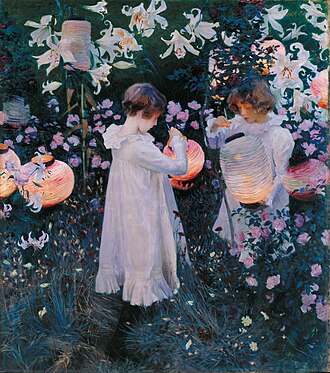 Clavel, lirio, lirio, rosa - John Singer Sargent (1885-1886)
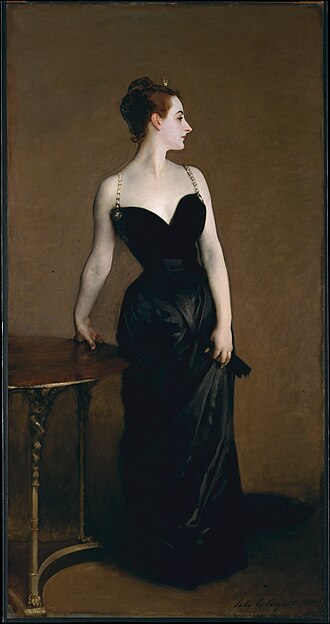 Retrato de Madame X - John Singer Sargent (1884)
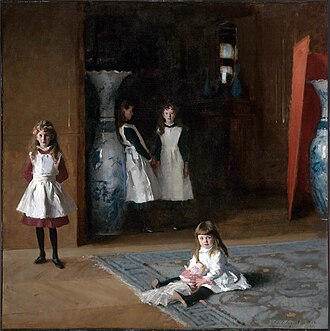 Las hijas de Edward Darley Boit - John Singer Sargent (1882)
 Gassed - John Singer Sargent (1919)
 Lady Agnew of Lochnaw - John Singer Sargent (1892)
 Las hermanas Wyndham: Lady Elcho, Mrs. Adeane, y Mrs. Tennant - John Singer Sargent (1899)
 El jaleo - John Singer Sargent (1882)
 Street in Venice - John Singer Sargent (1882)
Obras de artistas relacionados
 Pollice verso - Jean-Léon Gérôme (1872)
 El mercado de esclavos - Jean-Léon Gérôme (1866)
 Almuerzo sobre la hierba - Édouard Manet (1863)
 Olympia - Édouard Manet (1863)
 El origen del mundo - Gustave Courbet (1866)
 Entierro en Ornans - Gustave Courbet (2020)
 La Libertad guiando al pueblo - Eugène Delacroix (1830)
 La muerte de Sardanápalo - Eugène Delacroix (1827)
 La muerte de Sócrates - Jacques-Louis David (1787)
 Juramento de los Horacios - Jacques-Louis David (1784)
 Las hermanas Waldgrave - Joshua Reynolds (1780)
 Capitán George K. H. Coussmaker - Joshua Reynolds (1782)