Cleopatra
Artemisia Gentileschi · 1613
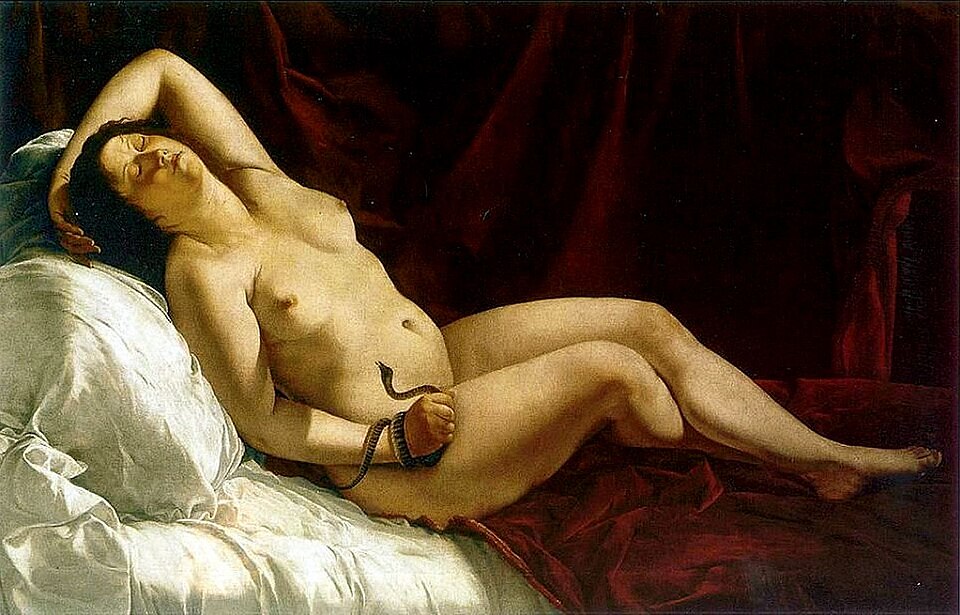
A queen lies alone on her bed, the asp already at work. This Cleopatra came out of the Gentileschi workshop, yet scholars still argue whether the hand was the father's or the daughter's.
The story behind the painting
Cleopatra is an oil on canvas from the Gentileschi workshop. Wikipedia dates it 1611 to 1612, while Wikidata gives 1613, so the exact year is not settled. At the start of Artemisia's career she worked closely beside her father Orazio, and this closeness is why the authorship is still open. Wikipedia says the picture is unquestionably from the workshop, but that a secure attribution to either Orazio or Artemisia is disputed. Today it belongs to the private Etro collection in Milan.
What to look for
The Egyptian queen is shown alone, in the moments before she dies by the bite of a venomous snake. The artist may have followed Plutarch, who described her death from the bite of an asp. Her pose is borrowed from an ancient statue now known as Sleeping Ariadne, which was once thought to show Cleopatra wearing a snake-like piece of jewellery on her arm. Look at the textiles of the bed and pillow and at the body itself: both have been used as evidence in the debate about who painted it.
Meaning and intent
The death of Cleopatra was a common theme for artists of the period, but each scholar reads this version differently. Keith Christiansen gives it to Orazio, pointing to the masterful painting of the fabrics for which he was famous. Mary D. Garrard argues for Artemisia because of the strong emotional tension of the scene. Letizia Treves sees the realistic rendering of the female body as conclusive proof of Artemisia's authorship. The painting therefore asks a quiet question of the viewer: what makes a hand recognisable?
Legacy
The picture hung in the collection of Pietro Gentile in Palazzo Gentile in Genoa until 1640 to 1641, beside a Lucretia. It stayed in the Gentile family until the early 19th century, then appears in the Adorno collection, and later in the Morandotti collection in 1971. Restoration between 1967 and 1978 revealed a great depth of colour and skill, and conservators removed a wide strip of canvas at the top judged to be a later addition. It was lent to the Gentileschi exhibition in 2001 and entered the Gerolamo Etro collection in Milan in April 2004.
¿Sabías que…?
- Painted in the Gentileschi workshop, dated 1611-1612 or 1613.
- Attribution between Orazio and Artemisia is disputed.
- The pose follows the ancient statue known as Sleeping Ariadne.
- In the Etro collection in Milan since April 2004.
Sobre el artista
Artemisia Gentileschi (1593-1653)
mujer · desnudo · pintura de historia · melena · cama · almohada
Más obras de Artemisia Gentileschi
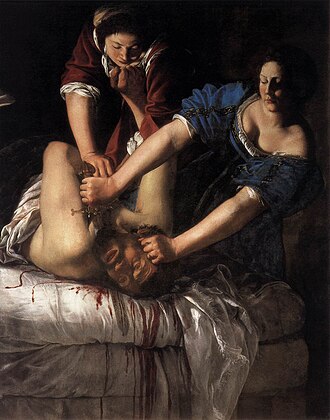 Judit decapitando a Holofernes - Artemisia Gentileschi (1613)
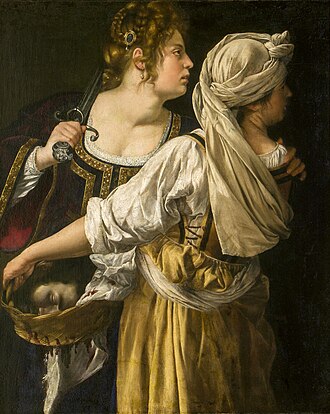 Judit y su doncella - Artemisia Gentileschi (1618)
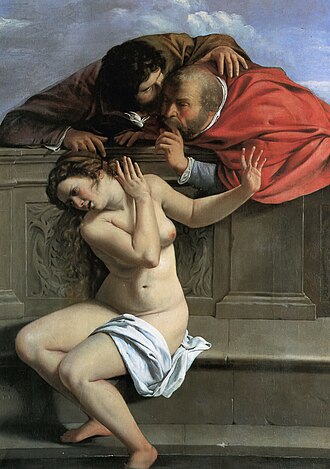 Susana y los viejos - Artemisia Gentileschi (1610)
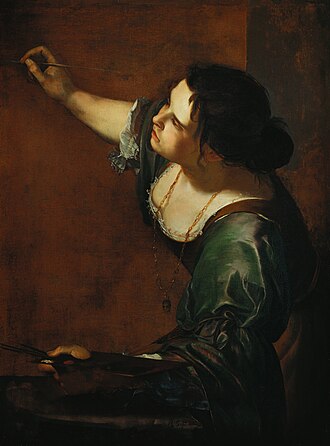 Autorretrato como alegoría de la pintura - Artemisia Gentileschi (1638)
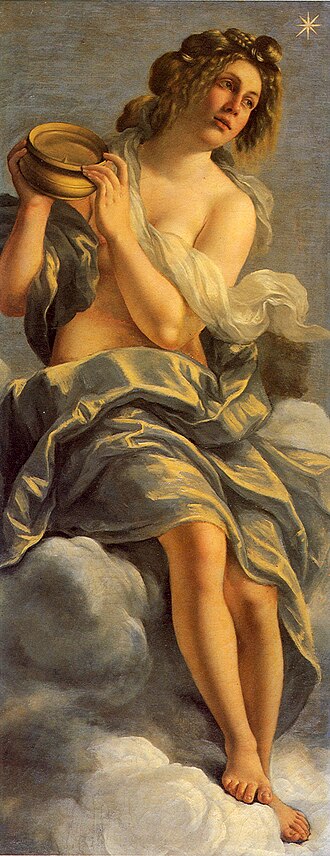 Alegoría de la inclinación - Artemisia Gentileschi (1615)
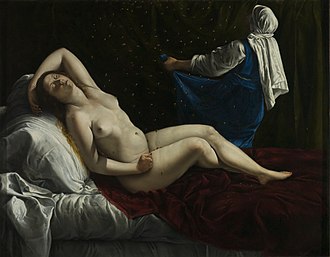 Dánae - Artemisia Gentileschi (1612)
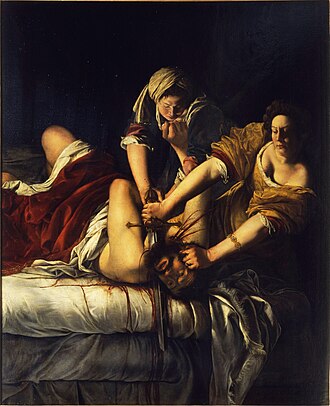 Judit decapitando a Holofernes - Artemisia Gentileschi (1620)
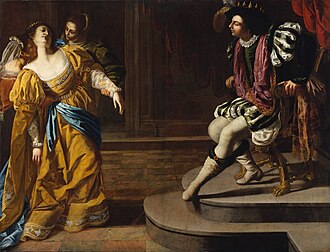 Ester y Asuero - Artemisia Gentileschi (1620s)
Obras de artistas relacionados
 La cena de Emaús - Caravaggio (1601)
 La vocación de San Mateo - Caravaggio (1609)
 Las meninas - Diego Velázquez (1656)
 La rendición de Breda - Diego Velázquez (1635)
 Saint Francis in Meditation - Francisco de Zurbarán (1639)
 Inmaculada Concepción - Francisco de Zurbarán (1661)
 Triple retrato de Carlos I - Anthony van Dyck (1635)
 Charles I (1600-1649) with M. de St Antoine - Anthony van Dyck (1636)
 La elevación de la cruz - Peter Paul Rubens (1609)
 Rapto de las hijas de Leucipo - Peter Paul Rubens (1618)
 La ronda de noche - Rembrandt van Rijn (1642)
 Autorretrato - Rembrandt van Rijn (1659)