Corisca y el sátiro
Artemisia Gentileschi · 1630s
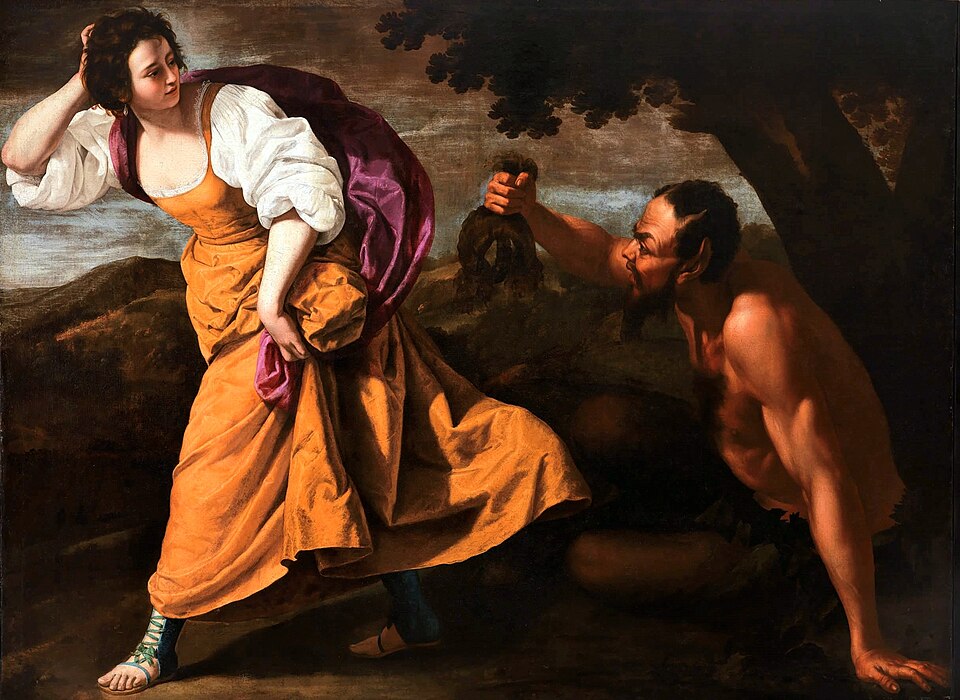
A nymph runs free while a satyr falls back clutching nothing but her hair. For decades this witty painting carried other painters' names, until a cleaning revealed Artemisia Gentileschi's signature on a tree trunk.
The story behind the painting
The story comes from Il Pastor Fido, a play by the sixteenth-century Italian poet Giovanni Battista Guarini. In the sixth scene of the second act, the nymph Corisca accepts gifts of clothes and sandals from a satyr. Aroused by her acceptance, he tries to rape her. He seizes her by the hair, but the hair is a false wig, and Corisca escapes, leaving him holding the hairpiece. Gentileschi painted the scene in the 1630s, during her time in Naples, on a wide canvas of about 155 by 210 cm.
What to look for
Two figures, a woman and a man, are set in a darkened landscape. The woman runs towards the left edge of the canvas in a gold-coloured gown and a purple cloak over a white chemise. Her blue sandals stand out against the bright colour of her dress. With her right hand she clutches her hair, with her left she gathers her skirts, and she glances back at the satyr. He has fallen back on the ground, the wig still in his right hand. Look at the tree trunk behind his back: that is where the signature was found.
Meaning and intent
After the painting resurfaced in 1989, early readings linked it to Gentileschi's own life, seeing Corisca's escape as an echo of her rape by Agostino Tassi. Later interpretations weakened that link, showing that commentators of her time saw Corisca not as a wronged woman but as a reviled character, a manipulative, lustful foil to two other figures in the play. Mary Garrard answers that the gesture of Corisca's left hand is a sign of folly aimed at the one who receives it. The debate over how to read the scene remains open in the sources.
Legacy
The painting first surfaced in a private collection in Naples in 1989. In March 1990 it was sold at Christie's in Rome as a work by Massimo Stanzione. It had also been attributed to another woman painter, Annella de Rosa. Cleaning in the 1990s revealed Gentileschi's signature on the tree trunk behind the satyr, and scholars now agree the painting is hers, made during her Naples years. It remains in a private collection, a rediscovery that added a lively, even comic, scene to her known work.
¿Sabías que…?
- Based on Guarini's play Il Pastor Fido, act two, scene six.
- Once sold as a work by Massimo Stanzione.
- Gentileschi's signature appeared on the tree trunk during cleaning in the 1990s.
- Painted in the 1630s in Naples; private collection.
Sobre el artista
Artemisia Gentileschi (1593-1653)
pintura mitológica · barroco · ninfa · sátiro
Más obras de Artemisia Gentileschi
 Judit decapitando a Holofernes - Artemisia Gentileschi (1613)
 Judit y su doncella - Artemisia Gentileschi (1618)
 Susana y los viejos - Artemisia Gentileschi (1610)
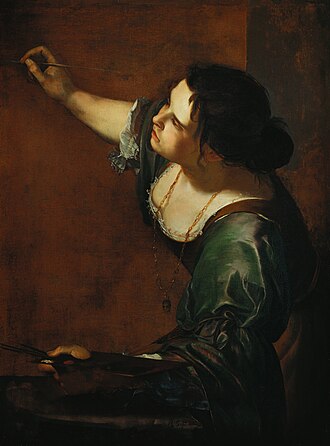 Autorretrato como alegoría de la pintura - Artemisia Gentileschi (1638)
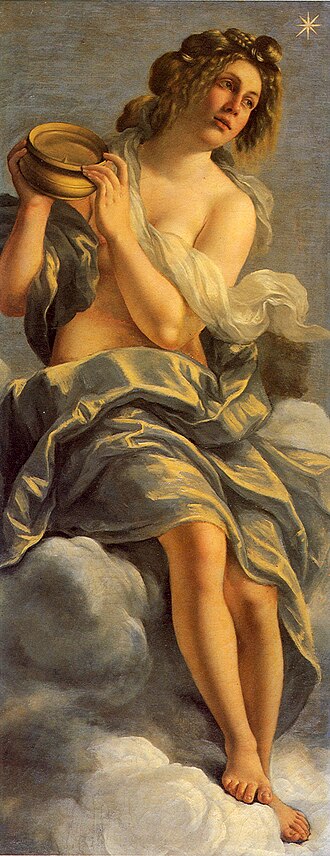 Alegoría de la inclinación - Artemisia Gentileschi (1615)
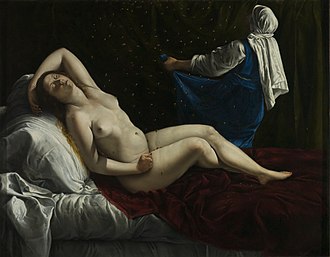 Dánae - Artemisia Gentileschi (1612)
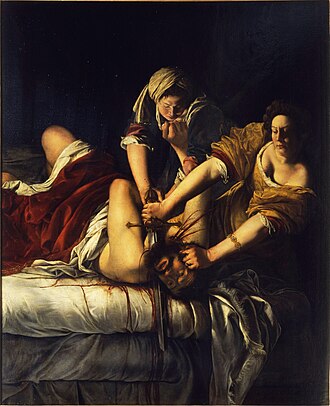 Judit decapitando a Holofernes - Artemisia Gentileschi (1620)
 Ester y Asuero - Artemisia Gentileschi (1620s)
Obras de artistas relacionados
 La cena de Emaús - Caravaggio (1601)
 La vocación de San Mateo - Caravaggio (1609)
 Las meninas - Diego Velázquez (1656)
 La rendición de Breda - Diego Velázquez (1635)
 Saint Francis in Meditation - Francisco de Zurbarán (1639)
 Inmaculada Concepción - Francisco de Zurbarán (1661)
 Triple retrato de Carlos I - Anthony van Dyck (1635)
 Charles I (1600-1649) with M. de St Antoine - Anthony van Dyck (1636)
 La elevación de la cruz - Peter Paul Rubens (1609)
 Rapto de las hijas de Leucipo - Peter Paul Rubens (1618)
 La ronda de noche - Rembrandt van Rijn (1642)
 Autorretrato - Rembrandt van Rijn (1659)