Clío, musa de la historia
Artemisia Gentileschi · 1632
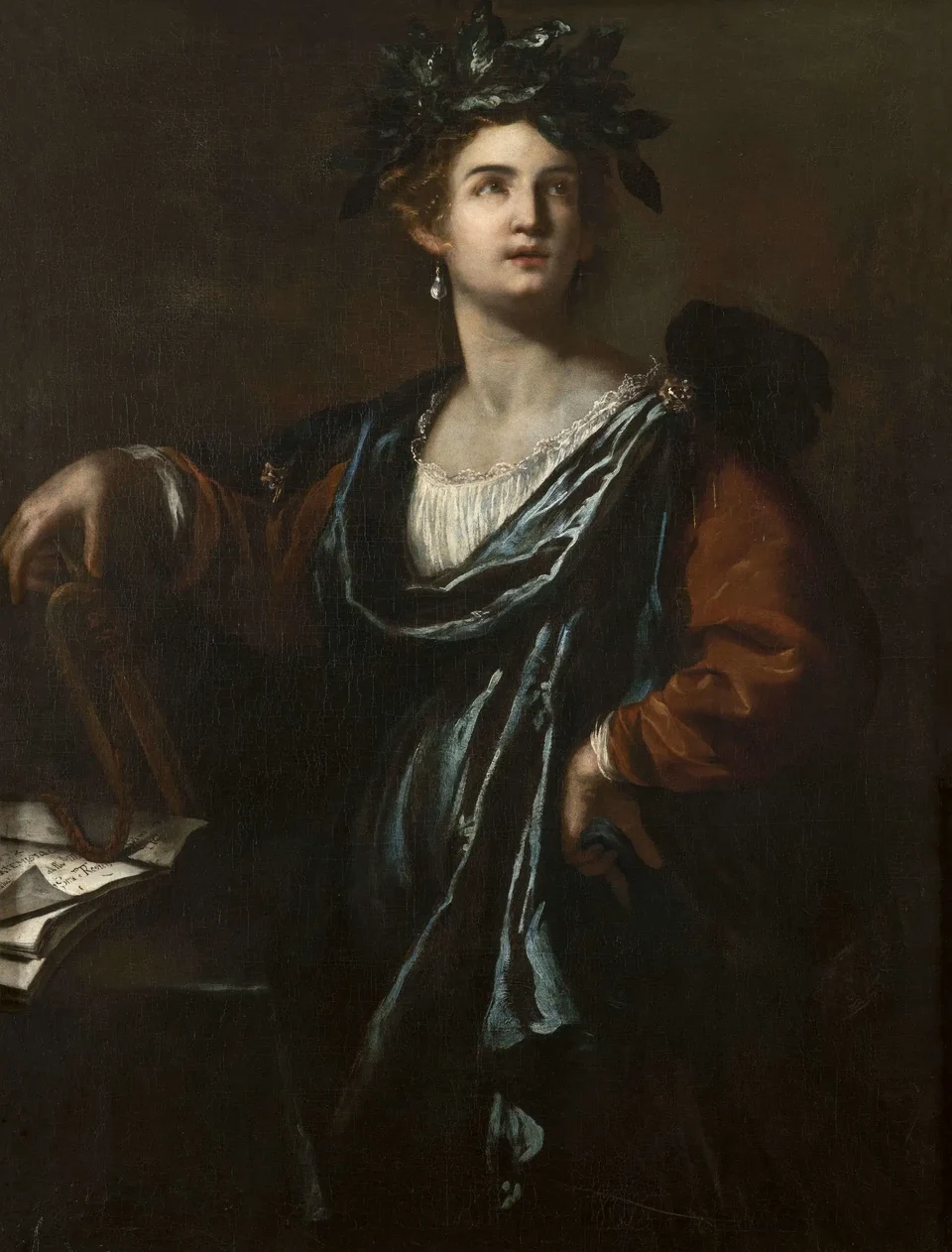
A woman crowned with leaves looks upward, her hand resting on a trumpet and an open book. In that book Artemisia Gentileschi wrote her own name, quite literally writing herself into history.
The story behind the painting
Gentileschi painted Clio around 1632, just after she had moved to Naples. The date 1632 is inscribed in the book at the left, together with Artemisia's name in capital letters and the name F. Rosier. This is probably François de Rosières, a French nobleman and scholar who had served the Duke of Guise and was living in Italy after the duke's rift with Cardinal Richelieu. The work was most likely painted for Charles, Duke of Guise, and in a 1635 letter to Galileo Galilei the artist mentions receiving payment for a work delivered to the duke.
What to look for
The woman stands in three-quarter view, turned to her right and looking over her left shoulder, her eyes raised. Her left hand is on her hip; her right rests on a trumpet lying on an open book. She wears a crown of leaves and a large pearl earring, a russet gown over a white chemise, and a blue mantle pinned at the shoulder. The room is dark, and light from the left falls on her face, her chemise and the pages of the book. The colours are laid on freely and spontaneously, a borrowing from Venetian painting. The canvas measures about 127.6 by 97.5 cm.
Meaning and intent
The figure is Clio, the Muse of History. Cesare Ripa's Iconologia, a key handbook for artists of the time, said Clio should carry a crown of laurels, a trumpet and an open book, and all three are here. Traces of earlier paint beneath the surface suggest, without proving it, that the picture first showed Fame, another figure from Ripa's book; Gentileschi often changed course on a canvas. The painting has been read in relation to her own career and self-image: by placing her signature in Clio's open book, she wrote herself into the history the Muse records.
Legacy
After it left the Duke of Guise, nothing is known of the painting until it appeared at a London gallery in 1940. It then passed through several collections in Great Britain and New York before being sold in December 2004 to its present owners. Today it hangs in the Palazzo Blu in Pisa; Wikidata names the building as the Palazzo Giuli Rosselmini Gualandi. For visitors there, the picture offers a rare meeting of a painter's name and a Muse of History on the same page.
¿Sabías que…?
- Dated 1632 in the open book, just after Gentileschi moved to Naples.
- Probably painted for Charles, Duke of Guise.
- Earlier paint layers may show a first figure of Fame.
- Reappeared in London in 1940; now in Pisa.
Sobre el artista
Artemisia Gentileschi (1593-1653)
Más obras de Artemisia Gentileschi
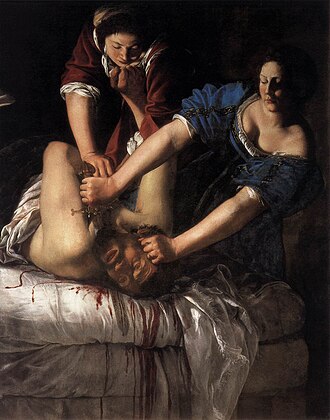 Judit decapitando a Holofernes - Artemisia Gentileschi (1613)
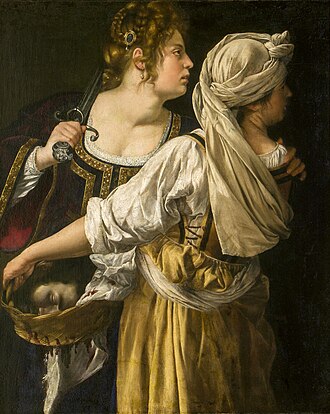 Judit y su doncella - Artemisia Gentileschi (1618)
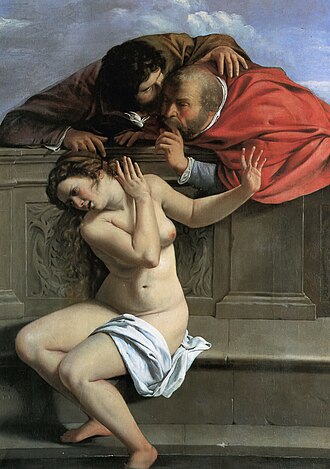 Susana y los viejos - Artemisia Gentileschi (1610)
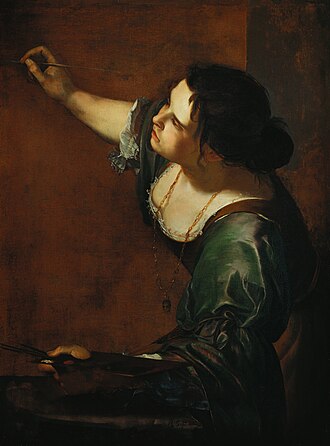 Autorretrato como alegoría de la pintura - Artemisia Gentileschi (1638)
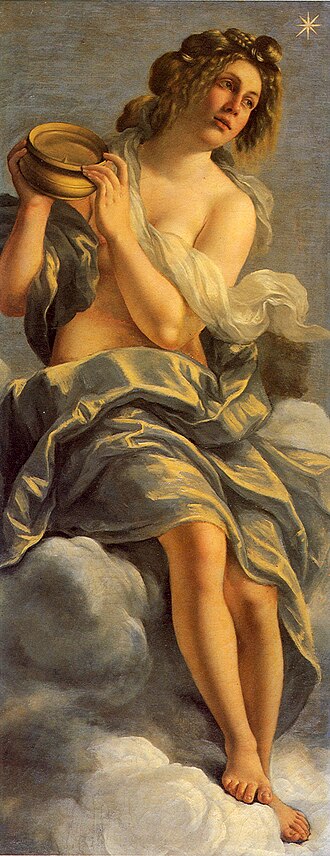 Alegoría de la inclinación - Artemisia Gentileschi (1615)
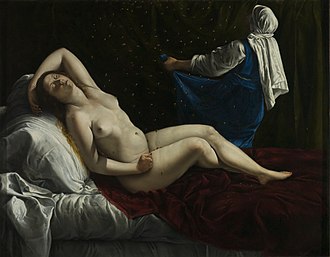 Dánae - Artemisia Gentileschi (1612)
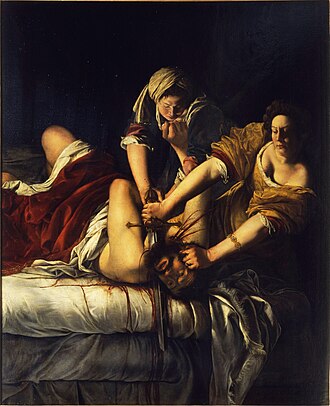 Judit decapitando a Holofernes - Artemisia Gentileschi (1620)
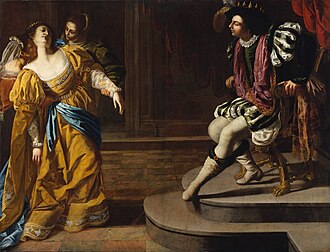 Ester y Asuero - Artemisia Gentileschi (1620s)
Obras de artistas relacionados
 La cena de Emaús - Caravaggio (1601)
 La vocación de San Mateo - Caravaggio (1609)
 Las meninas - Diego Velázquez (1656)
 La rendición de Breda - Diego Velázquez (1635)
 Saint Francis in Meditation - Francisco de Zurbarán (1639)
 Inmaculada Concepción - Francisco de Zurbarán (1661)
 Triple retrato de Carlos I - Anthony van Dyck (1635)
 Charles I (1600-1649) with M. de St Antoine - Anthony van Dyck (1636)
 La elevación de la cruz - Peter Paul Rubens (1609)
 Rapto de las hijas de Leucipo - Peter Paul Rubens (1618)
 La ronda de noche - Rembrandt van Rijn (1642)
 Autorretrato - Rembrandt van Rijn (1659)