Carrera en provincias
Edgar Degas · 1869
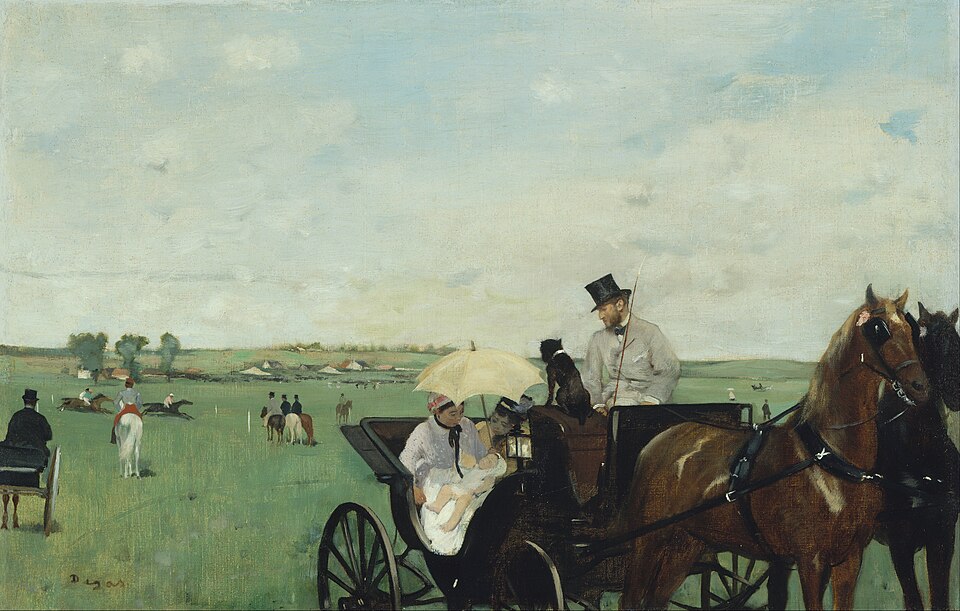
A family rides to the races in an open carriage, a baby asleep in the shade, a bulldog on the seat. Degas painted his old friend's household in 1869 as if he had simply glanced at them in passing.
The story behind the painting
In the summer of 1869 Degas stayed with Paul Valpinçon, a friend from childhood, at his estate at Ménil-Hubert in Normandy. Valpinçon's son Henri had been born in January that year. During the visit Degas painted the family on an outing to the races at Argentan, fifteen kilometres from the estate. He returned to the Valpinçons in other pictures too: Paul's wife appears in A Woman Seated beside a Vase of Flowers of 1865, and his daughter in the Portrait of Mlle. Hortense Valpinçon of 1871.
What to look for
The picture is built to look as if it was never composed. The family's carriage sits off-centre, filling most of the lower right quarter. The bottom of the wheels is cut off by the frame, so are the lower legs of the two horses and half of one horse's face. On the left, in the distance, another carriage slips partly out of view. Notice the driver's top hat, the bulldog, and the green of the field, then the nearly flat horizon with its simplified houses, trees and tiny figures.
Meaning and intent
The cropping makes the scene feel like a snapshot of a moment you happened upon. Art historian Aaron Scharf compared it with Hippolyte Jouvin's stereoscopic photographs of Paris streets, taken between 1861 and 1865, where horses and carriages are cut by the frame in the same way. Degas did not crop like this in his racing scenes before 1862, when such framing first appeared in photographs. The green colouring, top hat and bulldog point to English racing pictures, fashionable among the French upper classes, while the flat horizon recalls Japanese woodblock prints.
Legacy
Degas sold the painting to his dealer Paul Durand-Ruel in September 1872, then left for New Orleans. It was shown in London that October, and from New Orleans Degas wrote to James Tissot asking how it had been received, a sign that he stayed attached to it. The singer Jean-Baptiste Faure bought it. Degas showed it at the first Impressionist exhibition in 1874, where Ernest Chesneau called it exquisite in colour, drawing and the felicity of the poses. Faure sold it back to Durand-Ruel in 1893, and in 1926 it entered the Museum of Fine Arts Boston, where it remains.
¿Sabías que…?
- Painted in 1869 during a visit to the Valpinçon family in Normandy.
- Shown at the first Impressionist exhibition in 1874.
- Its cropping has been compared to early instantaneous photographs.
- In the Museum of Fine Arts Boston since 1926.
Sobre el artista
Edgar Degas (1834-1917)
escena de género · Museo de Bellas Artes de Boston
Más obras de Edgar Degas
 El ajenjo - Edgar Degas (1875)
 Die Bellelli Familie - Edgar Degas (1858)
 Clase de ballet - Edgar Degas (1871)
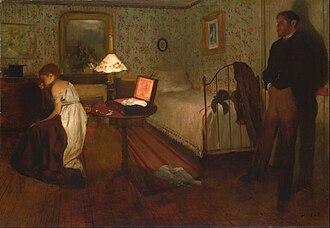 Interior - Edgar Degas (1868)
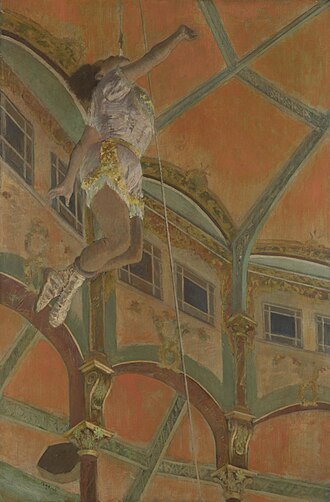 Miss La La en el Circo Fernando - Edgar Degas (1879)
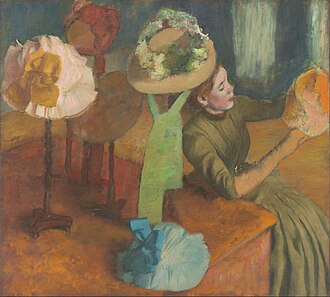 The Millinery Shop by Edgar Degas - Edgar Degas
.jpg) The Tub - Edgar Degas (1886)
The Tub - Edgar Degas (1886)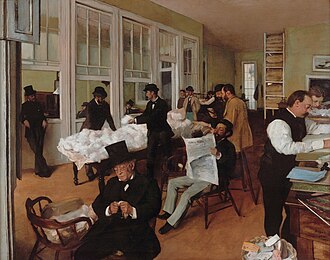 A Cotton Office in New Orleans - Edgar Degas (1873)
Obras de artistas relacionados
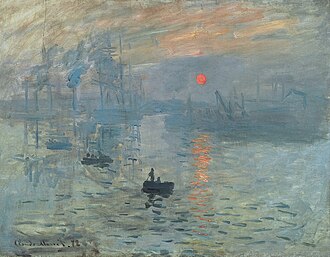 Impresión, sol naciente - Claude Monet (1872)
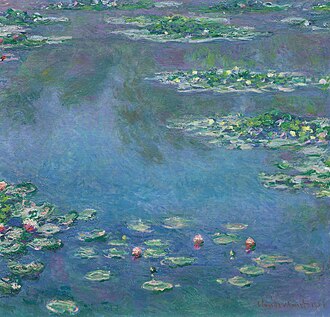 Nenúfares - Claude Monet (1906)
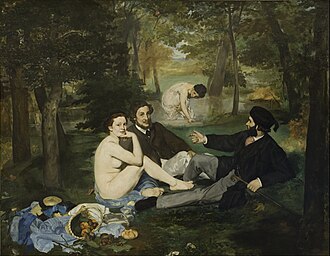 Almuerzo sobre la hierba - Édouard Manet (1863)
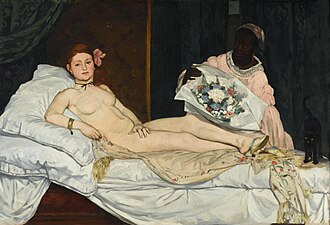 Olympia - Édouard Manet (1863)
 Baile en el Moulin de la Galette - Pierre-Auguste Renoir (1876)
 El almuerzo de los remeros - Pierre-Auguste Renoir (1881)
 La noche estrellada - Vincent van Gogh (1889)
.jpg) Terraza de café por la noche - Vincent van Gogh (1888)
Terraza de café por la noche - Vincent van Gogh (1888) El Temerario remolcado - J. M. W. Turner (1839)
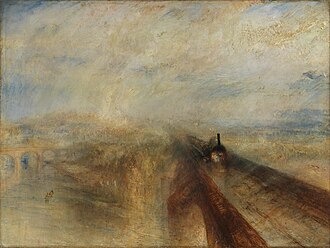 Lluvia, vapor y velocidad. El gran ferrocarril del Oeste - J. M. W. Turner (1844)
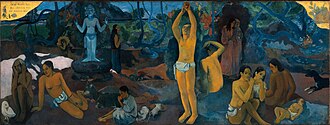 ¿De dónde venimos? ¿Qué somos? ¿Adónde vamos? - Paul Gauguin (1897-1898)
%201889.jpg) El Cristo amarillo - Paul Gauguin (1889)
El Cristo amarillo - Paul Gauguin (1889)