Después de la comida en Ornans
Gustave Courbet · 1848
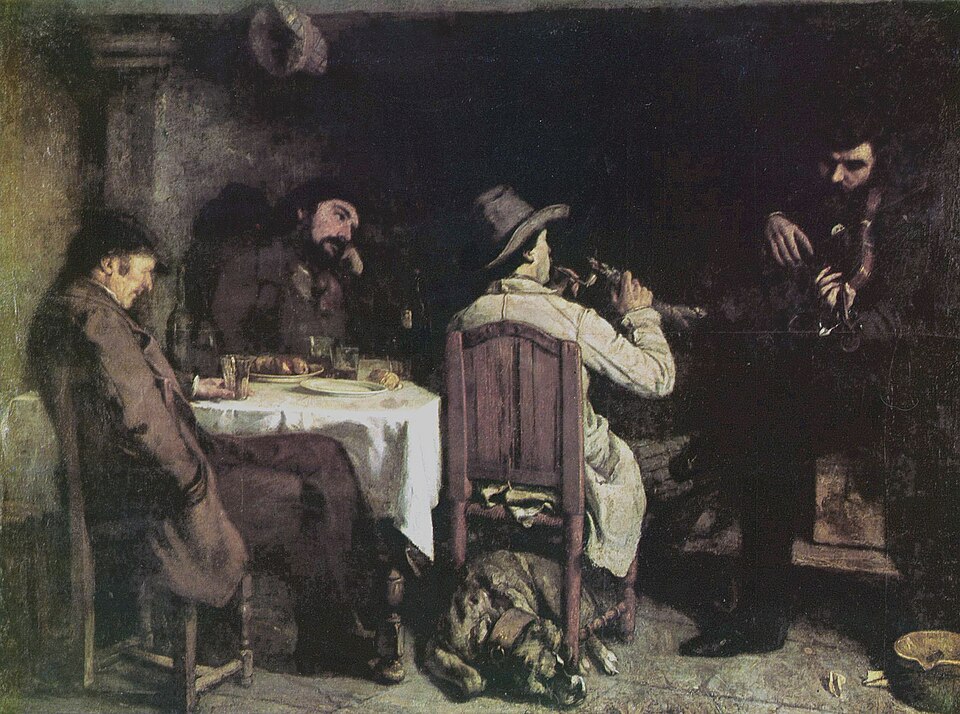
A meal is over, someone plays the violin, someone else dozes, and a dog sleeps under a chair. With this quiet evening among friends in his hometown, Courbet won a Salon medal and opened his great series of Ornans paintings.
The story behind the painting
Courbet painted After Dinner at Ornans in his hometown in the winter of 1848 to 1849; Wikidata gives 1848. It was the first of his imposing paintings of Ornans subjects, before The Stone Breakers and A Burial at Ornans. He showed it at the Salon of 1849, where it won a medal and was bought by the state. The scene is casual and features his friends and family: some think the man with the glass is his father, his friend Marlet lights a pipe, and the host Cuenot sits lost in thought in the background.
What to look for
The canvas is large, about 195 by 257 cm, for a scene of nothing much happening. Figures gather languidly around a table still holding the remains of the meal. One man in the background leans with his hand on his cheek; another may be thinking, relaxing or falling asleep. At the centre sits a man with his back to us, playing the flute, facing a man playing the violin. A dog sleeps under one musician's chair. Courbet uses strong chiaroscuro to lead the eye across the room and set the central figure apart.
Meaning and intent
Courbet held to painting only what the eye can see, an idea he drew from the Dutch masters, and here he pushes it further, giving ordinary people at rest the size of a history painting. The source sees the influence of French genre painters such as Le Nain and Chardin, and describes the work as capturing a single fleeting moment, as if with a camera. Not everyone agrees on who is who: some believe Courbet himself is in the picture and that these figures are unknown.
Legacy
The state's purchase and the Salon medal of 1849 gave Courbet an early public success, and the painting is now in the Palais des Beaux-Arts in Lille. Its influence reached the next generation: one of Pierre-Auguste Renoir's first major paintings, Mother Anthony's Tavern of 1866, pays homage to it and shows how much the young Renoir learned from Courbet. Looking at the sleepy room, you can sense the start of a realism that would soon shake the Paris art world.
¿Sabías que…?
- Painted in Ornans in winter 1848 to 1849.
- Won a medal at the Salon of 1849 and was bought by the state.
- The first of Courbet's large Ornans paintings.
- Now in the Palais des Beaux-Arts, Lille.
Sobre el artista
Gustave Courbet (1819-1877)
varón · escena de género · mesa · perro · silla · Palais des Beaux-Arts de Lille · pipa · violín
Más obras de Gustave Courbet
 El origen del mundo - Gustave Courbet (1866)
 Entierro en Ornans - Gustave Courbet (2020)
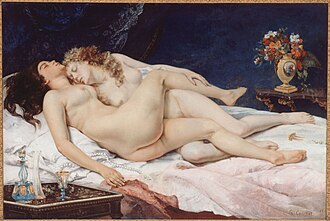 El sueño - Gustave Courbet (1866)
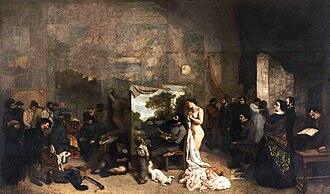 El taller del pintor - Gustave Courbet (1855)
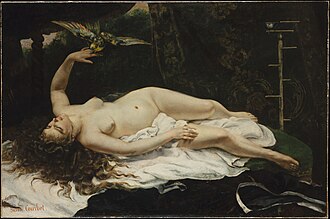 Mujer con loro - Gustave Courbet (1866)
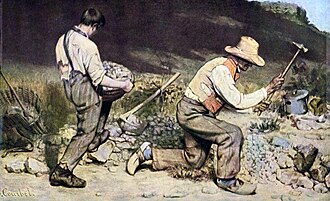 Los rompe piedras - Gustave Courbet (1850)
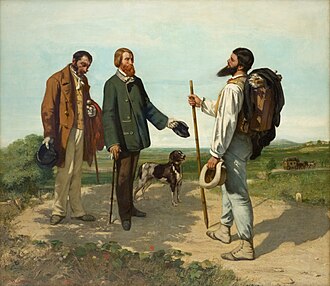 El encuentro - Gustave Courbet (1854)
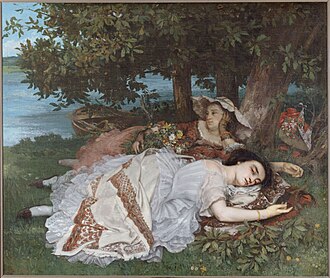 Cortesanas al borde del Sena - Gustave Courbet (1857)
Obras de artistas relacionados
 Impresión, sol naciente - Claude Monet (1872)
 Nenúfares - Claude Monet (1906)
 Almuerzo sobre la hierba - Édouard Manet (1863)
 Olympia - Édouard Manet (1863)
 Breezing Up - Winslow Homer (1873)
 The Fog Warning - Winslow Homer (1885)
 La noche estrellada - Vincent van Gogh (1889)
 Terraza de café por la noche - Vincent van Gogh (1888)