Mujer sentada al lado de un florero
Edgar Degas · 1865
.jpg)
A great burst of chrysanthemums fills the middle of the canvas, and the woman it seems to be about sits pushed to the edge, a hand at her face, lost in thought. Degas turned the portrait inside out.
The story behind the painting
Degas painted this oil on canvas in 1865. It is also known as Woman with Chrysanthemums. According to the French Wikipedia article, the sitter is Baroness Valpinçon, wife of the well-known French collector. The picture, about 74 by 93 cm, is in the Metropolitan Museum of Art in New York. Instead of the usual portrait, with the person at the centre, Degas built the composition around a vase of flowers and let the woman slip to the side.
What to look for
The multicoloured vase of chrysanthemums dominates the centre and seems to spread sensuously across the surface, in the critic Alessandra Borgogelli's words bursting into a myriad of weightless petals. Degas studied this still life very analytically, rendering every detail and reworking it close to the limits of technique. The baroness sits at the margin. Her hand partly covers her face, she looks dreamy and closed in her thoughts, and she turns her gaze to the right, as if to widen the picture in that direction.
Meaning and intent
The philosopher Karl Popper was struck by the choice to put the flowers in the centre and exile the main subject to the edge, and called it a decentred composition, close to that of some photographers. The article argues that Degas escapes academic rhetoric here, and that the choice strongly disorients a viewer used to the human figure at the centre. Borgogelli felt the woman almost seems to want to win back the centrality the painter denied her. The critic Bernd Growe saw everything as everyday, a relaxed moment of calm between two actions.
Legacy
The painting is a clear early sign of how Degas would break with academic habits of composition, with a cut-off, off-centre view that the sources compare to photography. It hangs in the Metropolitan Museum of Art. The careful, almost obsessive work on the chrysanthemums, despite the heaviness of the process, shows how much he loved describing them, and the quiet figure beside them keeps the painting from being only a still life.
¿Sabías que…?
- Painted in 1865, also called Woman with Chrysanthemums.
- The sitter is identified as Baroness Valpinçon.
- Karl Popper compared its off-centre composition to photography.
- Metropolitan Museum of Art, New York.
Sobre el artista
Edgar Degas (1834-1917)
mujer · retrato · Museo Metropolitano de Arte · mesa · flor · ventana
Más obras de Edgar Degas
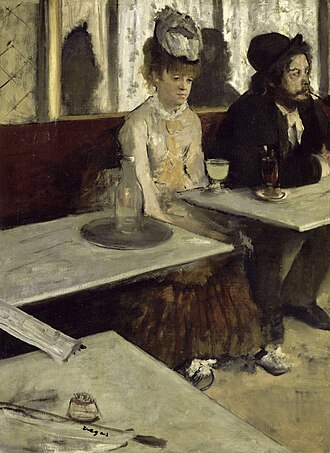 El ajenjo - Edgar Degas (1875)
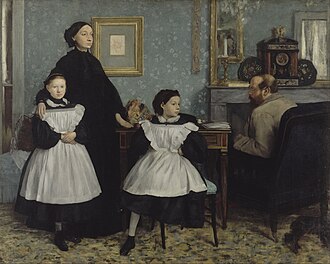 Die Bellelli Familie - Edgar Degas (1858)
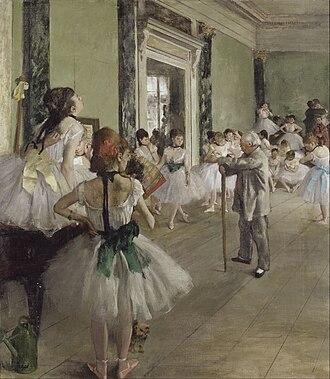 Clase de ballet - Edgar Degas (1871)
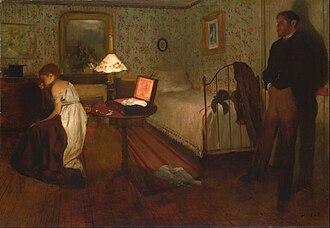 Interior - Edgar Degas (1868)
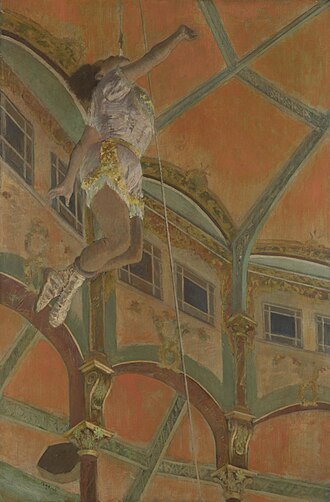 Miss La La en el Circo Fernando - Edgar Degas (1879)
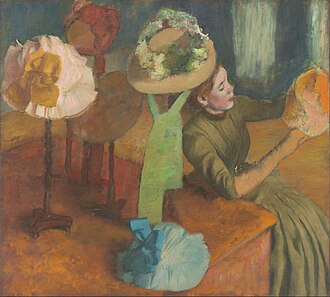 The Millinery Shop by Edgar Degas - Edgar Degas
.jpg) The Tub - Edgar Degas (1886)
The Tub - Edgar Degas (1886)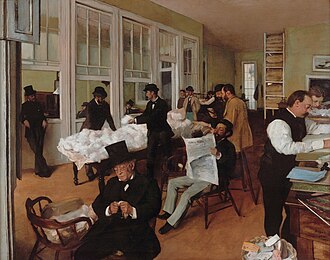 A Cotton Office in New Orleans - Edgar Degas (1873)
Obras de artistas relacionados
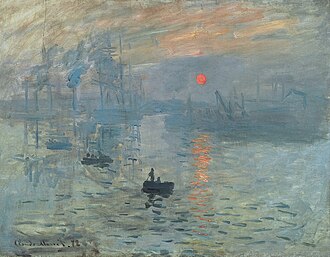 Impresión, sol naciente - Claude Monet (1872)
 Nenúfares - Claude Monet (1906)
 Almuerzo sobre la hierba - Édouard Manet (1863)
 Olympia - Édouard Manet (1863)
 Baile en el Moulin de la Galette - Pierre-Auguste Renoir (1876)
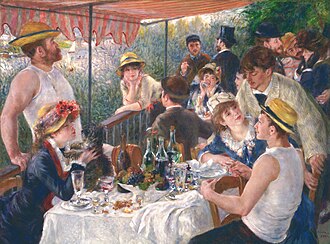 El almuerzo de los remeros - Pierre-Auguste Renoir (1881)
 La noche estrellada - Vincent van Gogh (1889)
.jpg) Terraza de café por la noche - Vincent van Gogh (1888)
Terraza de café por la noche - Vincent van Gogh (1888)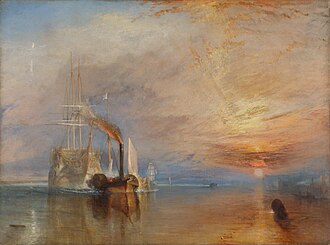 El Temerario remolcado - J. M. W. Turner (1839)
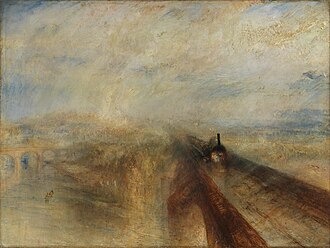 Lluvia, vapor y velocidad. El gran ferrocarril del Oeste - J. M. W. Turner (1844)
 ¿De dónde venimos? ¿Qué somos? ¿Adónde vamos? - Paul Gauguin (1897-1898)
%201889.jpg) El Cristo amarillo - Paul Gauguin (1889)
El Cristo amarillo - Paul Gauguin (1889)