The Temptation of Saint Anthony
Hieronymus Bosch · 1500s
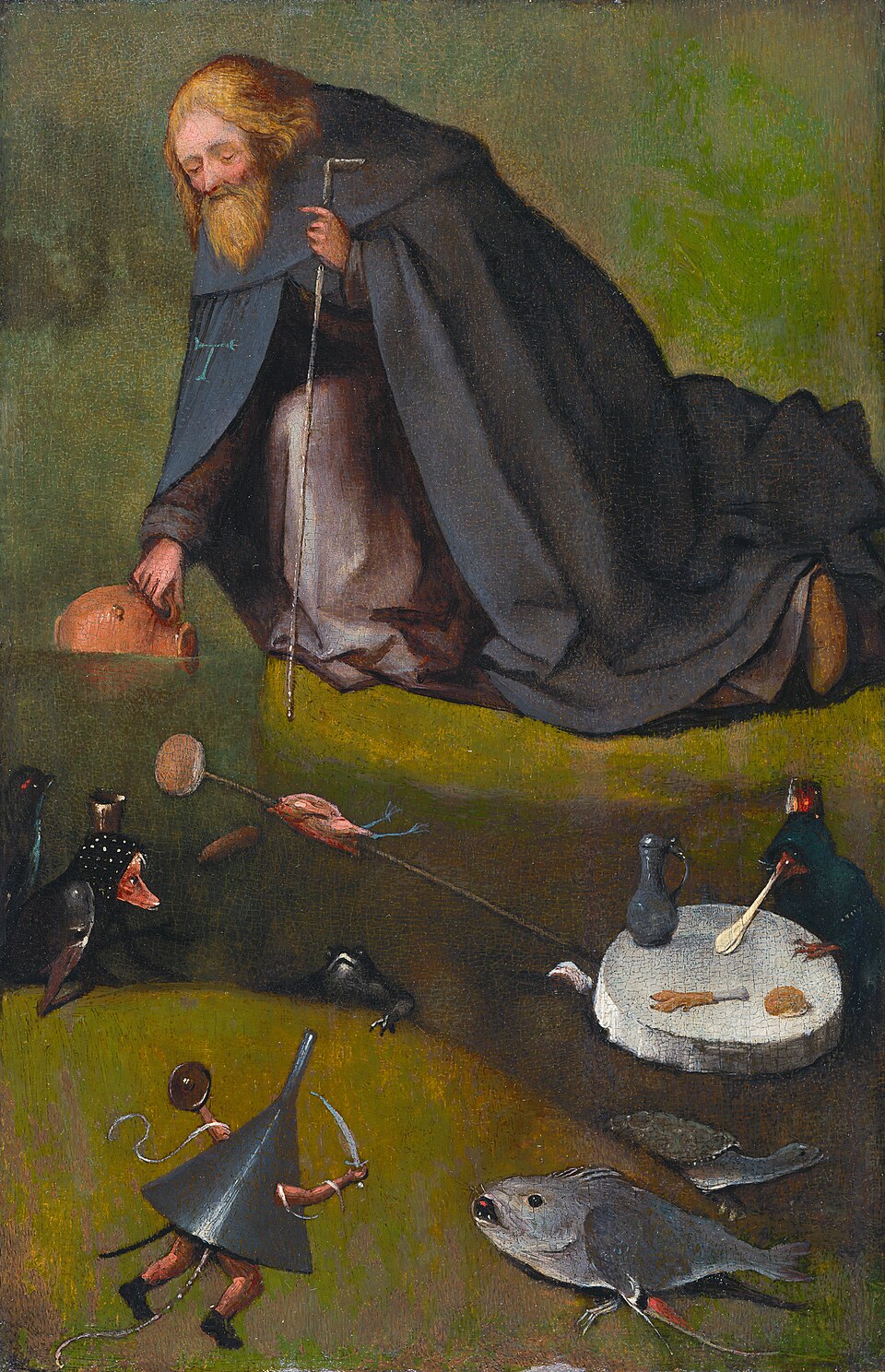
A hunched hermit fills a jug with water while small hooded demons get up to mischief around him. This little panel in Kansas City was long doubted, until science showed it came from Bosch's own hand.
The story behind the painting
This single oak panel shows a scene from the life of Saint Anthony, the hermit who wandered alone in the desert and was plagued by demons and temptations, which he resisted. His life was first written by Saint Athanasius in 357 and spread across Europe in the thirteenth century through the Golden Legend. Anthony was Bosch's most recurring subject. One reason for the saint's popularity was the outbreaks of Saint Anthony's fire in Bosch's lifetime, since many believed Anthony could punish sinners with the disease or heal the sick. The panel, painted around 1500 to 1510, has been in the Nelson-Atkins Museum of Art in Kansas City since 1935.
What to look for
Anthony is shown hunched over, arm stretched out to fill a crock with water. The same crock and pose appear in Bosch's Hermit Saints Triptych, and the crock returns in the Madrid Temptation, where a demon empties it. Around him are small grotesque demons: a hooded fox-headed demon on the left, also found in the Lisbon triptych, a spoon-billed demon seated at a table on the right, also seen in the Hell panel of The Garden of Earthly Delights, and along the bottom a fish fighting a funnel with human limbs. Look for food too, such as a roasted bird over the water. The panel measures only about 39 by 25 cm.
Meaning and intent
Compared with the Lisbon Temptation, this Anthony is more sorrowful, tormented by lesser demons. Bosch uses symbols here for gluttony, sexuality and folly. The funnel stands for the devil and gluttony, pouring in only for everything to fall out. The fish stands for folly, through its link with the Flemish April Fool's Day and other unrestrained merrymaking. The roasted bird may mean gluttony or allude to sex. A goat hoof before the spoon-billed creature stands for a whole goat, linked in Flemish art with merrymakers and improper sexuality. The demons' hoods call on a Flemish proverb, and satirise the hoods worn by monks, a touch of Bosch's humour.
Legacy
It was long disputed whether the panel was by Bosch or his workshop. The Bosch Research and Conservation Project concluded it was autograph, based on the underdrawing revealed by infrared photography and on dendrochronology: the latest year the wood could come from is 1482, pointing to the early 1500s. Retouching had hidden the master's hand. Critics had noted the absence of the Devil disguised as a temptress, seen in other versions, but analysis of the panel's shape, size and composition showed it is a fragment of a larger scene, so the temptress is thought lost. In 2016 it was shown in the exhibition Jheronimus Bosch: Visions of Genius.
Did you know?
- Oil on oak, painted around 1500-1510.
- In the Nelson-Atkins Museum of Art, Kansas City, since 1935.
- Confirmed as by Bosch himself through infrared study and dendrochronology.
- Probably a fragment of a larger scene.
About the artist
Hieronymus Bosch (1450-1516)
religious art · Anthony the Great · The Nelson-Atkins Museum of Art
More by Hieronymus Bosch
 The Garden of Earthly Delights - Hieronymus Bosch
 Ship of Fools - Hieronymus Bosch (1500s)
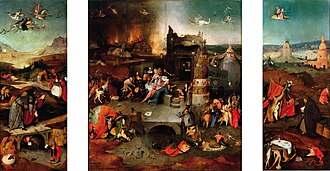 Temptation of Saint Anthony - Hieronymus Bosch (1501)
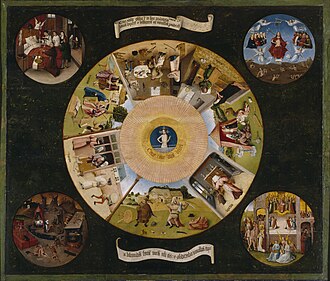 The Seven Deadly Sins and the Four Last Things - Hieronymus Bosch (1500)
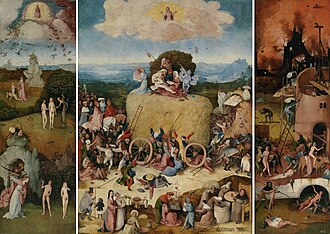 The Haywain Triptych - Hieronymus Bosch (1510s)
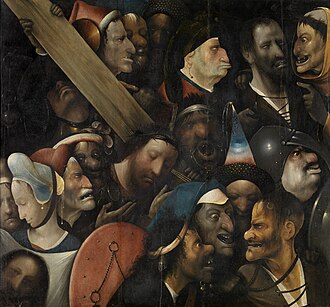 Christ Carrying the Cross - Hieronymus Bosch (1510s)
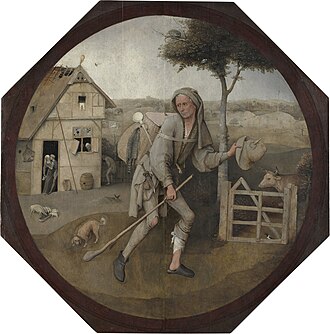 The Wayfarer - Hieronymus Bosch (1500)
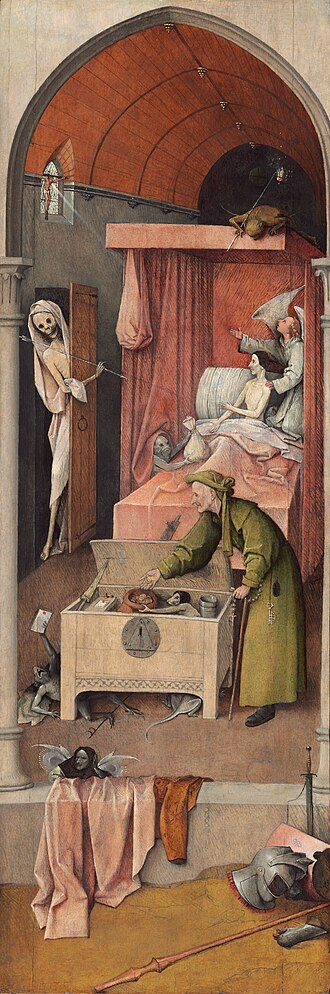 Death and the Miser - Hieronymus Bosch (1500s)
Paintings by related artists
 The Descent from the Cross - Rogier van der Weyden (1440s)
 Portrait of a Lady - Rogier van der Weyden (1460)
 Arnolfini Portrait - Jan van Eyck (1434)
 Ghent Altarpiece - Jan van Eyck (1432)
 Annunciation - Hans Memling (1480s)
 Scenes from the Passion of Christ - Hans Memling (1470)
 The Hunters in the Snow - Pieter Bruegel the Elder (1565)
 Netherlandish Proverbs - Pieter Bruegel the Elder (1551)