Scenes from the Passion of Christ
Hans Memling · 1470
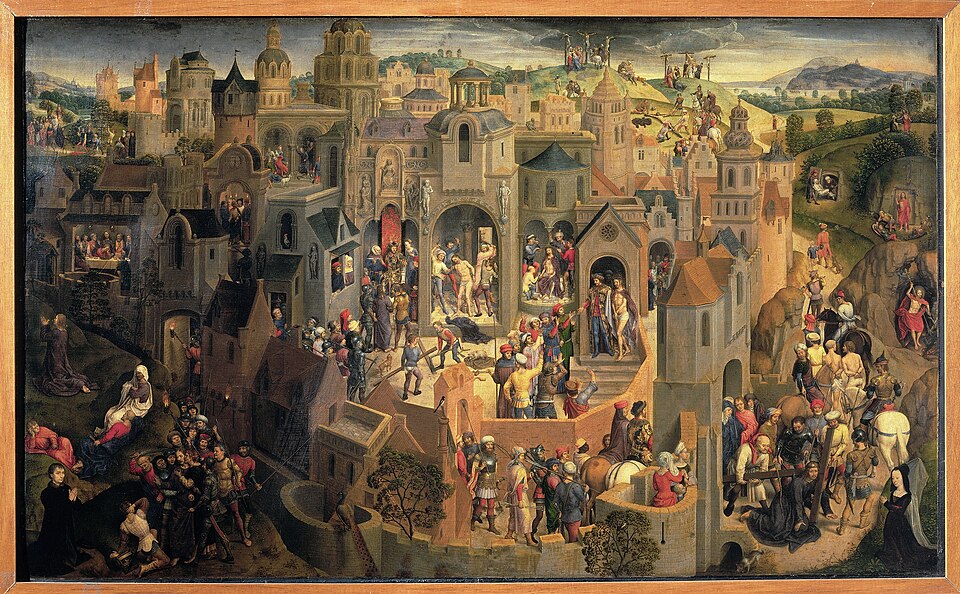
A whole walled city on one oak panel, and inside it twenty-three moments of Christ's last days, from Palm Sunday to the shores of Galilee. Memling lets you walk the story with your eyes, while the banker who paid for it kneels in the corner.
The story behind the painting
Hans Memling, a German-born painter working in Bruges, painted this oil on Baltic oak around 1470. It was commissioned by Tommaso Portinari, an Italian banker based in Bruges, who kneels in prayer in the lower left corner, with his wife Maria Baroncelli in the same pose in the lower right. At 56.7 by 92.2 centimetres it is fairly small and unlikely to have been an altarpiece; it may have been meant for Portinari's chapel in the church of St Jacob in Bruges.
What to look for
There is no central scene. Instead, 23 episodes unfold across an idealised Jerusalem, drawn as a walled medieval city with exotic domed towers. Begin far off at the top left with the entry into Jerusalem, then follow the path through the city and out to Gethsemane at the bottom left, through the judgement of Pilate, the Flagellation, the Crowning with Thorns and Ecce Homo in the centre, out along the road of the cross at the bottom right, up to Calvary, and finally to Emmaus and Galilee in the distance at the top right.
Meaning and intent
The high bird's-eye view makes Calvary visible behind the city, so the whole Passion can be read as one journey. Unusually for the period, the light comes from inside the picture, from the rising sun on the far right, and stays consistent: areas to the rear right are lit, those to the front left lie in shadow. Of the traditional fourteen Stations of the Cross, Memling includes seven and leaves out seven, adding scenes before and after them, including three appearances of the risen Christ.
Legacy
The panel was not listed among Portinari's belongings when he died in 1501. It is thought to have travelled from Bruges to Florence between 1510 and 1520 and is first recorded in the collection of Cosimo I in Florence in 1550. Today it is in the Galleria Sabauda in Turin. Memling used the same kind of single landscape narrative again in his later Advent and Triumph of Christ of 1480, painted for the Tanners' guild altar in Bruges and now in the Alte Pinakothek in Munich.
Did you know?
- Painted around 1470 on Baltic oak for the banker Tommaso Portinari.
- Shows 23 scenes, 19 of them from the Passion.
- First recorded in Cosimo I's collection in Florence in 1550.
- Now in the Galleria Sabauda, Turin.
About the artist
Hans Memling (1435-1494)
religious art · man · Jesus Christ · Early Netherlandish painting
More by Hans Memling
 Annunciation - Hans Memling (1480s)
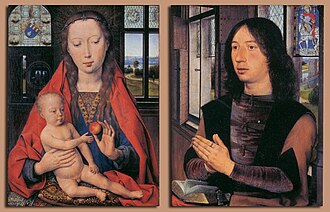 Diptych of Maarten van Nieuwenhove - Hans Memling (1487)
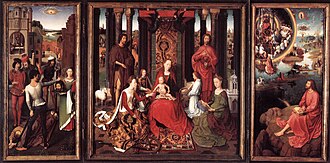 St John Altarpiece - Hans Memling (1479)
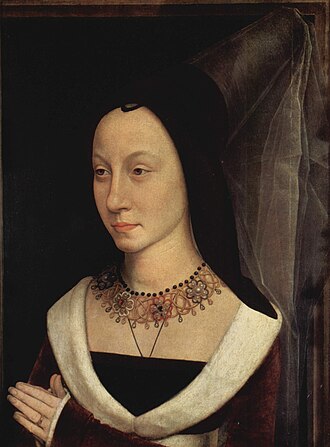 Portrait of Maria Portinari - Hans Memling (1470)
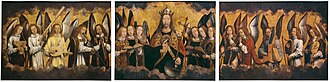 Christ with singing and music-making Angels - Hans Memling (1480s)
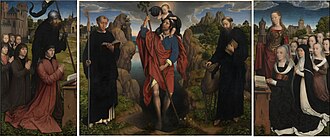 Moreel Triptych - Hans Memling (1484)
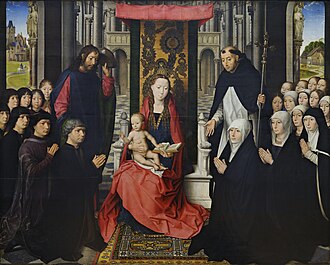 Madonna of Jacob Floreins - Hans Memling (1485)
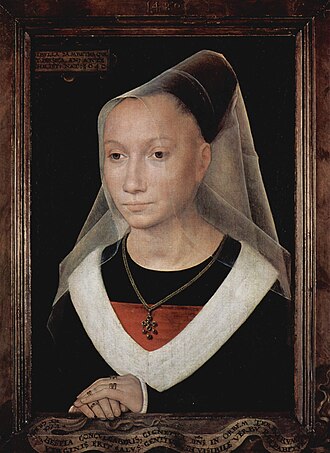 Sibylla Sambetha - Hans Memling (1480)
Paintings by related artists
 The Descent from the Cross - Rogier van der Weyden (1440s)
 Portrait of a Lady - Rogier van der Weyden (1460)
 Arnolfini Portrait - Jan van Eyck (1434)
 Ghent Altarpiece - Jan van Eyck (1432)
 The Garden of Earthly Delights - Hieronymus Bosch
 Ship of Fools - Hieronymus Bosch (1500s)
 The Hunters in the Snow - Pieter Bruegel the Elder (1565)
 Netherlandish Proverbs - Pieter Bruegel the Elder (1551)