Temptation of Saint Anthony
Hieronymus Bosch · 1501
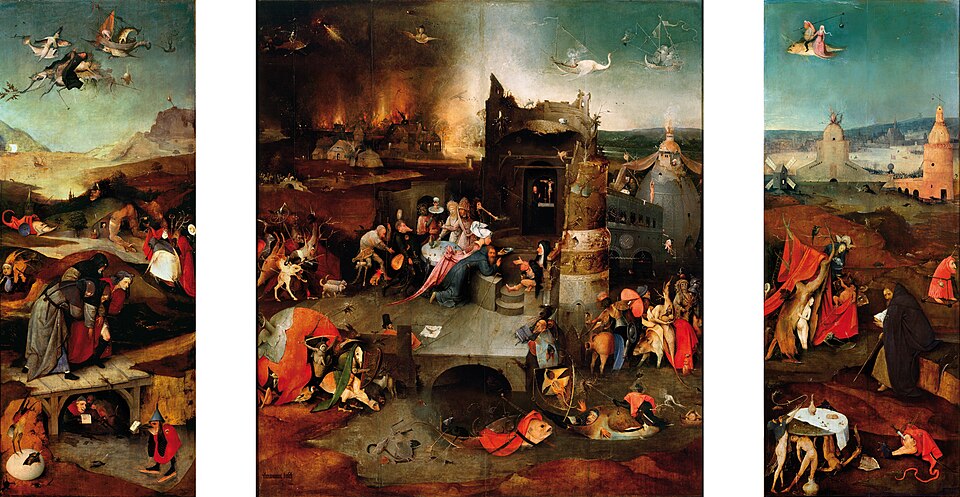
A city burns, demons ride fish through the sky and say mass in a ruin, yet at the centre an old hermit kneels calm and looks straight at us. Bosch's Lisbon triptych is a world of temptation with one still point.
The story behind the painting
Hieronymus Bosch painted this triptych in oil on oak panels around 1501, a date given by tree-ring analysis; it had usually been placed in the 1490s. It shows the mental and spiritual torments of Saint Anthony the Great, one of the Desert Fathers of Egypt, drawing on Athanasius's Life of Saint Anthony and the Golden Legend. Its early history is uncertain. Some historians link it to Temptations sent to the Escorial by Philip II in 1574; since the 1950s many thought the humanist Damião de Góis bought it. It reached the Royal Palace of Lisbon and was given to the museum in 1911.
What to look for
The centre panel measures 131.5 by 119 cm, each wing 131.5 by 53 cm. On the left, demons carry the saint through the sky and companions help him after his fall; the layman among them is traditionally said to be Bosch himself. A skating demon bird holds a note reading fat. In the centre, Anthony kneels with a blessing hand pointing to a tiny Christ in a ruined tower, while demons celebrate a profane mass around him. On the right a naked woman peers from a hollow tree. Closed, the wings show the Arrest of Christ and Christ Carrying the Cross in grisaille.
Meaning and intent
The saint looks out at the world while pointing toward Christ, and no one else in the panel looks in that direction. The burning city recalls Anthony's protection against fire and ergotism, called Saint Anthony's fire, a disease the monks of his order treated, which caused burning pain and hallucinations. One reading links many images to that illness: the great red fruit as a mandrake, used against ergotism and as an anaesthetic that itself caused visions, and the fish and thistles as cold remedies against a hot malady. The grey outer wings fit the Lenten custom of closing altarpieces before Easter.
Legacy
Like many of Bosch's works, the triptych was copied again and again: a workshop copy in Brussels, a later one in Berlin, a reduced copy of the wings in the Prado, another central panel in São Paulo, and a follower's version in Ottawa. The original stays in the Museu Nacional de Arte Antiga in Lisbon. Its crowded, fantastic imagery made it one of the best known treatments of a subject that was already popular in medieval and Renaissance art, and it shaped how later painters imagined the hermit besieged by visions.
Did you know?
- Oil on oak panels, dated by dendrochronology to around 1501.
- In the Museu Nacional de Arte Antiga, Lisbon, since 1911.
- The burning city refers to Saint Anthony's fire, ergotism.
- Copies exist in Brussels, Berlin, Madrid, São Paulo and Ottawa.
About the artist
Hieronymus Bosch (1450-1516)
religious art · Anthony the Great
More by Hieronymus Bosch
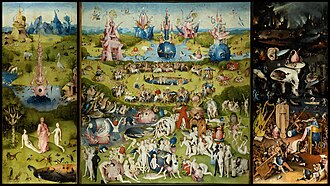 The Garden of Earthly Delights - Hieronymus Bosch
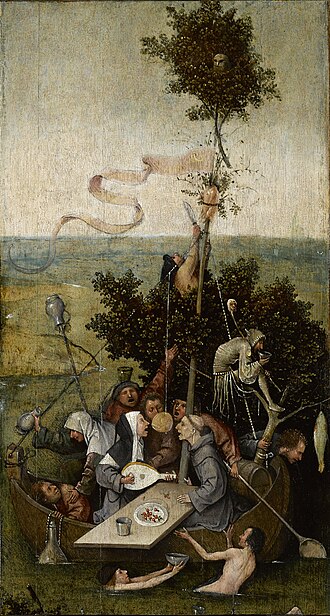 Ship of Fools - Hieronymus Bosch (1500s)
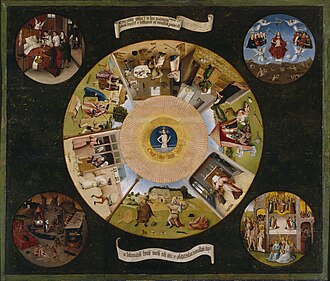 The Seven Deadly Sins and the Four Last Things - Hieronymus Bosch (1500)
.jpg) The Haywain Triptych - Hieronymus Bosch (1510s)
The Haywain Triptych - Hieronymus Bosch (1510s)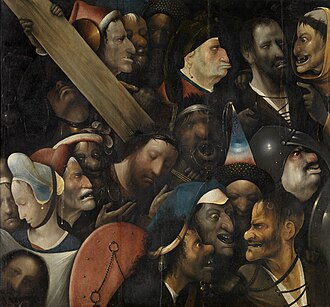 Christ Carrying the Cross - Hieronymus Bosch (1510s)
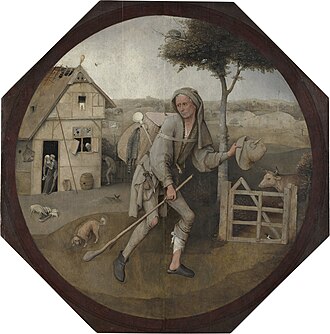 The Wayfarer - Hieronymus Bosch (1500)
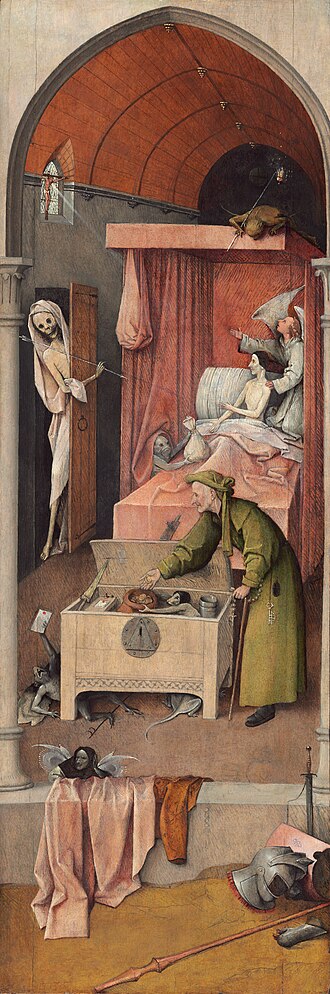 Death and the Miser - Hieronymus Bosch (1500s)
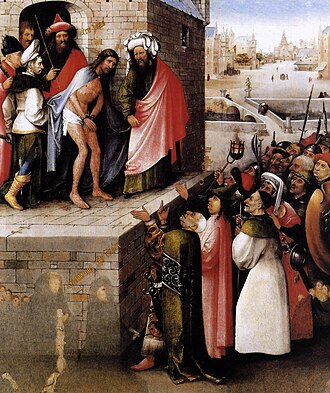 Ecce Homo - Hieronymus Bosch (1490s)
Paintings by related artists
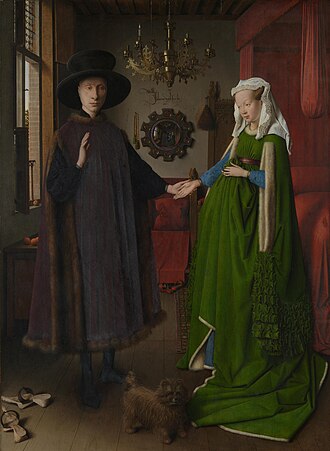 Arnolfini Portrait - Jan van Eyck (1434)
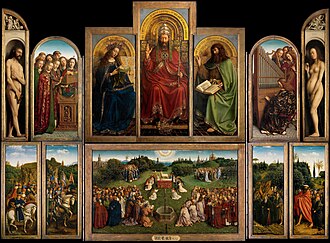 Ghent Altarpiece - Jan van Eyck (1432)
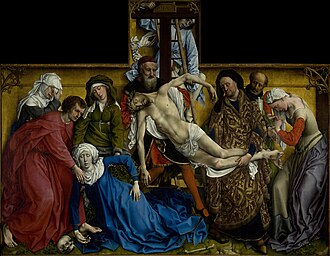 The Descent from the Cross - Rogier van der Weyden (1440s)
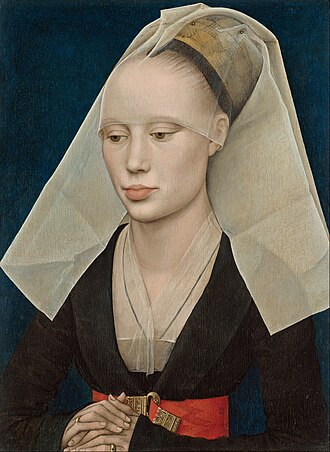 Portrait of a Lady - Rogier van der Weyden (1460)
%20-%20Google%20Art%20Project.jpg) The Hunters in the Snow - Pieter Bruegel the Elder (1565)
The Hunters in the Snow - Pieter Bruegel the Elder (1565) Netherlandish Proverbs - Pieter Bruegel the Elder (1551)