The Raising of Lazarus
Rembrandt van Rijn · 1630
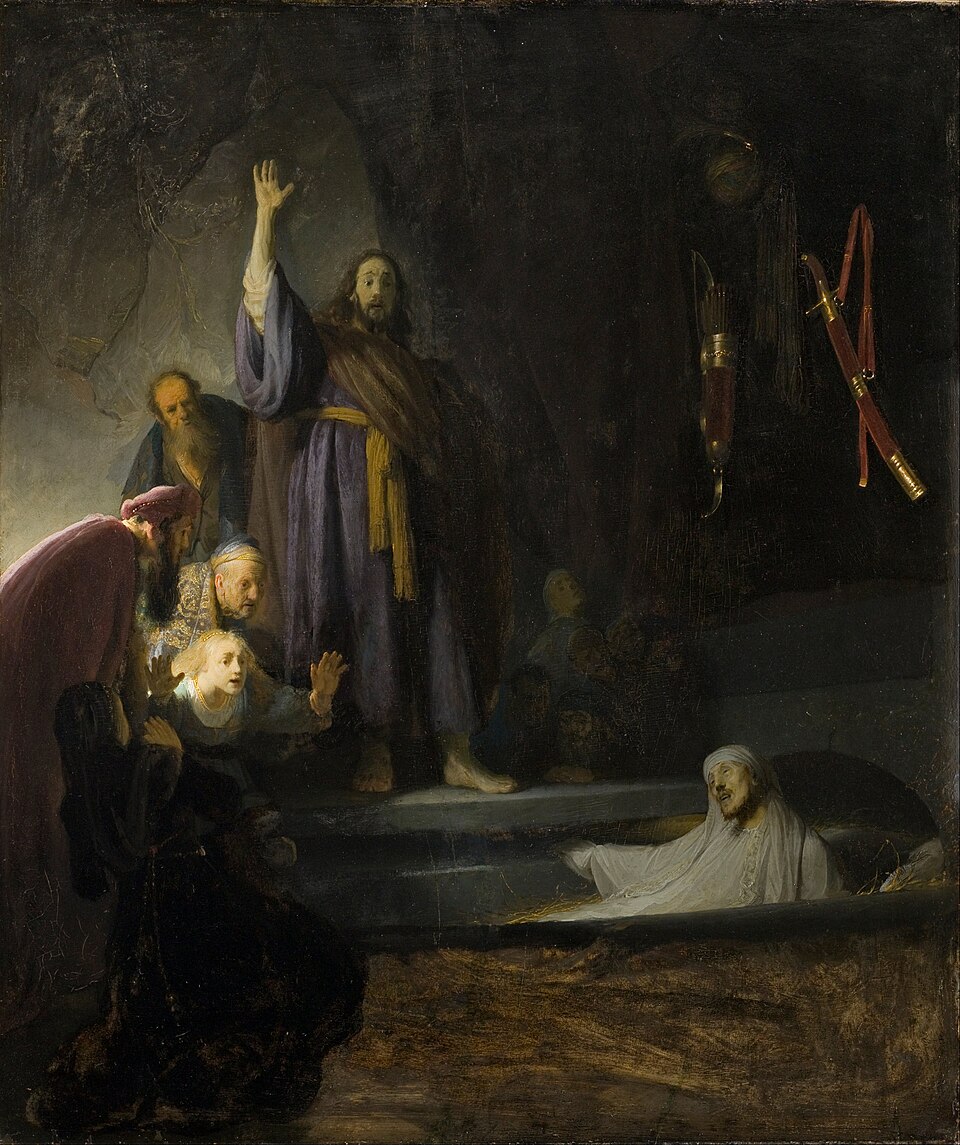
In a dark burial cave, Christ raises his arm and Lazarus stirs from death while the onlookers recoil in amazement. Young Rembrandt painted it in Leiden and kept it in his own house for most of his life.
The story behind the painting
Rembrandt painted this panel early in his career, while still in Leiden and not long after his apprenticeship with Pieter Lastman, whose influence is clear. Wikipedia dates it probably between 1630 and 1632, while Wikidata gives 1630. The subject comes from the Gospel of John, chapter 11. It may draw on an undated etching of the same subject by Jan Lievens; Lievens and Rembrandt were friends and probably worked together. The composition may come from a drawing Rembrandt made at the same time as one of the Burial of Christ.
What to look for
The painting shows the moment Lazarus reawakens and rises from his tomb as Christ calls him. Notice how Lazarus lies in the darker half of the picture, while the figures at left are far more brightly lit. Mary and the others look on in amazement as he comes back to life. Rembrandt uses chiaroscuro, strong contrasts of light and dark: the black interior of the cave and the limited torchlight focus our attention and give the figures their force. Sister Wendy Beckett felt Christ here looks more like a weary magician than a triumphant saviour.
Meaning and intent
The scene can be read as a parable of spiritual life: the hardened sinner receiving first grace, the sorrow for sins that leads toward penitence and redemption. It is one of relatively few New Testament subjects Rembrandt painted, though he made many prints of them. He returned to Lazarus in two etchings with different compositions, about 1632 and 1642. The later one shows Christ more as a healer than as the enchanter of this panel. The placement of figures here was echoed most closely in his painting The Resurrection of 1635 to 1639, which drawings show grew out of this one.
Legacy
Rembrandt kept the picture for most of his life; an inventory records it hanging in his anteroom. It was sold in his bankruptcy sale in 1656, a quiet sign of how much his fortunes had changed since the Leiden years. The painting then passed through various owners in Europe until Howard F. Ahmanson Sr. bought it in 1959 and gave it to the Los Angeles County Museum of Art, where it remains today.
Did you know?
- Painted in Leiden, probably between 1630 and 1632.
- Hung in Rembrandt's anteroom for most of his life.
- Sold in his bankruptcy sale in 1656.
- Given to LACMA after 1959 by Howard F. Ahmanson Sr.
About the artist
Rembrandt van Rijn (1606-1669)
religious art · Jesus Christ · Dutch Golden Age painting · Mary Magdalene · Rijksmuseum · sword · Los Angeles County Museum of Art
More by Rembrandt van Rijn
 The Night Watch - Rembrandt van Rijn (1642)
 Self-Portrait - Rembrandt van Rijn (1659)
 The Anatomy Lesson of Dr. Nicolaes Tulp - Rembrandt van Rijn (1632)
 The Jewish Bride - Rembrandt van Rijn (1660s)
 The Storm on the Sea of Galilee - Rembrandt van Rijn (1633)
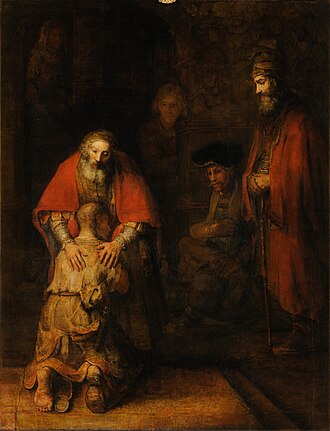 Return of the Prodigal Son - Rembrandt van Rijn (1668)
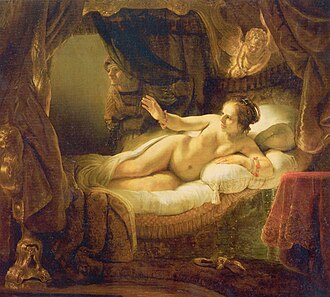 Danaë - Rembrandt van Rijn (1636)
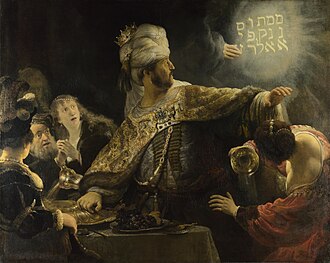 Belshazzar's Feast - Rembrandt van Rijn (1636)
Paintings by related artists
 Girl with a Pearl Earring - Johannes Vermeer (1665)
 The Milkmaid - Johannes Vermeer (c. 1658)
 The Feast of Saint Nicholas - Jan Steen (1660s)
 Girl eating oysters - Jan Steen (1658)
 A Militiaman Holding a Berkemeyer, Known as the ‘Merry Drinker’ - Frans Hals (1620s)
 Laughing Cavalier - Frans Hals (1624)
 The Windmill at Wijk bij Duurstede - Jacob van Ruisdael (1670)
 The Jewish Cemetery - Jacob van Ruisdael (1650s)
 The Courtyard of a House in Delft - Pieter de Hooch (1658)
 A Woman Peeling Apples - Pieter de Hooch (1663)