The Last Judgment
Hieronymus Bosch · 1500s
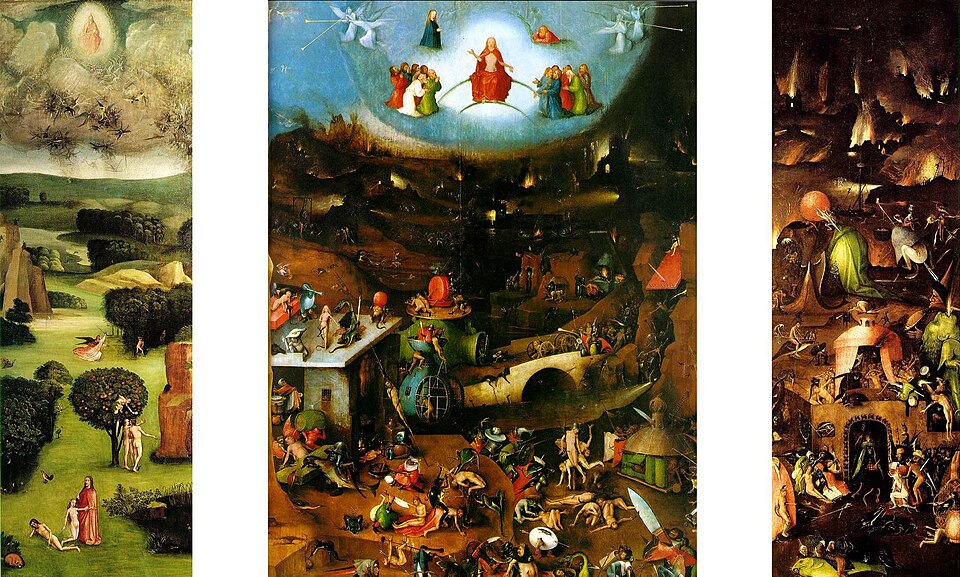
Rebel angels turn into insects as they fall, Eve is tempted in a green garden, and below, a dark world fills with monstrous punishments. Bosch's Vienna triptych tells the whole story of sin, from paradise to hell.
The story behind the painting
The Last Judgment is a triptych by Hieronymus Bosch, created after 1482, as dendrochronology has shown. The outer shutters are painted in grisaille and the inner panels in oil. The earliest mention is a 1659 inventory of Archduke Leopold Wilhelm of Austria, listing it as by Hieronimo Bosz. In the late 18th century it was acquired by Count Lambert-Sprinzenstein, and from him it passed to the Academy of Fine Arts in Vienna. Some historians identify it with the work bought by Philip I of Castile in 1504, while others deny this. Wikidata simply dates it to the 1500s.
What to look for
The left panel shows the Garden of Eden as a green landscape. At the top God sits enthroned in a luminous halo while angels fight the rebels, who turn into insects and devils as they fall. Reading upward from the bottom: God creates Eve from Adam's rib, the Serpent tempts Eve by the tree of knowledge, and an angel with a sword drives Adam and Eve into a dark forest. In the centre Christ judges, with the Virgin, John the Evangelist and the apostles, above a dark brownish world where the damned are burned, speared, impaled, hung on butcher's hooks or fed into bizarre machines.
Meaning and intent
The central Last Judgment is based on the Book of Revelation. Its bright blue heaven contrasts with the rest of the panel, given over to the punishment of the damned, while the blessed occupy only a small corner. On the right, hell continues the torment: Satan in the centre receives the damned in a dark landscape of flames and devils. Outside, the closed shutters show Saint James as a pilgrim in a wicked land with a hanged man, and Saint Bavo, patron of Flanders, giving to the poor with a hawk on his wrist.
Legacy
The composition is close to Bosch's Haywain Triptych and The Garden of Earthly Delights, which also place Eden on the left and hell on the right, and the central torments resemble the hell panel of the Garden in the Prado. An old woman with a child on the Saint Bavo shutter appears in a drawing attributed to Bosch. A copy attributed to Lucas Cranach the Elder is in Berlin. In the 17th and 18th centuries the triptych was widely repainted and lost some colour. Wikipedia gives the side panels as 167.7 by 60 cm, while Wikidata gives 163.7 by 60 cm.
Did you know?
- Painted after 1482, according to tree-ring dating.
- First recorded in 1659 in Archduke Leopold Wilhelm's inventory.
- Now in the Academy of Fine Arts, Vienna.
- A copy attributed to Lucas Cranach the Elder is in Berlin.
About the artist
Hieronymus Bosch (1450-1516)
religious art · Day of Judgment
More by Hieronymus Bosch
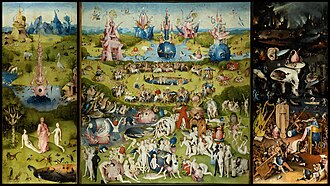 The Garden of Earthly Delights - Hieronymus Bosch
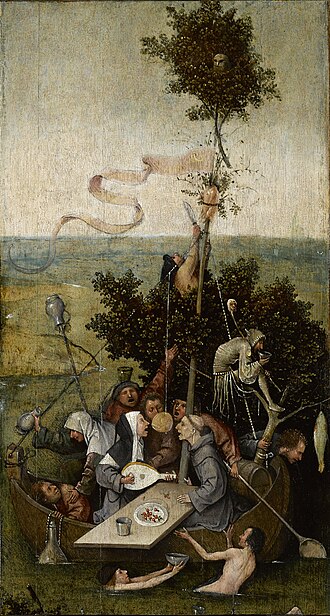 Ship of Fools - Hieronymus Bosch (1500s)
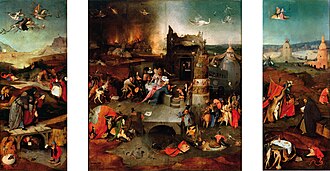 Temptation of Saint Anthony - Hieronymus Bosch (1501)
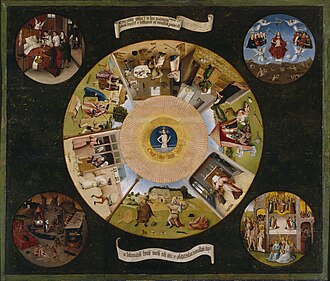 The Seven Deadly Sins and the Four Last Things - Hieronymus Bosch (1500)
.jpg) The Haywain Triptych - Hieronymus Bosch (1510s)
The Haywain Triptych - Hieronymus Bosch (1510s)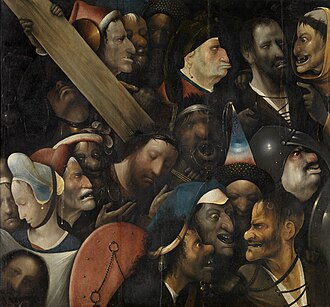 Christ Carrying the Cross - Hieronymus Bosch (1510s)
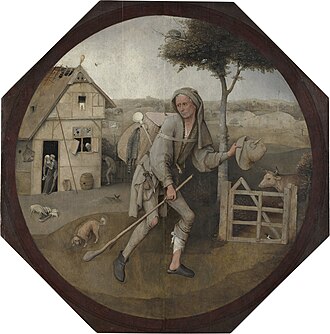 The Wayfarer - Hieronymus Bosch (1500)
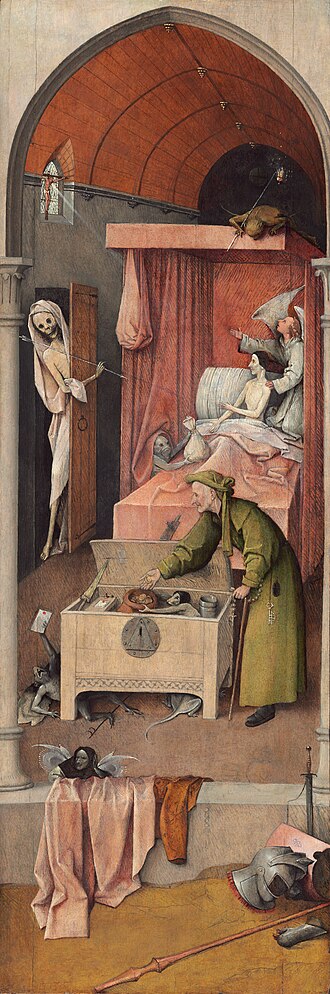 Death and the Miser - Hieronymus Bosch (1500s)
Paintings by related artists
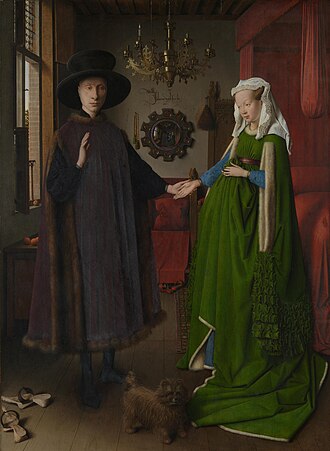 Arnolfini Portrait - Jan van Eyck (1434)
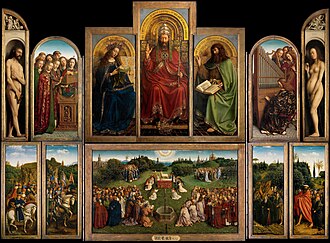 Ghent Altarpiece - Jan van Eyck (1432)
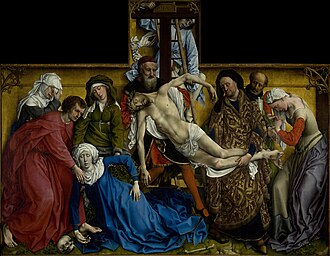 The Descent from the Cross - Rogier van der Weyden (1440s)
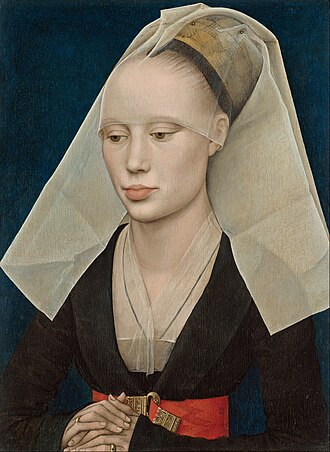 Portrait of a Lady - Rogier van der Weyden (1460)
%20-%20Google%20Art%20Project.jpg) The Hunters in the Snow - Pieter Bruegel the Elder (1565)
The Hunters in the Snow - Pieter Bruegel the Elder (1565) Netherlandish Proverbs - Pieter Bruegel the Elder (1551)