The Holy Family with a Curtain
Rembrandt van Rijn · 1646
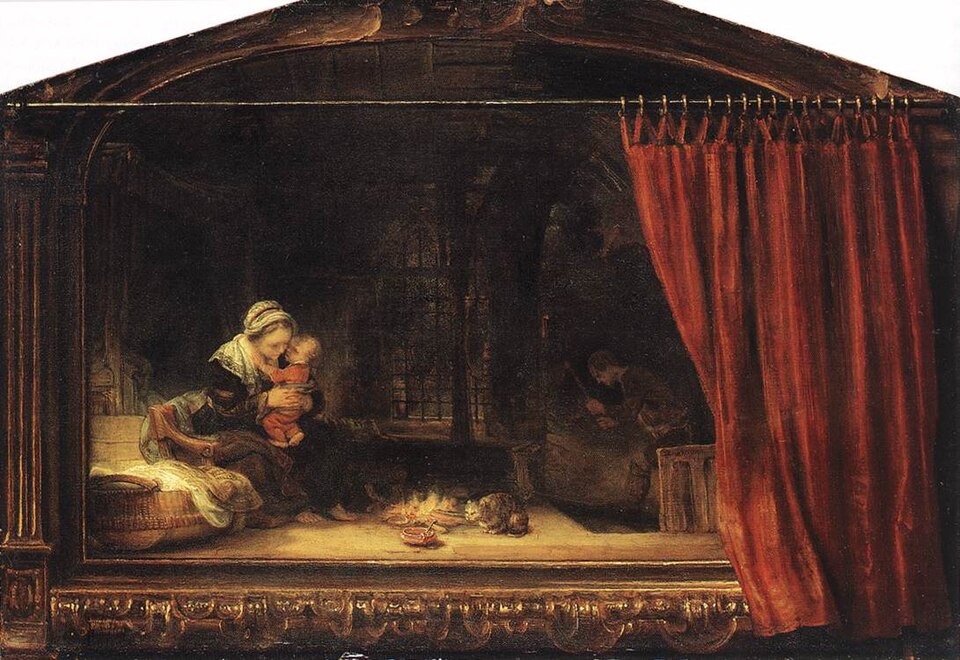
A mother warms her baby by a fire on the floor, a cat dozes nearby, and a painted red curtain seems to hang in front of the whole scene, half drawn back. Rembrandt, or his workshop, played a quiet trick on the viewer in 1646.
The story behind the painting
The small panel is dated 1646, when Rembrandt was living in Amsterdam at the height of his career. Its authorship is disputed. Researchers of the Rembrandt Research Project are divided: in favour of Rembrandt himself are the novelty of the painted frame and curtain in Dutch painting, and the several copies made in his workshop; against him are weaker passages, such as the perspective of the room and the painting of the cat, which suggest a pupil. The source describes it as a painting by Rembrandt or his workshop. Its stylistic links with The Prophetess Anna in the Temple, painted around 1650 and kept in Edinburgh, also by Rembrandt or a pupil, have been noted.
What to look for
On the left Mary sits on a chair beside a cradle, holding the child Jesus, dressed in red. She wears a brown green dress and a white cap, and seems to have just lifted him from the cradle to wrap him in the blue grey blanket on her knees. In the background on the right, in another room or outside, Joseph is chopping wood with an axe. The main light comes from a fire lit directly on the floor in the middle of the room, next to a cat, while a second light falls on mother and child from the upper left. Around everything runs a painted wooden frame, and a red curtain on a rod covers part of the right side. The panel measures about 46.8 by 69 cm.
Meaning and intent
Rembrandt places the Holy Family in an ordinary home that seventeenth century viewers would recognise: the cat, the bowl and the spoon by the fire, the run down building. The mood is intimate and serene. The curtain has several readings. Pictures were often protected by real curtains then, and unveiled to visitors for surprise. It may recall the ancient contest told by Pliny, in which Parrhasius painted a curtain so real that his rival Zeuxis tried to pull it aside, yet Rembrandt paints his curtain plainly, not to show off. In a Christian reading it stands for mystery, the hidden years of Jesus's family life, a veil that Calvin also wrote about. Victor Stoichita sees a painting about painting: not the Holy Family, but a Rembrandt picture of it.
Legacy
According to Cornelis Hofstede de Groot the painting first belonged to the collector Jacques Ignatius de Roore, but Ernst van de Wetering says this was not the case, a disagreement the sources leave open. In 1752 the Landgrave William VIII of Hesse bought it from the Dutch collector Willem Lormier. It has been in Kassel ever since, except between 1807 and 1815, when it was taken to the Louvre, then called the Musée Napoléon. Today it hangs in the Gemäldegalerie Alte Meister in Kassel, where the painted curtain still invites every visitor to reach out and draw it aside.
Did you know?
- Dated 1646; attributed to Rembrandt or his workshop.
- Features a trompe l'oeil frame and red curtain painted around the scene.
- Bought by Landgrave William VIII of Hesse in 1752.
- In the Louvre from 1807 to 1815, now in Kassel.
About the artist
Rembrandt van Rijn (1606-1669)
religious art · Dutch Golden Age painting · curtain · Holy Family
More by Rembrandt van Rijn
 The Night Watch - Rembrandt van Rijn (1642)
 Self-Portrait - Rembrandt van Rijn (1659)
 The Anatomy Lesson of Dr. Nicolaes Tulp - Rembrandt van Rijn (1632)
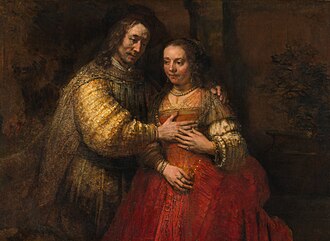 The Jewish Bride - Rembrandt van Rijn (1660s)
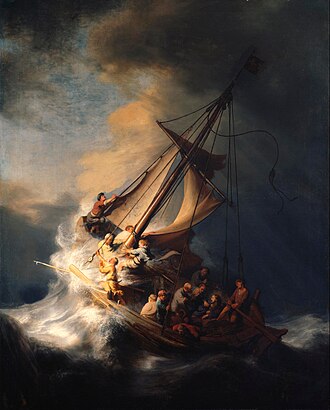 The Storm on the Sea of Galilee - Rembrandt van Rijn (1633)
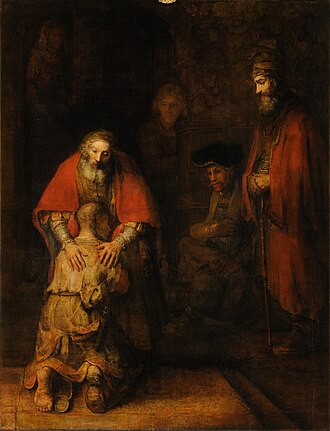 Return of the Prodigal Son - Rembrandt van Rijn (1668)
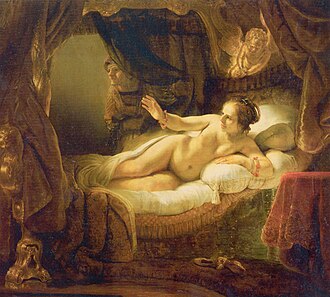 Danaë - Rembrandt van Rijn (1636)
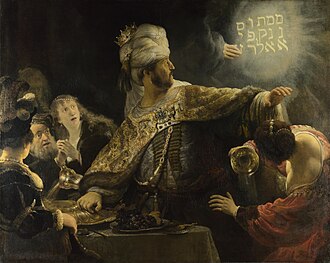 Belshazzar's Feast - Rembrandt van Rijn (1636)
Paintings by related artists
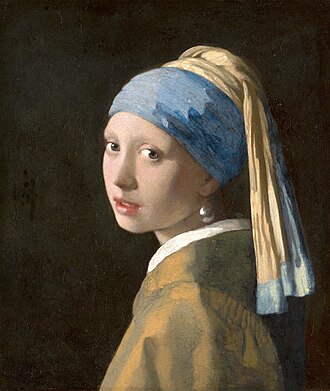 Girl with a Pearl Earring - Johannes Vermeer (1665)
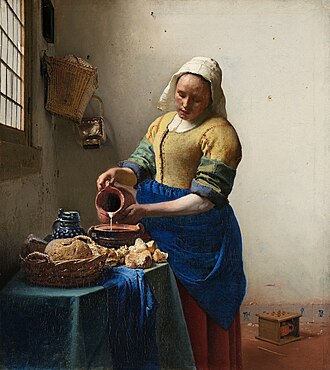 The Milkmaid - Johannes Vermeer (c. 1658)