The Adoration of the Kings
Hieronymus Bosch · 1514
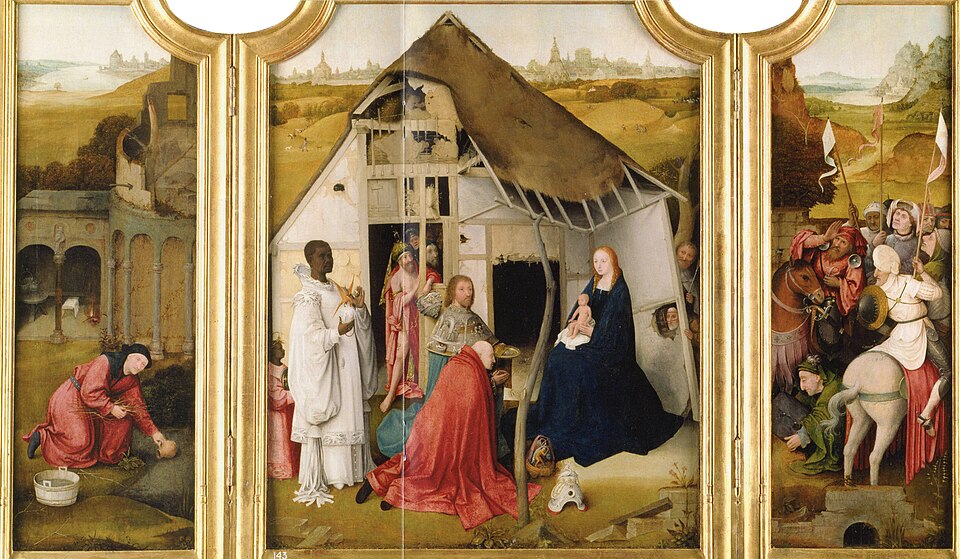
Open it and the kings kneel before the Child; close it and demons march toward a gallows. This triptych at Upton House is still labelled Bosch by its owner, while tree rings and scholars point to a follower.
The story behind the painting
This Adoration of the Magi, also called the Epiphany Triptych, is a 16th century triptych in oil on oak panels kept at Upton House in England. Before 1854 it belonged to the London collection of the member of parliament Henry Danby Seymour. In 1936 to 1937 it changed hands several times, passing to the critic Robert Langton Douglas, the dealer Vitale Bloch and finally Walter Samuel, second Viscount Bearsted, heir to the Shell company. He left Upton House, near Banbury, and his art collections to the National Trust. Wikidata dates it to 1514.
What to look for
The central panel is 91.4 by 72.4 cm and each wing 83.3 by 28.9 cm, with the upper corners cut in quarter circles by the hinges. Open, the centre closely copies Bosch's signed Adoration in the Prado, but leaves out details such as the shepherds on the stable roof and the star. The wings are entirely different: on the left Saint Joseph draws water before an Italianate ancient ruin, on the right the kings' procession with riders and a servant setting down a chest. Closed, a grisaille hell scene shows animal-headed demons heading for a gallows, around a coloured roundel on gold of Christ shown to the crowd by Pontius Pilate.
Meaning and intent
The gallows may allude to the hanging of Judas, though the source asks this as a question. Pilate is recognisable by the imperial banner with a double-headed eagle above him, and one soldier at the far left resembles the figure painted over a donor on the Saint Wilgefortis Triptych. The two faces of the work set the joy of the Epiphany against the Passion and hell: the kings bring gifts inside, while outside Christ is mocked and demons march. It is a Bosch-like world built from his own motifs, which is exactly what made its authorship so hard to settle.
Legacy
Charles de Tolnay flagged it as disputed in 1965; Mia Cinotti called it a patchwork in Bosch's manner; Gerd Unverfehrt saw an Antwerp artist of the 1520s; and in 2004 Frédéric Elsig dated it around 1515 and gave it to a disciple he identified with Bosch's nephew Johannes van Aken. Tree-ring analysis at the University of Sheffield in 2012 showed it was probably painted after 1512, perhaps after 1514, while Bosch died in 1516. The Bosch Research and Conservation Project gives it to a follower, but calls it the most successful of its group. The National Trust still attributes it to Bosch.
Did you know?
- Oil on oak, central panel 91.4 x 72.4 cm.
- Left to the National Trust by the second Viscount Bearsted.
- Tree rings suggest it was painted after 1512, perhaps after 1514.
- The National Trust says Bosch; most scholars say a follower.
About the artist
Hieronymus Bosch (1450-1516)
religious art · Christ Child · adoration of the Magi · National Trust
More by Hieronymus Bosch
 The Garden of Earthly Delights - Hieronymus Bosch
 Ship of Fools - Hieronymus Bosch (1500s)
 Temptation of Saint Anthony - Hieronymus Bosch (1501)
 The Seven Deadly Sins and the Four Last Things - Hieronymus Bosch (1500)
 The Haywain Triptych - Hieronymus Bosch (1510s)
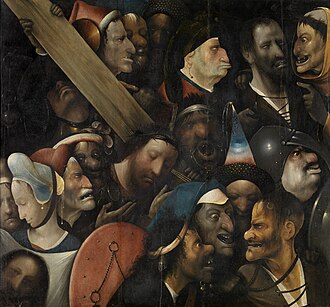 Christ Carrying the Cross - Hieronymus Bosch (1510s)
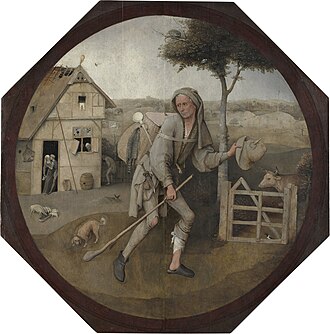 The Wayfarer - Hieronymus Bosch (1500)
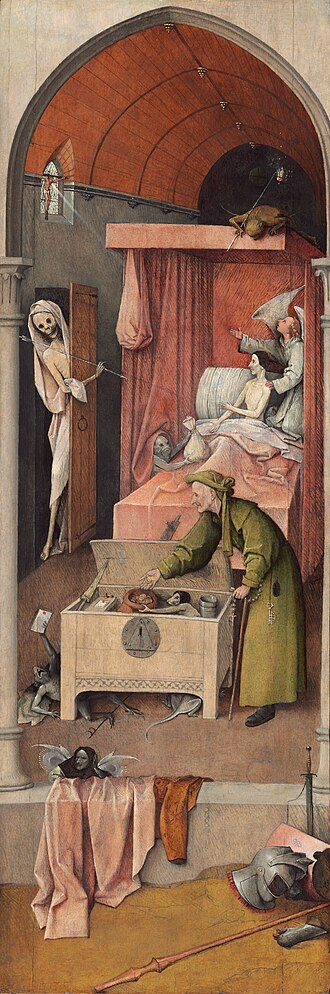 Death and the Miser - Hieronymus Bosch (1500s)
Paintings by related artists
 The Descent from the Cross - Rogier van der Weyden (1440s)
 Portrait of a Lady - Rogier van der Weyden (1460)
 Arnolfini Portrait - Jan van Eyck (1434)
 Ghent Altarpiece - Jan van Eyck (1432)
 Annunciation - Hans Memling (1480s)
 Scenes from the Passion of Christ - Hans Memling (1470)
 The Hunters in the Snow - Pieter Bruegel the Elder (1565)
 Netherlandish Proverbs - Pieter Bruegel the Elder (1551)