Self-Portrait
Francisco Goya · 1815
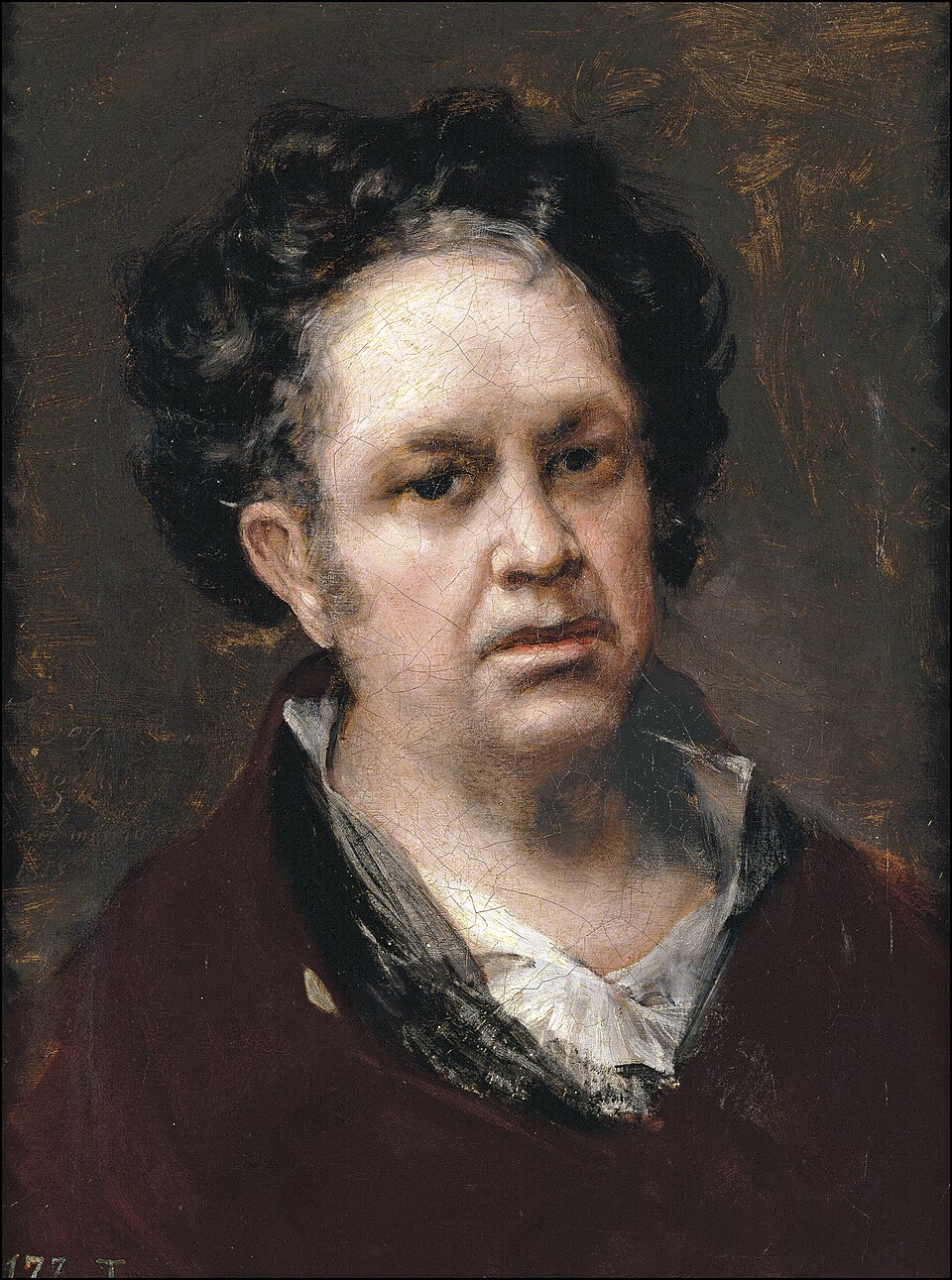
Goya at sixty-nine, tired, deaf and alone after a war, paints only his face against a brown dark. No easel, no fine clothes. It is one of the most sincere and direct self-portraits he ever made.
The story behind the painting
Goya painted this in 1815, in the hard years after the Peninsular War. Madrid had suffered famine in 1811 and 1812, his wife had died in 1812, and many friends had died or fled. Ferdinand VII, back on the throne, purged the court and restored the Inquisition, and in 1815 Goya stood before its tribunal over The Naked Maja, though he faced no consequences. Short of materials, he often painted over finished canvases. It is possible he made this portrait to affirm that he could still paint. Two versions survive, both dated 1815: this canvas in the Prado and a panel in the Real Academia de Bellas Artes de San Fernando.
What to look for
Goya shows himself as a bust in a dark reddish-brown velvet robe over a loosely buttoned white shirt. His head turns slightly left, the gaze intense and somber, the graying hair tousled around a high forehead. In this Prado version he seems to wear a wig that has slipped back, and broad black strokes partly cover the shirt collar. Look at the left side at neck level: an inscription scratched into the wet paint with a brush handle or stylus reads Fr. Goya, Aragonese, by himself, 1815. The palette is almost all browns and blacks, with white on the shirt and face and only a small crimson touch on the lips.
Meaning and intent
Goya left out every attribute of his trade and every sign of rank, which makes him feel more human and close. In the Prado canvas he appears tired, sickly and a little nostalgic, and his face seems to carry long years of work and the deafness that had almost cut him off from the world. The academy version, probably the older one, looks calmer and younger. Xavier Bray called the painting a study not of old age but of a state of mind. Valeriano Bozal believes that, as in many of Goya's works, the true hero is time, written into his features, gaze and gesture.
Legacy
For a long time the Prado canvas was taken for a later copy of the academy panel. Only in 1993, when conservators removed old varnish, did the full inscription and the date appear, showing that both were made at about the same time. Earlier writers such as Valentin Carderera and Charles Yriarte had read the academy version as a study for Self-portrait with Dr Arrieta, but Goya's illness began only in 1819, and Xavier Desparmet Fitz-Gerald and Aureliano de Beruete rejected that idea. The portrait stands in a line of severe self-portraits reaching back to Tintoretto and Rembrandt.
Did you know?
- Painted in 1815, the year Goya turned sixty-nine.
- Two versions survive: this canvas in the Prado and a panel in the San Fernando academy.
- The full inscription and date were found only in 1993, under old varnish.
- Goya painted himself without brushes, easel or rich clothes.
About the artist
Francisco Goya (1746-1828)
Museo del Prado · self-portrait · Francisco Goya
More by Francisco Goya
 The Third of May 1808 - Francisco Goya (1814)
.jpg) La Maja nue - Francisco Goya (1800)
La Maja nue - Francisco Goya (1800).jpg) Saturn Devouring His Son - Francisco Goya (1819)
Saturn Devouring His Son - Francisco Goya (1819) Charles IV of Spain and His Family - Francisco Goya (1800)
 The Clothed Maja - Francisco Goya (1800)
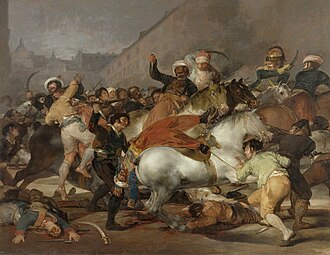 The Second of May 1808 - Francisco Goya (1814)
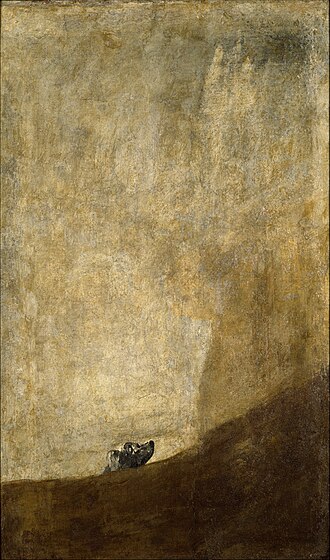 The Dog - Francisco Goya (1819)
 Witches' Sabbath - Francisco Goya (1820s)
Paintings by related artists
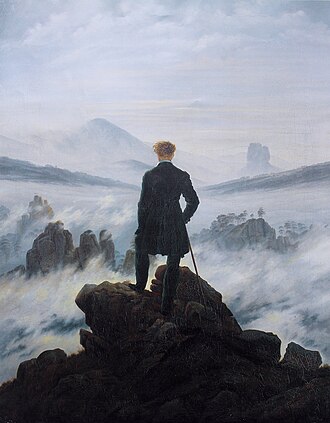 Wanderer above the Sea of Fog - Caspar David Friedrich (c. 1818)
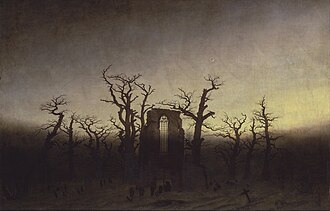 The Abbey in the Oakwood - Caspar David Friedrich (1800s)
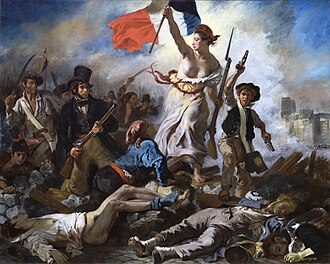 Liberty Leading the People - Eugène Delacroix (1830)
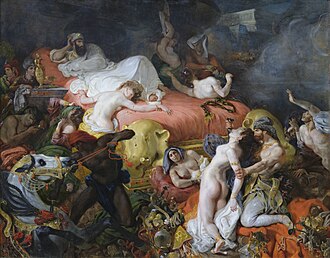 Death of Sardanapalus - Eugène Delacroix (1827)
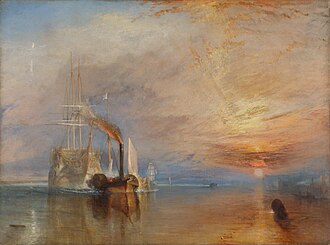 The Fighting Temeraire - J. M. W. Turner (1839)
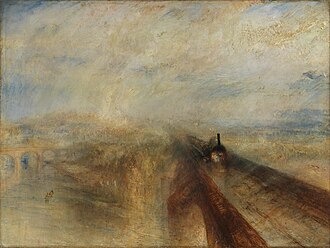 Rain, Steam and Speed - The Great Western Railway - J. M. W. Turner (1844)
.jpg) The Blue Boy - Thomas Gainsborough (1770)
The Blue Boy - Thomas Gainsborough (1770).jpg) Mr and Mrs Andrews - Thomas Gainsborough (1748)
Mr and Mrs Andrews - Thomas Gainsborough (1748)