Portrait of Giovanni di Nicolao Arnolfini
Jan van Eyck · 1440
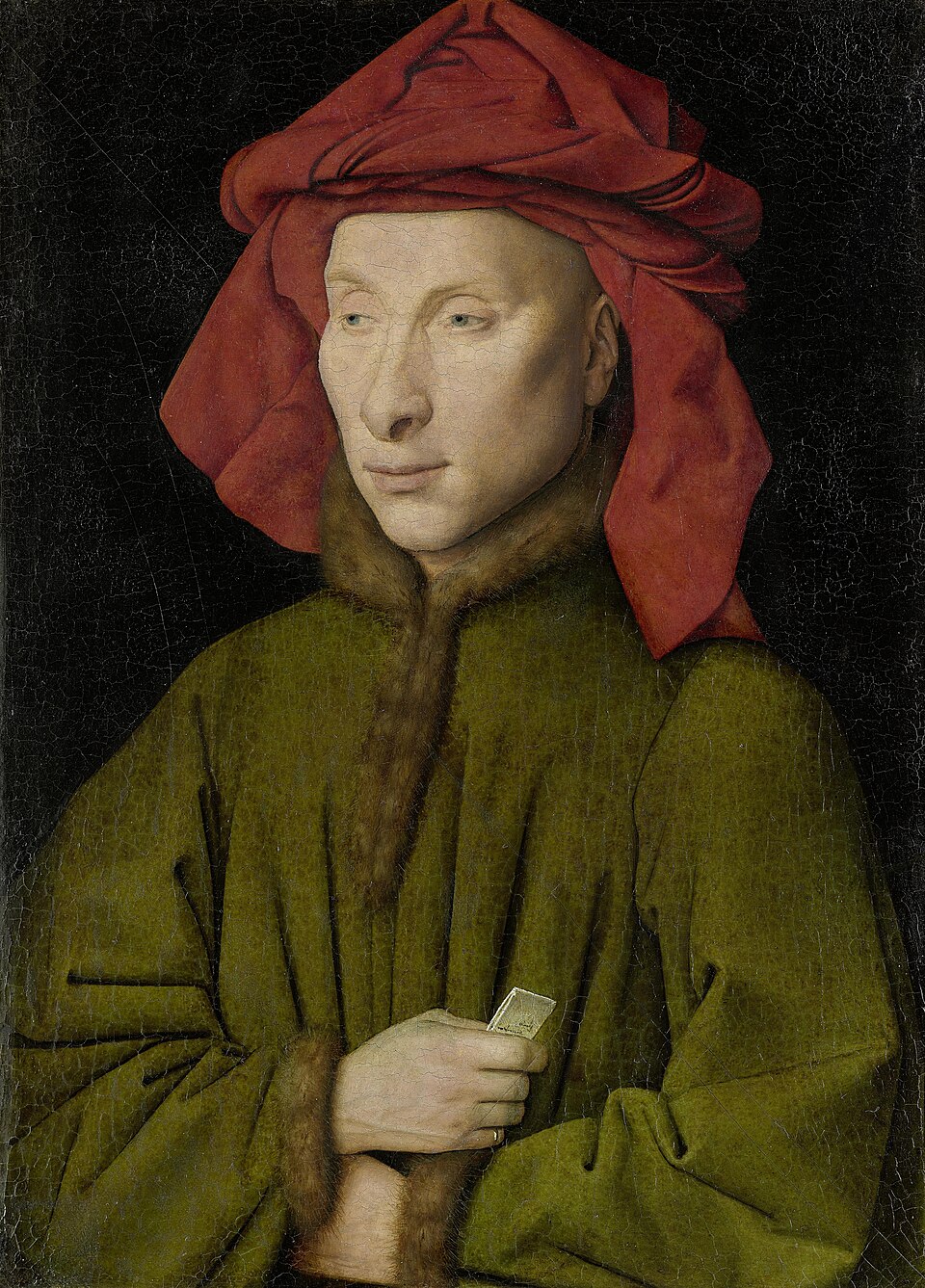
A merchant in a red headdress stares at us with an expression no one can read. Jan van Eyck painted Giovanni di Nicolao Arnolfini, believed to be the same man as in his famous Arnolfini Portrait, and painted him a second time.
The story behind the painting
Giovanni di Nicolao Arnolfini was a wealthy merchant from Lucca in Tuscany who spent most of his life in Flanders. This small portrait is believed to show him because his features match those of the man in van Eyck's famous Arnolfini Portrait of 1434, which makes it the painter's second portrait of him. That van Eyck painted him twice has led to speculation that the two were friends. For a long time the picture was thought to be a self portrait, because it is so similar to van Eyck's Portrait of a Man in a Red Chaperon in London.
What to look for
Arnolfini wears a dark green gown lined with dark brown fur and a red chaperon, a headdress with its twisted roll and its hanging cloth tied up on top. Van Eyck paints him with exacting realism, without hiding any flaws: small, slightly narrow eyes, a large nose and an inscrutable stare. In his left hand is a scroll whose meaning is unknown; it may relate to trade, perhaps a kind of international credit note then just appearing in European banking. His folded arms once rested on the original frame, now lost.
Meaning and intent
The painting is a meeting with a real person, not an ideal. Van Eyck shows a powerful foreign merchant as he was, and the stare keeps its secret. The unknown scroll and the lost frame, which would have carried inscriptions with the date, leave us with questions instead of answers. Seen beside the famous double portrait, it lets us meet the same man twice through the eyes of one painter, and wonder what bound them together.
Legacy
Opinions on the date have ranged from 1434 to 1438, and the later date is now generally accepted; Wikidata gives 1440. For years neither this panel nor the London double portrait had named sitters, and the double portrait was often taken to show the artist and his wife. In 1857 Crowe and Cavalcaselle linked it to early 16th century inventories of Margaret of Austria and named the Arnolfini, which later led to this panel's identification. Today it hangs in the Gemäldegalerie in Berlin.
Did you know?
- A small portrait, about 29 by 20 cm, believed to show the man in the Arnolfini Portrait.
- Dated around 1438 by Wikipedia, 1440 by Wikidata.
- Long thought to be a self portrait of Jan van Eyck.
- In the Gemäldegalerie, Berlin.
About the artist
Jan van Eyck (1390-1441)
portrait · Early Netherlandish painting · Gemäldegalerie Berlin · Charles Sedelmeyer collection
More by Jan van Eyck
 Arnolfini Portrait - Jan van Eyck (1434)
 Ghent Altarpiece - Jan van Eyck (1432)
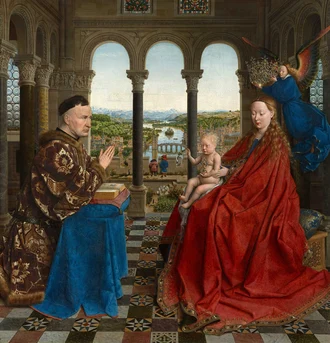 Madonna of Chancellor Rolin - Jan van Eyck
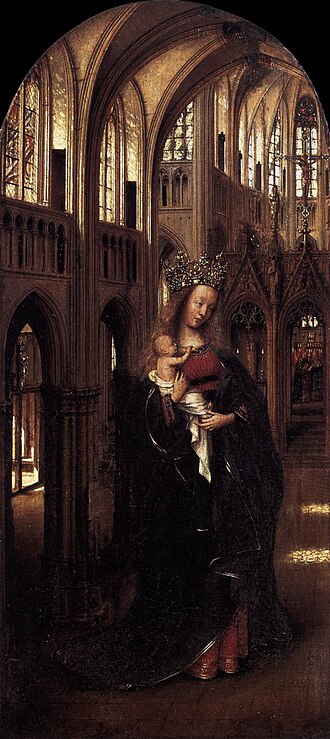 The Madonna in the Church - Jan van Eyck (1440)
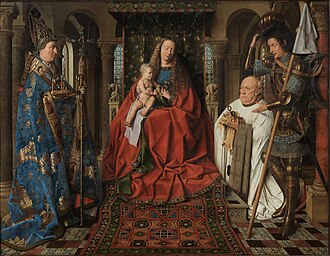 Madonna with Canon Joris van der Paele - Jan van Eyck (1436)
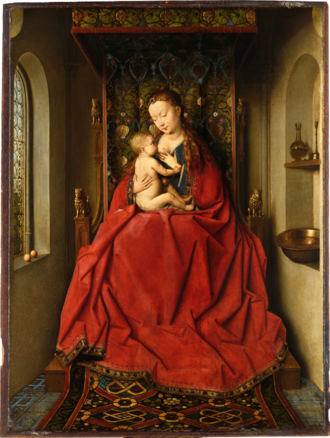 Lucca Madonna - Jan van Eyck (1437)
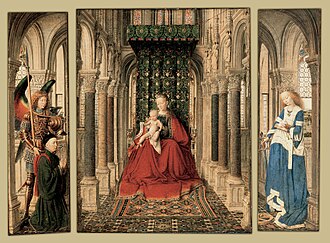 Dresden Triptych - Jan van Eyck (1437)
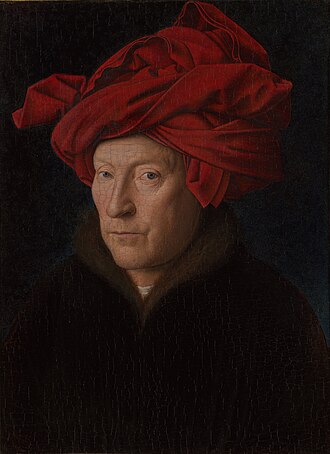 Portrait of a Man - Jan van Eyck (1433)
Paintings by related artists
 The Descent from the Cross - Rogier van der Weyden (1440s)
 Portrait of a Lady - Rogier van der Weyden (1460)
 Annunciation - Hans Memling (1480s)
 Scenes from the Passion of Christ - Hans Memling (1470)
 The Garden of Earthly Delights - Hieronymus Bosch
 Ship of Fools - Hieronymus Bosch (1500s)
 The Hunters in the Snow - Pieter Bruegel the Elder (1565)
 Netherlandish Proverbs - Pieter Bruegel the Elder (1551)