Portrait of a Man
Jan van Eyck · 1433
%201433.jpg)
A man with bloodshot blue eyes and a towering red headdress stares straight out. On the frame Jan van Eyck wrote "As I Can" and the exact day he finished: 21 October 1433. Many believe the face is his own.
The story behind the painting
Jan van Eyck completed this small oil panel in Bruges in 1433. The original frame carries two inscriptions. At the bottom, in the painting's own voice, it says that Jan van Eyck made me on 21 October 1433, a Wednesday and Saint Ursula's feast day. Dating a secular picture to the day was unusual at the time. At the top, his motto Als Ich Can, As I Can, is spelled in Greek letters, a pun on his name. This is the first known use of the motto, and it is unusually large here. The panel has been in England since the Earl of Arundel acquired it, probably in Antwerp between 1642 and 1644.
What to look for
The panel is small, about one-third life-size. The man has pronounced stubble in brown and whitish grey, and his face is lined with the onset of middle age, especially around the eyes, which are blue, painted with ultramarine, and semi-bloodshot. He wears a dark purple and brown robe with fur at the neck. The vermilion headdress is the centrepiece: not a turban, despite the old title, but a chaperon with its hanging sash tied up over the top. The gilded frame is painted with letters made to look carved. Infrared shows underdrawing along the nose and jaw.
Meaning and intent
The motto and the sitter's direct, confrontational gaze have led most scholars to see a self-portrait, perhaps made by studying himself in a mirror, which may explain why the hands are not shown. The expensive cloth and gilded frame suggest wealth and prestige. Some think he kept it at his workshop as a sample for clients, saying in effect look at what I can do with paint, although by 1433 he was already in high demand. The motto has been read as a challenge to rivals, ancient and modern. No document confirms the identity, hence the question mark in the title.
Legacy
The National Gallery in London has owned the panel since 1851 and hangs it beside the Arnolfini Portrait and Léal Souvenir. Long called Portrait of a Man in a Red Turban, it has been titled Portrait of a Man (Self Portrait?) since the mid twentieth century. It may have been a companion to his 1439 portrait of his wife Margaret, also dominated by red, though hers is later and larger. If it is a self-portrait, it comes decades before other independent self-portraits in European painting, and its intense eyes find an echo in Dürer's self-portrait of 1500.
Did you know?
- Dated on its frame 21 October 1433.
- Carries van Eyck's motto Als Ich Can in Greek letters.
- Widely thought to be a self-portrait, but without documentary proof.
- In the National Gallery, London, since 1851.
About the artist
Jan van Eyck (1390-1441)
portrait · man · National Gallery · self-portrait · Early Netherlandish painting
More by Jan van Eyck
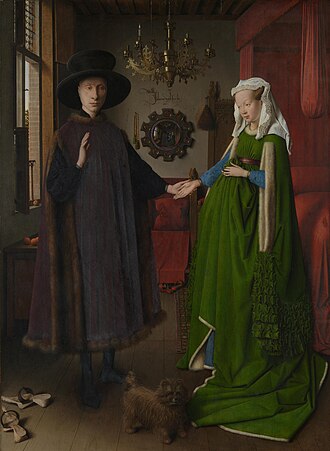 Arnolfini Portrait - Jan van Eyck (1434)
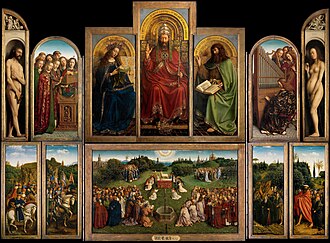 Ghent Altarpiece - Jan van Eyck (1432)
.webp) Madonna of Chancellor Rolin - Jan van Eyck
Madonna of Chancellor Rolin - Jan van Eyck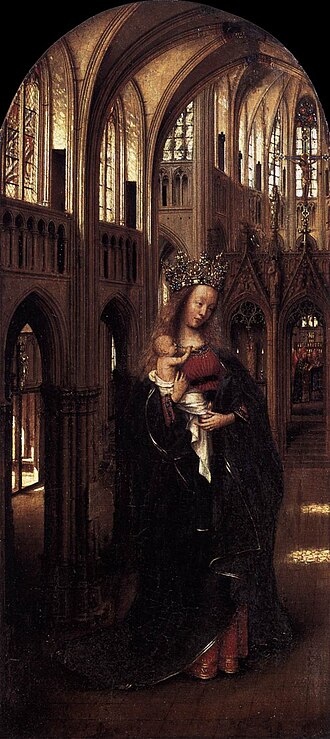 The Madonna in the Church - Jan van Eyck (1440)
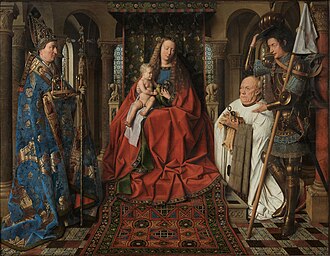 Madonna with Canon Joris van der Paele - Jan van Eyck (1436)
.png) Lucca Madonna - Jan van Eyck (1437)
Lucca Madonna - Jan van Eyck (1437)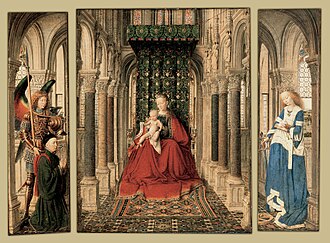 Dresden Triptych - Jan van Eyck (1437)
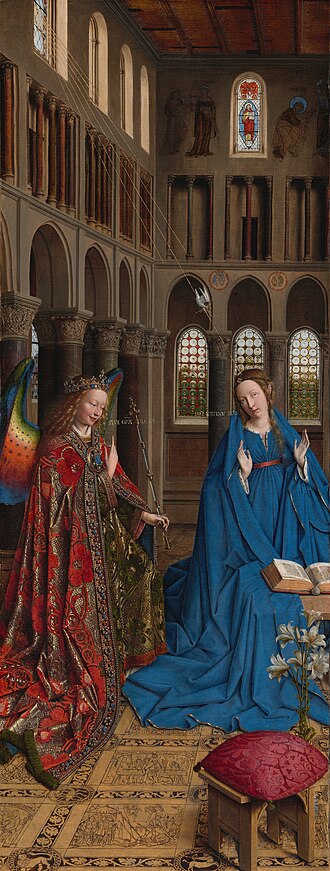 Annunciation - Jan van Eyck (1430s)
Paintings by related artists
 The Garden of Earthly Delights - Hieronymus Bosch
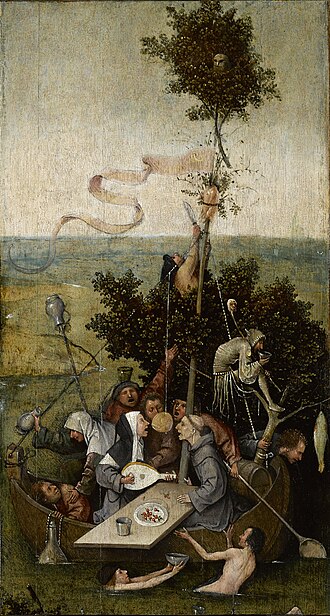 Ship of Fools - Hieronymus Bosch (1500s)
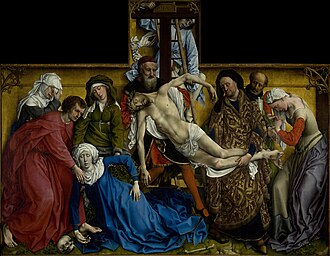 The Descent from the Cross - Rogier van der Weyden (1440s)
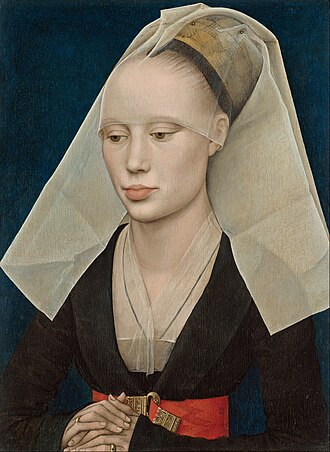 Portrait of a Lady - Rogier van der Weyden (1460)
%20-%20Google%20Art%20Project.jpg) The Hunters in the Snow - Pieter Bruegel the Elder (1565)
The Hunters in the Snow - Pieter Bruegel the Elder (1565)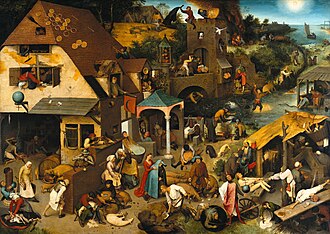 Netherlandish Proverbs - Pieter Bruegel the Elder (1551)